Leather dyeing vat
1344×768 · AVIF · CC BY 4.0
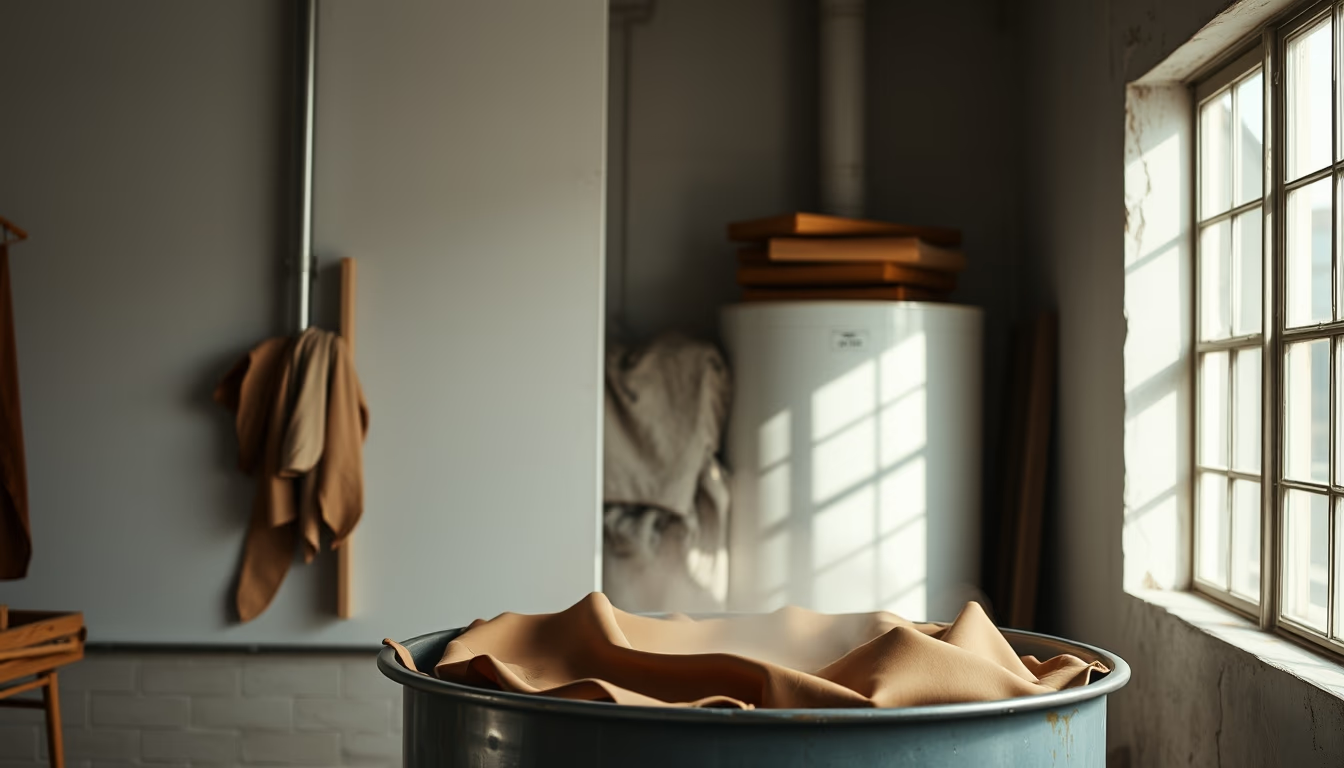
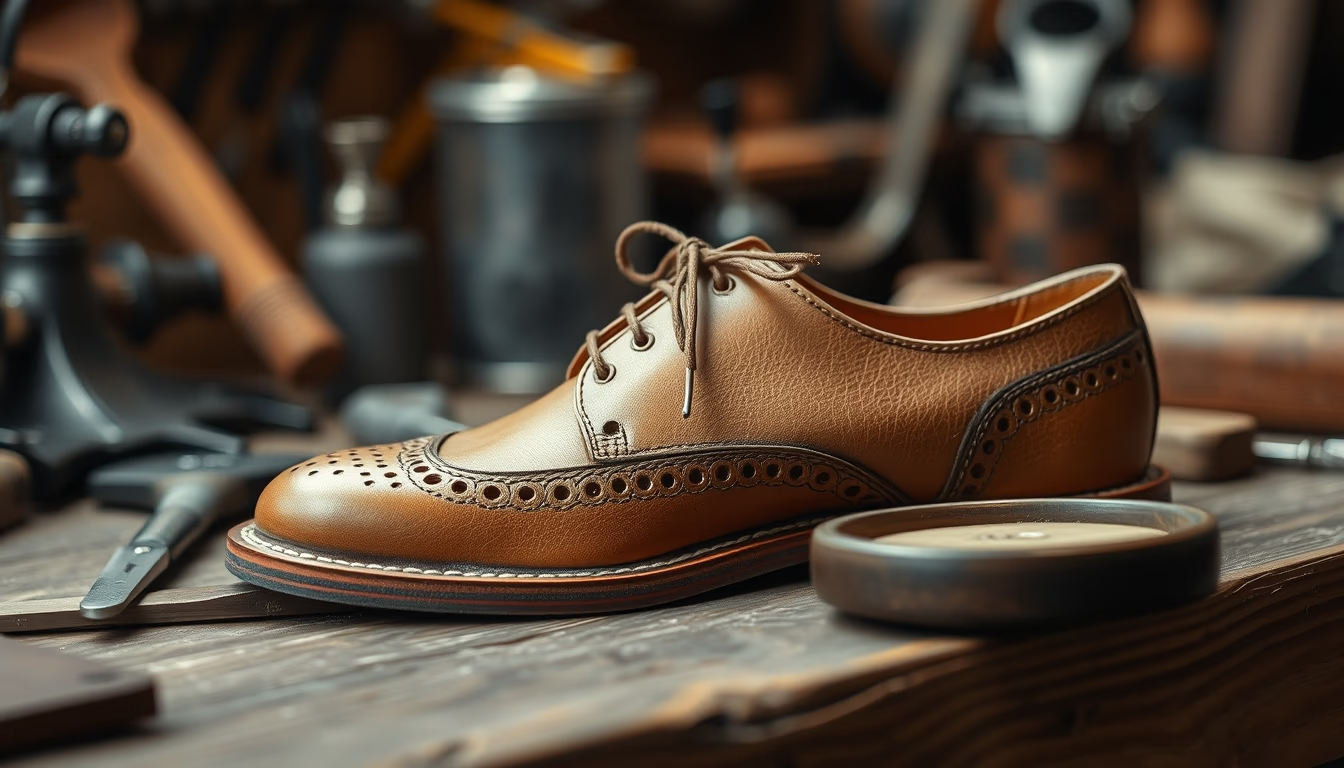
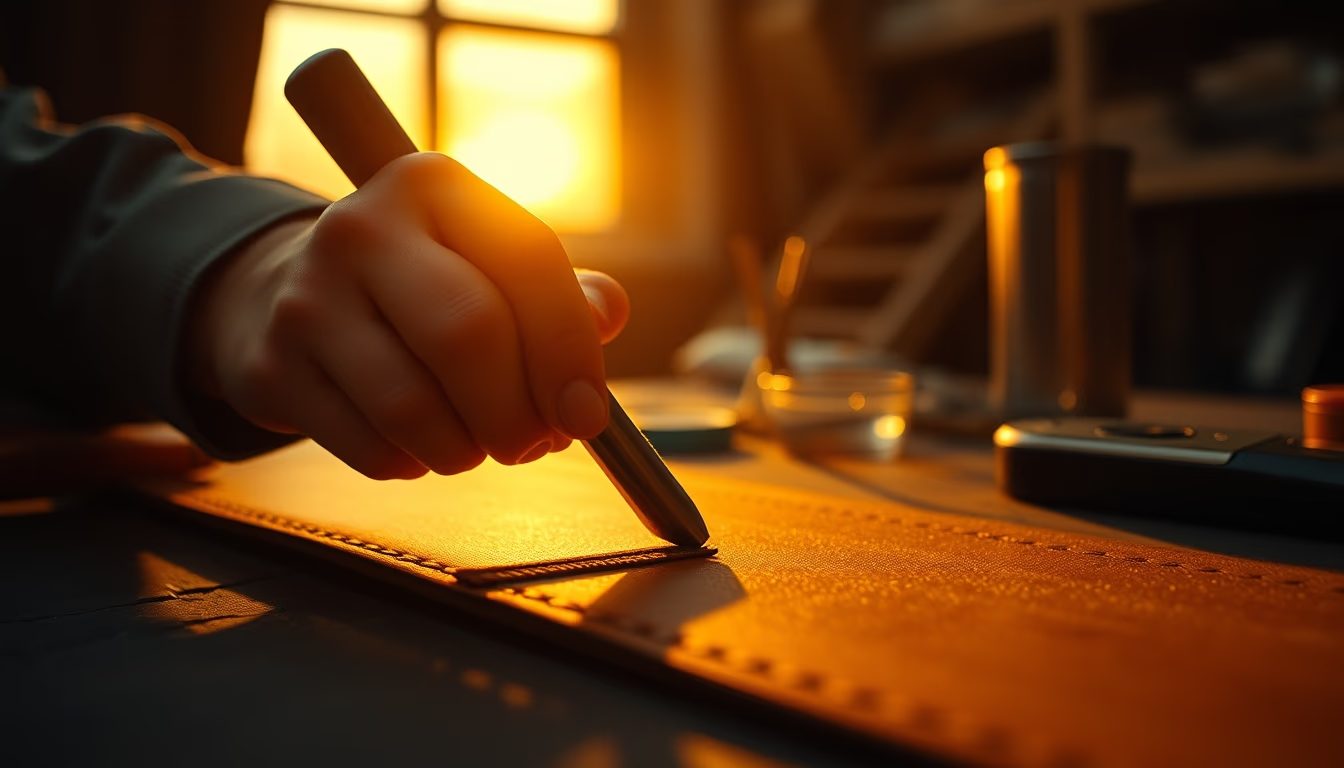
Leather dyeing vat used in the artisanal coloring process, essential for producing leather goods with vibrant and lasting colors.
About this subject
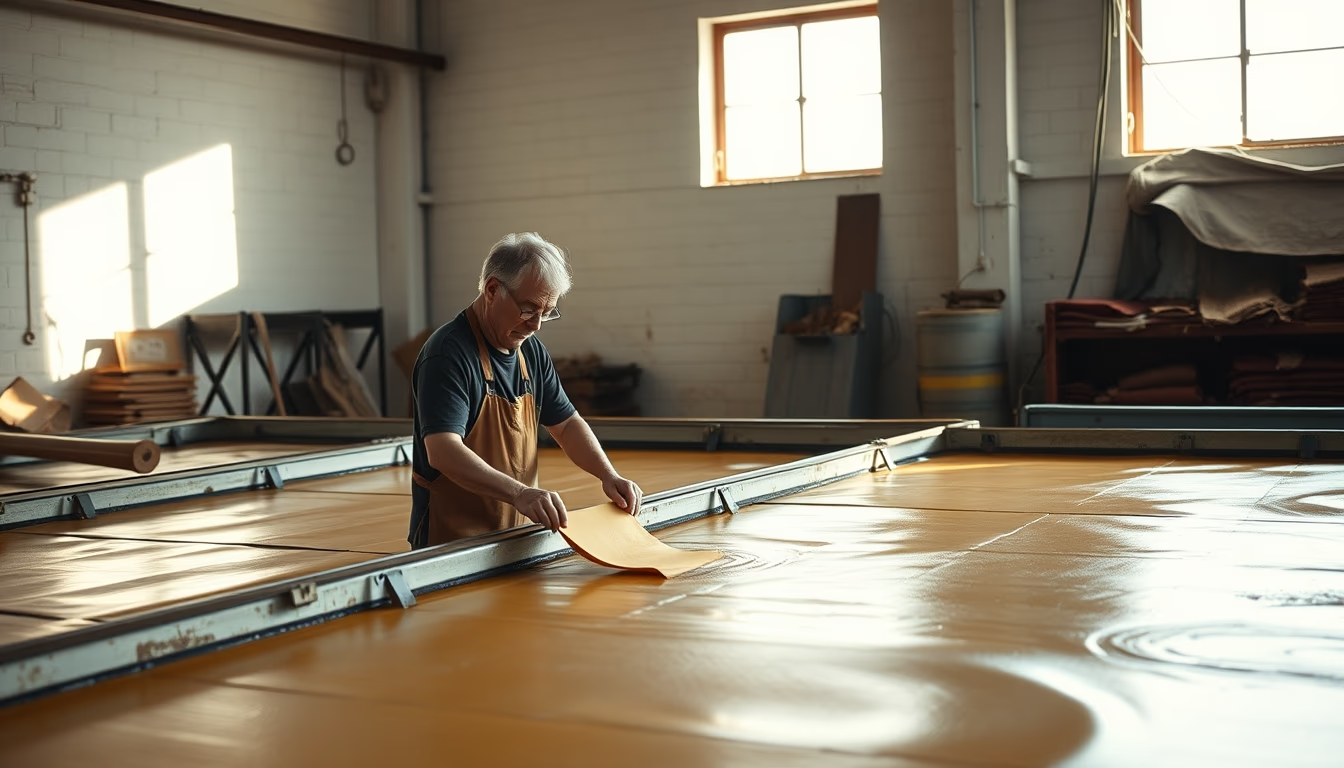
The leather dyeing vat is a fundamental piece of equipment in leather tanning and finishing. Typically made of stainless steel or polypropylene, its main function is to immerse tanned leather in dye solutions. The dyeing process can be done by total immersion or spraying, depending on the desired finish. In Brazil, the leather-footwear industry is one of the largest globally, with prominent hubs in Franca (SP) and Novo Hamburgo (RS), where these vats are widely used.
Different types of dyes are employed: aniline, pigments, and solvent-based dyes. Aniline penetrates deep into the leather fibers, resulting in translucent colors and a soft touch, while pigments form a surface layer, offering greater coverage and durability. Temperature and pH of the solution are strictly controlled to ensure uniform absorption. A typical vat can hold 50 to 500 liters, and immersion time ranges from 15 minutes to several hours.
Historically, leather dyeing dates back to ancient civilizations such as the Egyptians and Romans, who used plant extracts (like tannin) and minerals. The Industrial Revolution introduced synthetic dyes, making the process faster and more standardized. Today, there is a growing trend toward natural dyes and sustainable processes to reduce environmental impact. The dyeing vat thus represents the intersection of tradition and innovation in leathercraft.
In artisanal leatherworking, vat dyeing gives the craftsman complete control over the final color, enabling gradient or aged (patina) effects. Although the process requires patience and practice, the result is leather with unique character, highly valued in luxury items such as bags, belts, and wallets.
Frequently Asked Questions
What is the difference between aniline and pigment dyeing?
Aniline penetrates the leather fibers, maintaining the natural texture and producing translucent colors. Pigment forms a surface layer, covering imperfections and providing greater resistance to scratches and fading.
How long does leather vat dyeing take?
The time varies depending on the dye type, leather thickness, and desired color, ranging from 15 minutes to several hours. Aniline processes are usually faster than pigment-based ones.
Can I dye leather at home with an improvised vat?
Yes, hobbyists can use plastic or stainless steel buckets. However, it's important to control temperature and pH, and to use leather-specific dyes to avoid uneven staining.
Direct URL
https://pub-c7d6a6ea828543ac903a74a341ccb2e1.r2.dev/imagens/leather-dyeing-vat-minimalist-composition-fresh3.avifHow to credit
Include a visible link back to UtilizAí. Copy one of the snippets below:
<a href="https://xn--utiliza-eza.com/en/midia/imagens/leather-dyeing-vat-minimalist-composition-fresh3">Leather dyeing vat</a> by <a href="https://xn--utiliza-eza.com">UtilizAí</a>, licensed under <a href="https://creativecommons.org/licenses/by/4.0/">CC BY 4.0</a>.
[Leather dyeing vat](https://xn--utiliza-eza.com/en/midia/imagens/leather-dyeing-vat-minimalist-composition-fresh3) by [UtilizAí](https://xn--utiliza-eza.com), CC BY 4.0
License: CC-BY-4.0