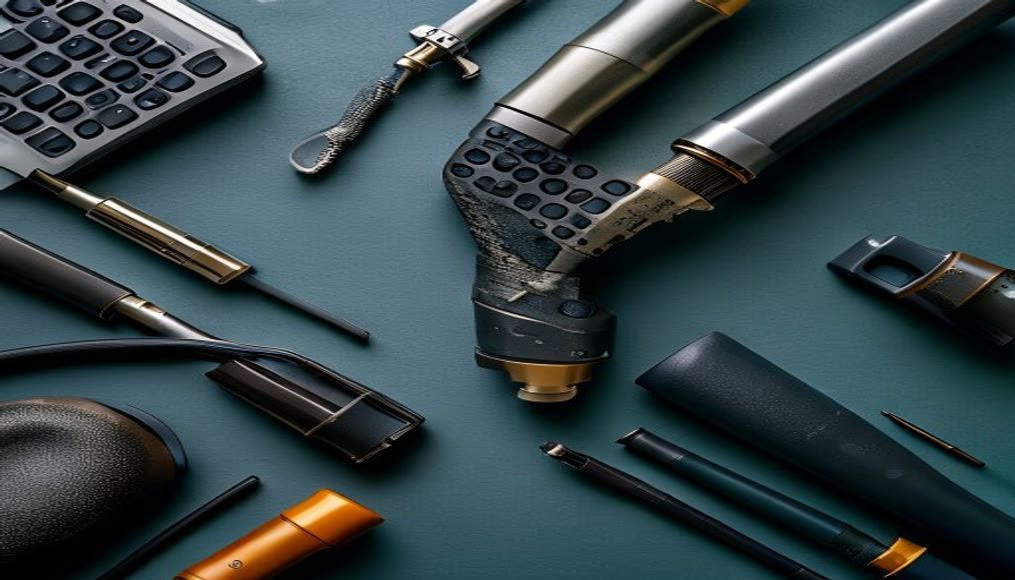
Lead came soldering
1344×768 · AVIF · CC BY 4.0
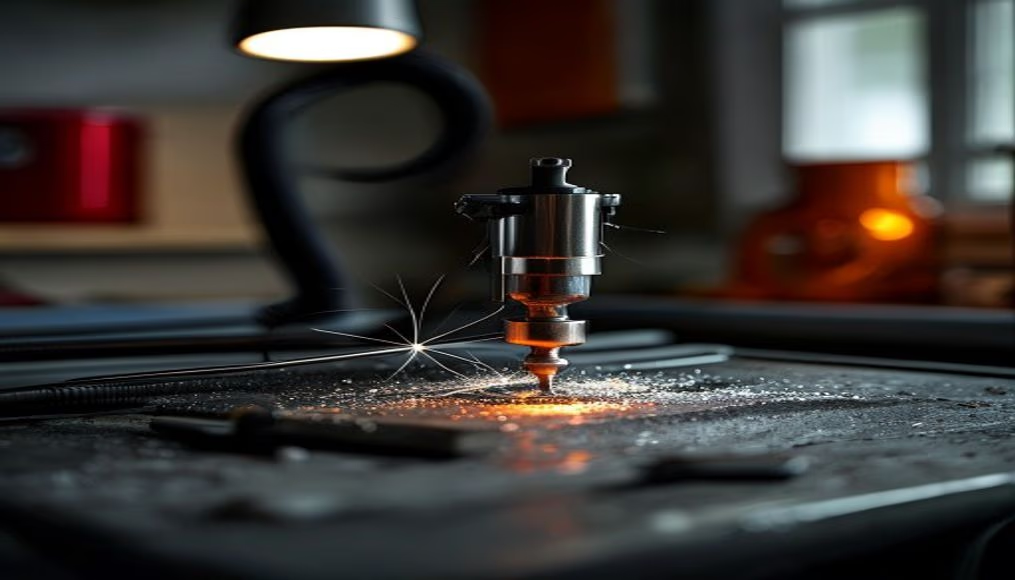
Soldagem de chumbo (lead came) é técnica essencial na criação de vitrais tradicionais, unindo peças de vidro com precisão e durabilidade.
Sobre o tema
A soldagem de chumbo, conhecida como lead came soldering, é um processo fundamental na arte do vitral. O lead came é um perfil de chumbo em formato de H que envolve as bordas das peças de vidro, formando a estrutura do painel. Para unir esses perfis nos cruzamentos, o artesão utiliza um ferro de soldar aquecido a cerca de 350°C, aplicando uma liga de estanho e chumbo (solda) sobre uma camada de fluxo, que limpa e prepara a superfície metálica.
A técnica remonta à Idade Média, quando vitrais góticos como os da Catedral de Chartres (século XIII) já empregavam came de chumbo. A solda não só fixa as junções, mas também confere resistência estrutural ao painel. Após a soldagem, aplica-se um cimento (putty) para vedar e impermeabilizar, garantindo a longevidade da obra. O processo exige precisão: excesso de calor pode deformar o chumbo, enquanto solda insuficiente compromete a estabilidade.
Ferramentas típicas incluem o ferro de soldar (com ponta de cobre), fluxo líquido ou em pasta (como resina ou ácido muriático diluído), e a solda 60/40 (60% estanho, 40% chumbo). A escolha do fluxo depende do tipo de came e da técnica. Artesãos modernos também usam came de cobre ou zinco, mas o chumbo continua preferido por sua maleabilidade e estética tradicional. A soldagem de lead came é uma habilidade valorizada em estúdios de restauro e criação de vitrais contemporâneos.
Perguntas frequentes
Qual a diferença entre lead came e copper foil na soldagem de vitrais?
Lead came usa perfis de chumbo em H, ideal para painéis grandes e retos. Copper foil (técnica Tiffany) envolve cada peça de vidro com fita de cobre, permitindo curvas e detalhes finos. A soldagem no came exige menos precisão nas junções, enquanto no copper foil a solda forma a própria estrutura.
É possível soldar lead came sem usar fluxo?
Não recomendado. O fluxo remove óxidos e promove aderência da solda. Sem ele, a solda não se espalha uniformemente e a junção fica frágil. Produtos como ácido muriático diluído ou fluxo orgânico são comuns.
Quais cuidados de segurança são necessários na soldagem de chumbo?
Trabalhe em área ventilada para evitar inalação de fumos. Use luvas e óculos de proteção. Lave as mãos após o manuseio. Evite ingestão de partículas de chumbo. Mantenha crianças e animais afastados.
URL direta
https://pub-c7d6a6ea828543ac903a74a341ccb2e1.r2.dev/imagens/lead-came-soldering-studio-still-life-p0.avifComo creditar
Inclua um link visível de volta pro UtilizAí. Copie um dos snippets abaixo:
<a href="https://xn--utiliza-eza.com/midia/imagens/lead-came-soldering-studio-still-life-p0">Lead came soldering</a> by <a href="https://xn--utiliza-eza.com">UtilizAí</a>, licensed under <a href="https://creativecommons.org/licenses/by/4.0/">CC BY 4.0</a>.
[Lead came soldering](https://xn--utiliza-eza.com/midia/imagens/lead-came-soldering-studio-still-life-p0) by [UtilizAí](https://xn--utiliza-eza.com), CC BY 4.0
Licença: CC-BY-4.0