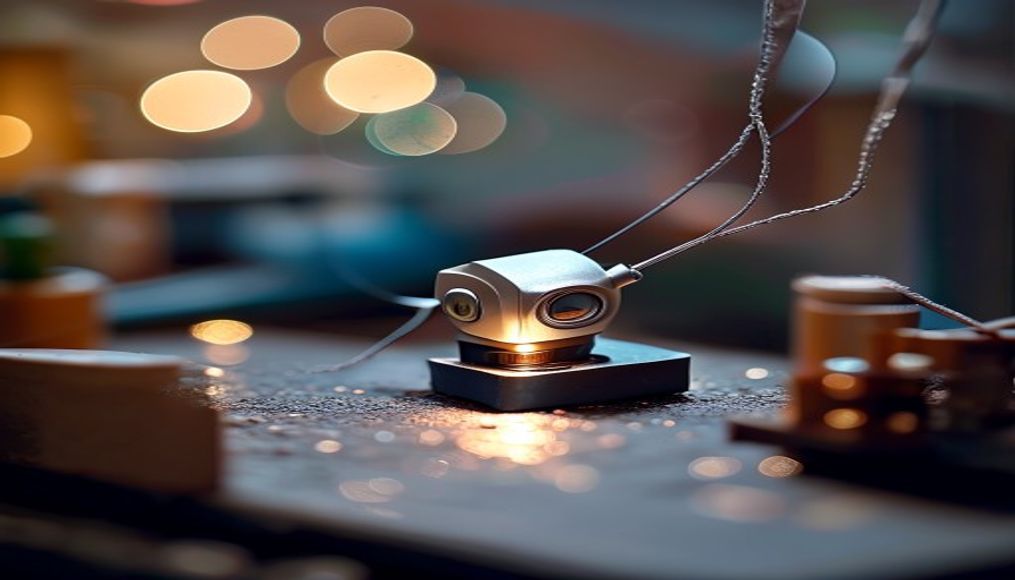
Lead came soldering
1344×768 · AVIF · CC BY 4.0
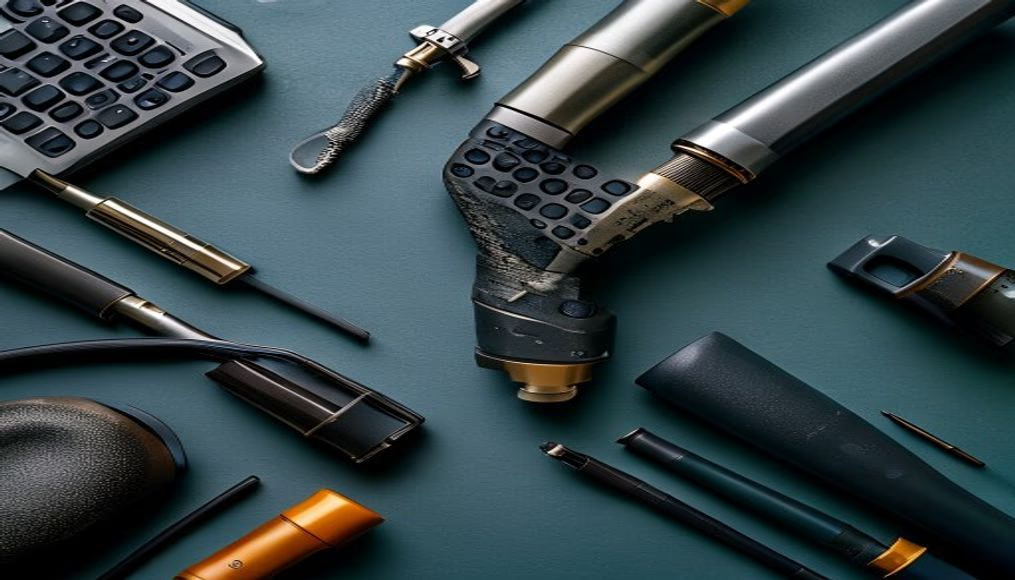
Lead came soldering in stained glass and electronics: an age-old technique combining precision and durability.
About this subject
Lead came soldering is a technique used primarily in stained glass artistry and historically in electronics. The term "came" refers to H-shaped or U-shaped lead profiles that hold glass pieces together, joined by solder (tin-lead alloy) at the seams. This method dates back to the Middle Ages, when European cathedrals' stained glass windows were assembled with lead came, enabling colorful, detailed panels.
In stained glass, lead came soldering involves heating the joint between two came pieces with a soldering iron, applying a metal alloy (60% tin, 40% lead) that melts and solidifies quickly. Stearin or other fluxes clean the joints, removing oxides for a smooth finish. The low melting point and good adhesion of the solder make it ideal for glasswork.
Beyond art, lead was common in electronic solders until the EU's RoHS directive (2006) restricted it due to health and environmental concerns. In stained glass, lead remains preferred for its malleability and corrosion resistance, though alternatives like zinc or copper came are growing. Soldering requires manual skill and thermal control to avoid cracking the glass.
Notably, the stained glass of Chartres Cathedral (France, 13th century) showcases the durability of lead came soldering, with many original pieces still intact. Today, the technique is used in restoration and contemporary glass art.
Frequently Asked Questions
What is the difference between lead solder and lead-free solder?
Lead solder (tin-lead) has a lower melting point and better wetting but is toxic. Lead-free solder (tin-copper or tin-silver) is more eco-friendly and required by RoHS, though it requires higher temperatures.
What is a lead came?
A lead came is an extruded H-shaped or U-shaped profile used to hold glass pieces together in stained glass. Lead is malleable, allowing curves and intricate designs.
Is lead soldering still used in electronics?
Not in new products due to RoHS restrictions, except in some military or medical exemptions. In stained glass soldering, its use remains common.
Direct URL
https://pub-c7d6a6ea828543ac903a74a341ccb2e1.r2.dev/imagens/lead-came-soldering-isometric-flat-lay-p2.avifHow to credit
Include a visible link back to UtilizAí. Copy one of the snippets below:
<a href="https://xn--utiliza-eza.com/en/midia/imagens/lead-came-soldering-isometric-flat-lay-p2">Lead came soldering</a> by <a href="https://xn--utiliza-eza.com">UtilizAí</a>, licensed under <a href="https://creativecommons.org/licenses/by/4.0/">CC BY 4.0</a>.
[Lead came soldering](https://xn--utiliza-eza.com/en/midia/imagens/lead-came-soldering-isometric-flat-lay-p2) by [UtilizAí](https://xn--utiliza-eza.com), CC BY 4.0
License: CC-BY-4.0