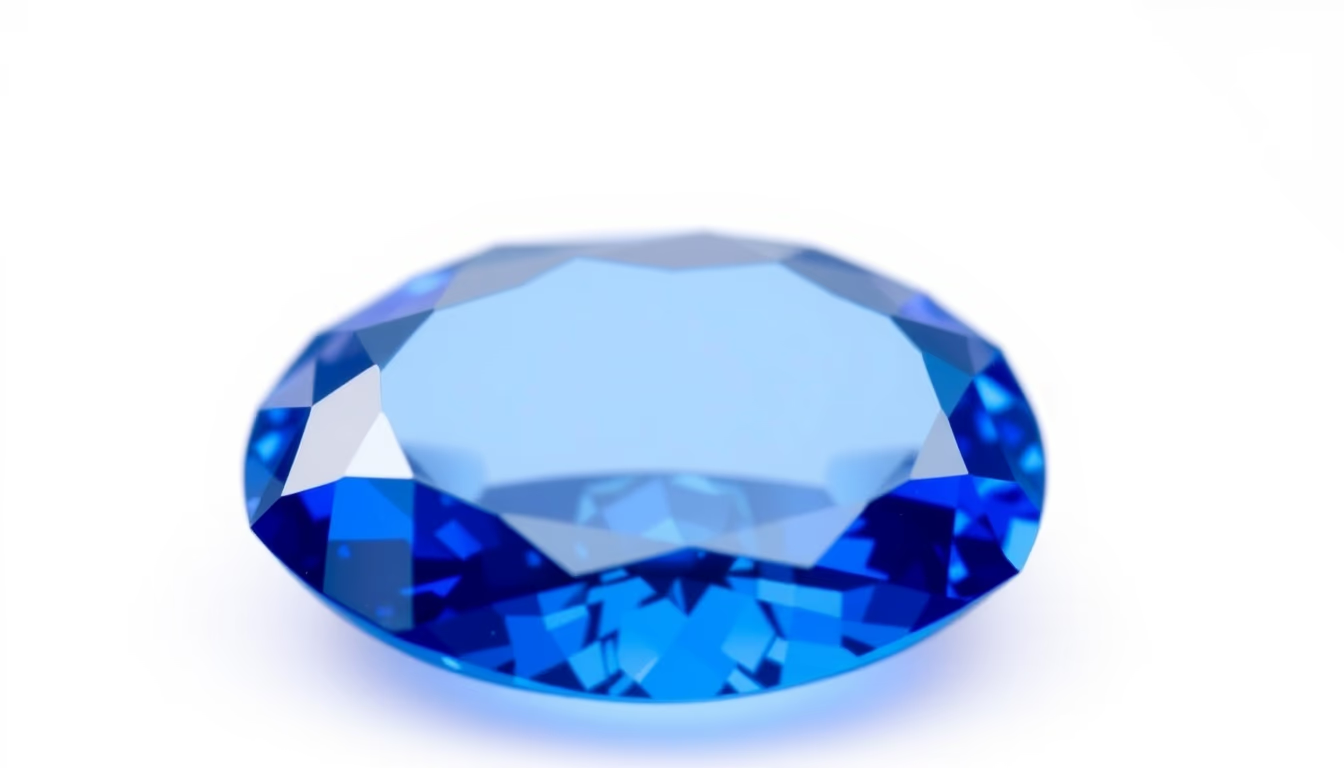
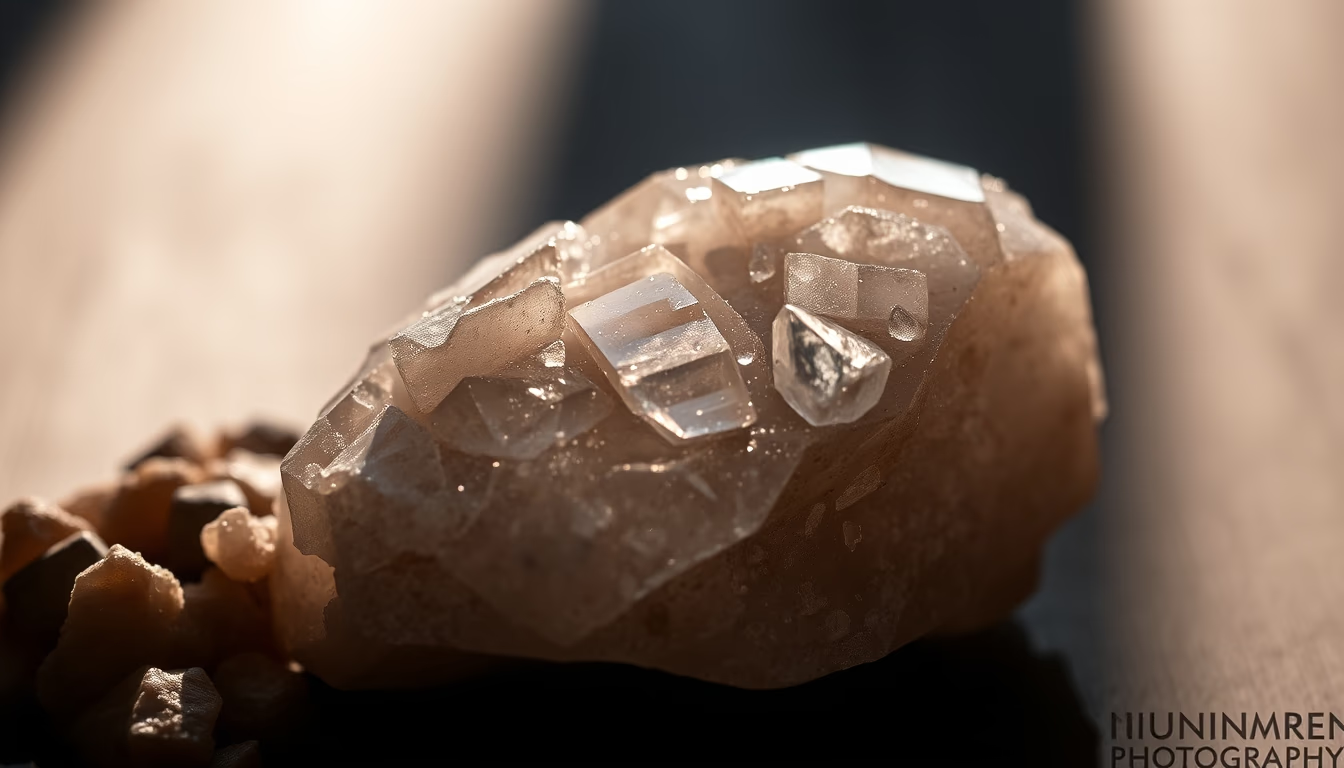
Lapis lazuli blue
1344×768 · AVIF · CC BY 4.0
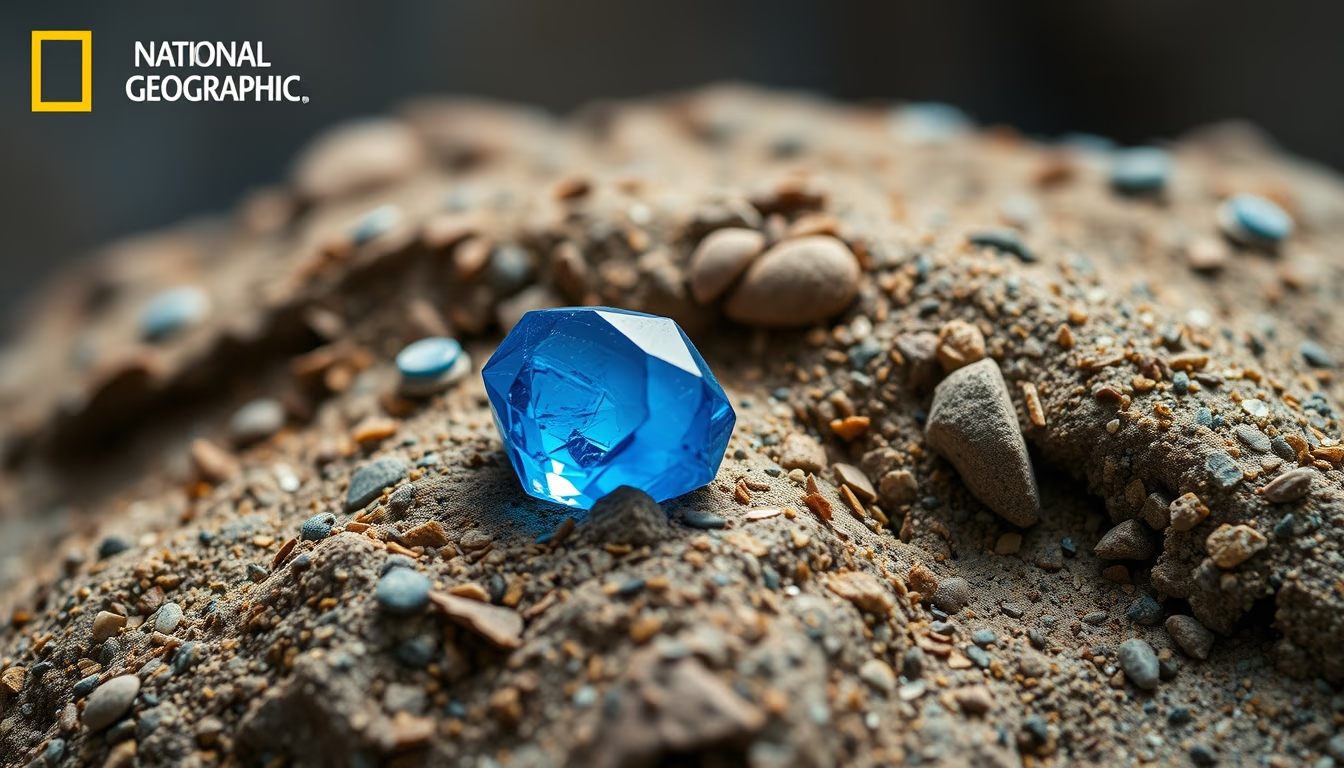
Lapis lazuli is a deep blue metamorphic rock mined for over 6,000 years in the mountains of Afghanistan.
About this subject
Lapis lazuli is a metamorphic rock composed mainly of lazurite, calcite, and pyrite, giving it a deep blue color with golden flecks. Its primary source is the Sar-e-Sang mines in the Kokcha Valley, Badakhshan province, Afghanistan, mined continuously since the Neolithic period. The Silk Road carried this gemstone across ancient civilizations.
In ancient Egypt, lapis lazuli was ground into ultramarine pigment for funerary art and used in Tutankhamun's death mask. Pharaohs associated it with the heavens and royalty. During the Renaissance, ultramarine pigment was more expensive than gold, reserved for the Virgin Mary's robes in paintings by artists like Giotto and Vermeer.
Beyond pigment, lapis lazuli is cut into cabochons for jewelry and decorative objects. Its hardness of 5 to 5.5 on the Mohs scale requires careful cutting. The most valued color is a uniform intense blue without white calcite veins. Today, demand remains high, especially in Asia and Europe, and Afghanistan remains the primary producer despite conflicts affecting legal mining.
The name lapis lazuli comes from Latin “lapis” (stone) and Persian “lazhward” (blue). It is the national gem of Afghanistan and a UNESCO geoheritage site. Artisanal mining in Badakhshan employs thousands of families using techniques that have changed little over millennia.
Frequently Asked Questions
What is lapis lazuli?
It is a deep blue metamorphic rock composed of lazurite, calcite, and pyrite. It has been used since antiquity as a gemstone and to produce ultramarine pigment.
Where is lapis lazuli found?
The primary source is the Sar-e-Sang mine in Afghanistan, active for over 6,000 years. Smaller deposits exist in Chile, Russia, and the United States.
How was lapis lazuli used historically?
In ancient Egypt, it was ground for paint and used in royal jewelry. During the Renaissance, ultramarine pigment was used in religious art, especially for the Virgin Mary's robes.
Direct URL
https://pub-c7d6a6ea828543ac903a74a341ccb2e1.r2.dev/imagens/lapis-lazuli-blue-national-geographic-style-p8.avifHow to credit
Include a visible link back to UtilizAí. Copy one of the snippets below:
<a href="https://xn--utiliza-eza.com/en/midia/imagens/lapis-lazuli-blue-national-geographic-style-p8">Lapis lazuli blue</a> by <a href="https://xn--utiliza-eza.com">UtilizAí</a>, licensed under <a href="https://creativecommons.org/licenses/by/4.0/">CC BY 4.0</a>.
[Lapis lazuli blue](https://xn--utiliza-eza.com/en/midia/imagens/lapis-lazuli-blue-national-geographic-style-p8) by [UtilizAí](https://xn--utiliza-eza.com), CC BY 4.0
License: CC-BY-4.0