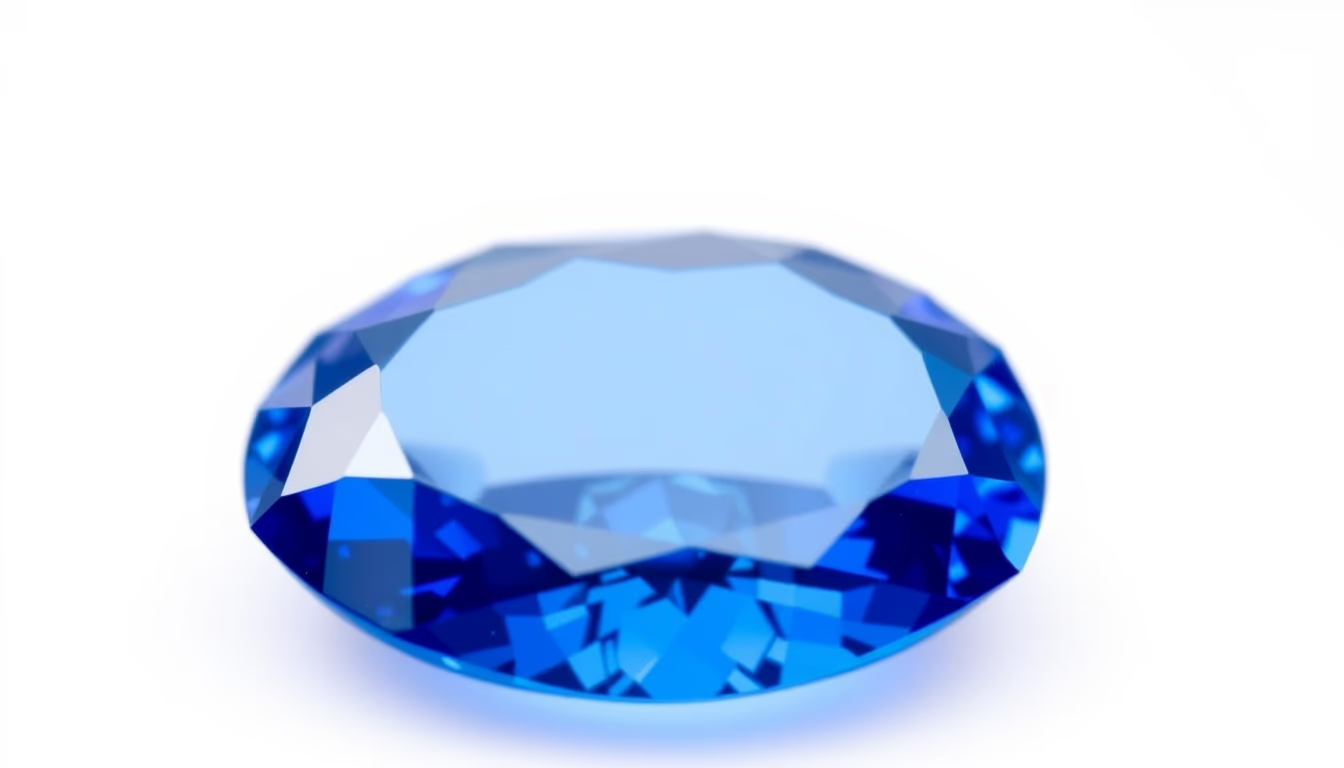
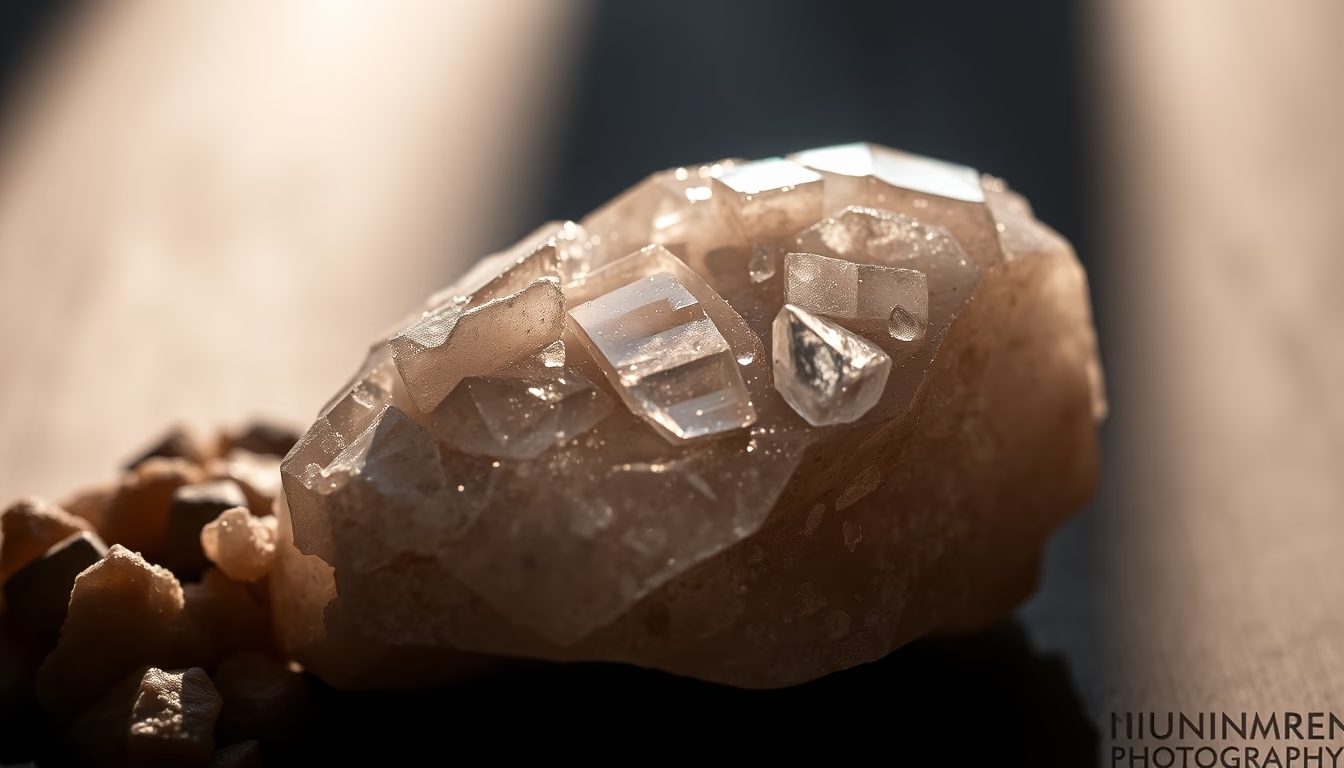
Lapis lazuli blue
1344×768 · AVIF · CC BY 4.0
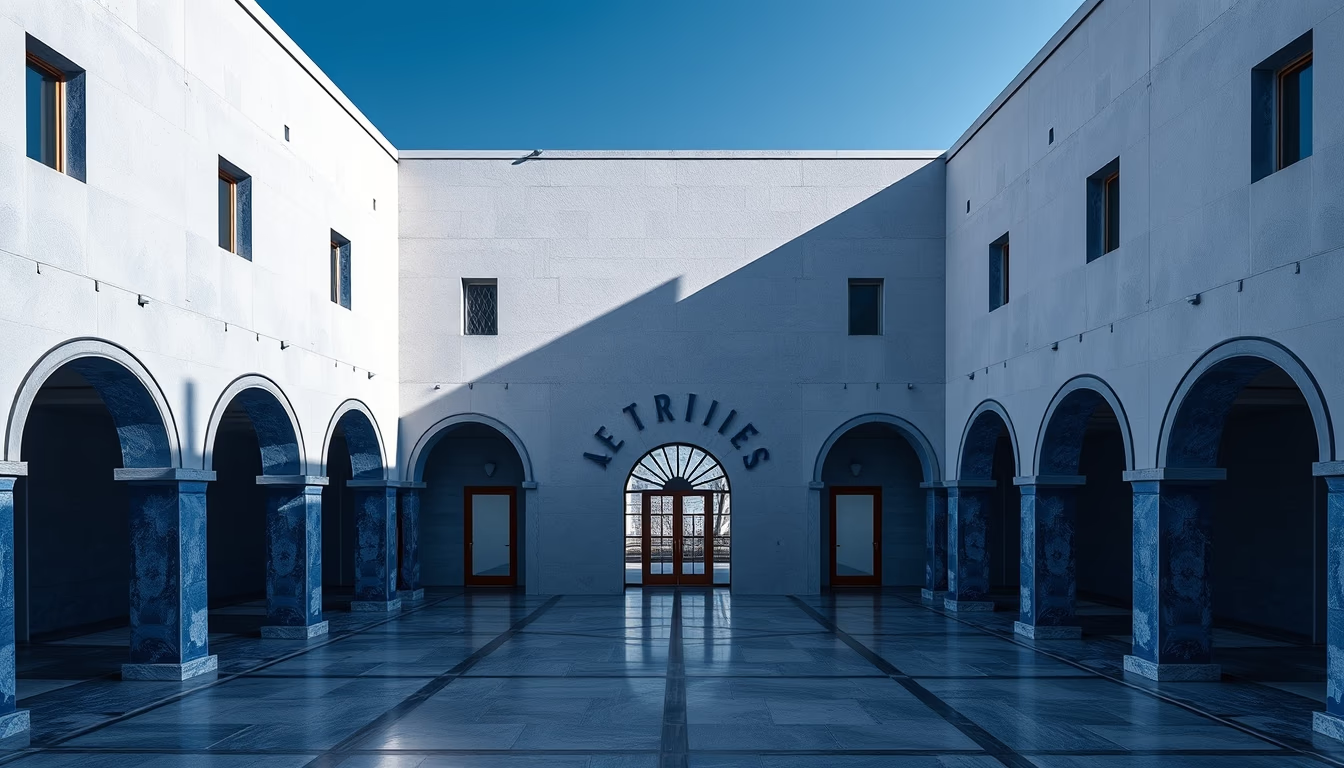
The intense blue of lapis lazuli, one of the oldest and most coveted gemstones, has fascinated civilizations for millennia.
About this subject
Lapis lazuli is a metamorphic rock composed mainly of lazurite, a silicate mineral that gives it its characteristic blue color, along with calcite and pyrite. It forms in contact metamorphic environments, with the Sar-e-Sang mines in Afghanistan being the most famous and ancient, having been in operation for over 6,000 years. Since Ancient Egypt, lapis lazuli has been mined and used in jewelry, amulets, and sculptures, such as the well-known sarcophagus of Tutankhamun. During the European Renaissance, the stone was ground to produce ultramarine pigment, the most valued blue of the time, used in masterpieces like Vermeer's "Girl with a Pearl Earring" and Giotto's frescoes. Natural ultramarine pigment from lapis lazuli was as expensive as gold, reserved for religious themes and noble figures. Today, lapis lazuli is also mined in Chile, Russia, and Pakistan, but Afghan material remains the purest and most valued. Its hardness on the Mohs scale ranges from 5 to 5.5, requiring careful handling to avoid scratches. Beyond its use in jewelry, the stone is appreciated by collectors and in decorative objects such as spheres, sculptures, and inlays in furniture. The deep blue of lapis lazuli is often associated with royalty, wisdom, and truth, and is considered the stone of the throat chakra in spiritual practices.
Frequently Asked Questions
What is the origin of the name lapis lazuli?
The name comes from Latin lapis (stone) and Persian lazhward (blue), referring to its characteristic color.
How was lapis lazuli used in Ancient Egypt?
In Ancient Egypt, the stone was ground for eyeshadow (kohl), used in amulets like the scarab, and inlaid in jewelry and sarcophagi, such as Tutankhamun's.
What is ultramarine pigment?
Ultramarine is an intense blue pigment obtained by grinding lapis lazuli. It was the most expensive and valued blue in the Renaissance, used by artists like Vermeer and Michelangelo.
Direct URL
https://pub-c7d6a6ea828543ac903a74a341ccb2e1.r2.dev/imagens/lapis-lazuli-blue-architectural-photography-p10.avifHow to credit
Include a visible link back to UtilizAí. Copy one of the snippets below:
<a href="https://xn--utiliza-eza.com/en/midia/imagens/lapis-lazuli-blue-architectural-photography-p10">Lapis lazuli blue</a> by <a href="https://xn--utiliza-eza.com">UtilizAí</a>, licensed under <a href="https://creativecommons.org/licenses/by/4.0/">CC BY 4.0</a>.
[Lapis lazuli blue](https://xn--utiliza-eza.com/en/midia/imagens/lapis-lazuli-blue-architectural-photography-p10) by [UtilizAí](https://xn--utiliza-eza.com), CC BY 4.0
License: CC-BY-4.0