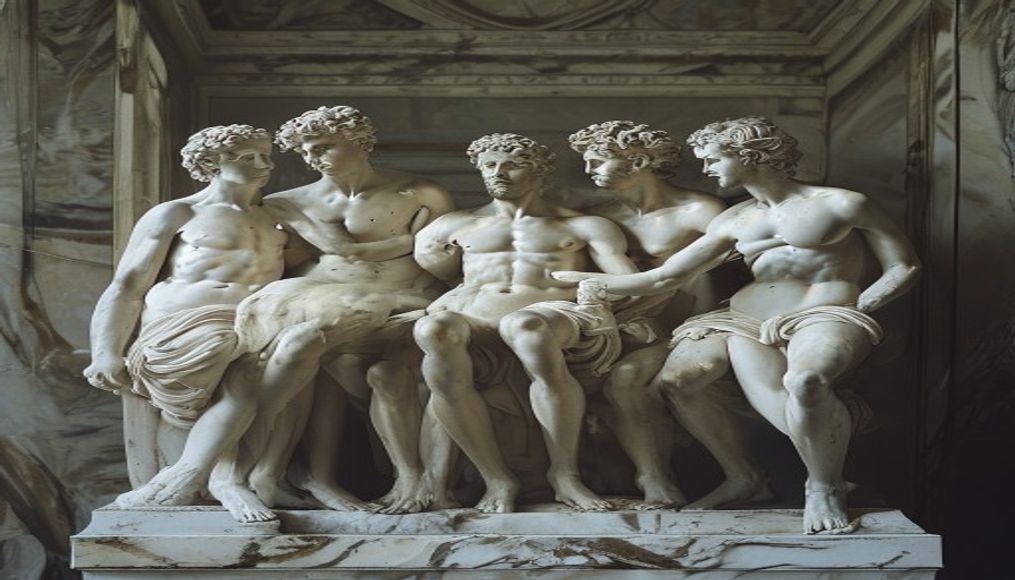
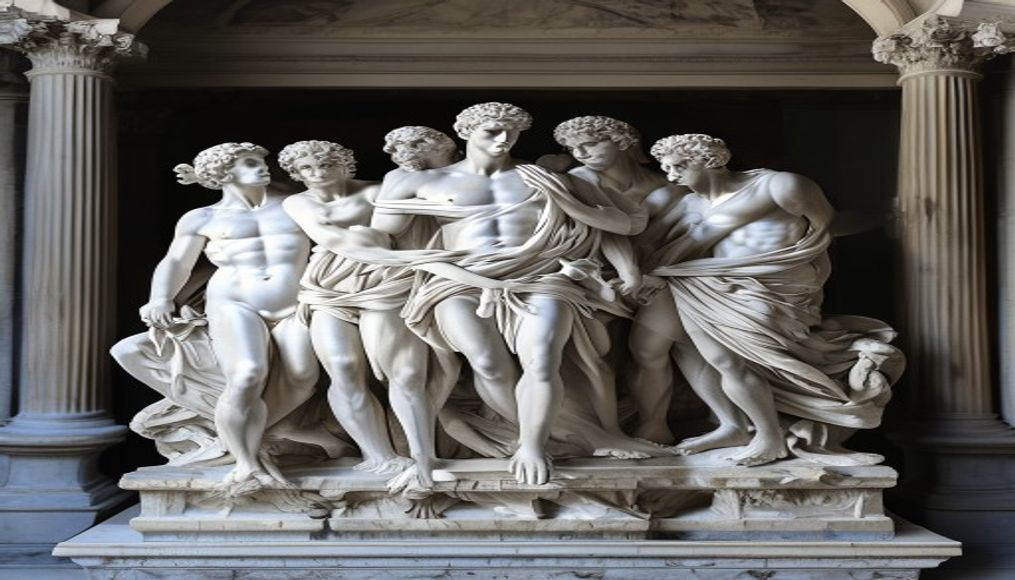
Laocoon group sculpture
1344×768 · AVIF · CC BY 4.0
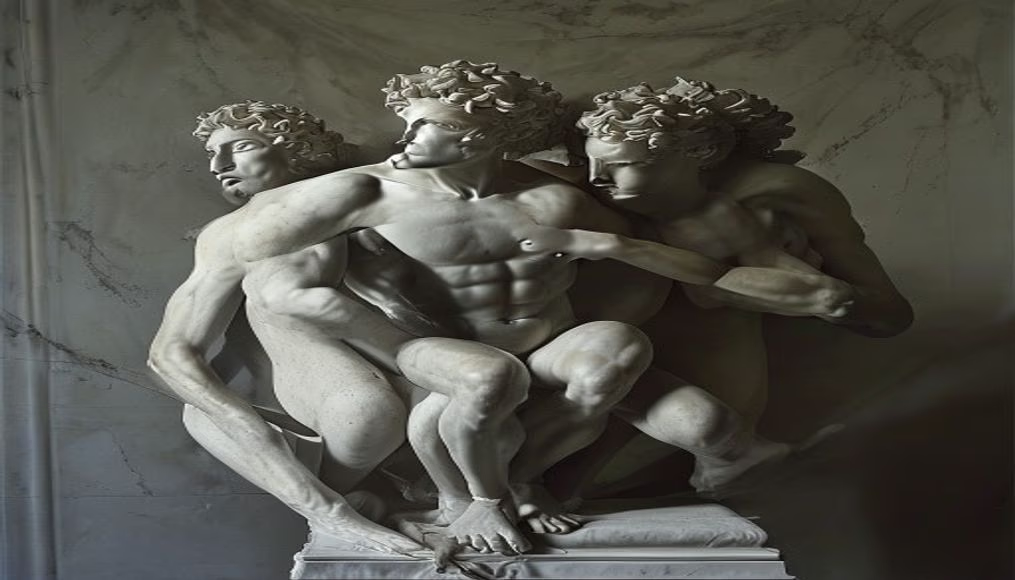
The Laocoon Group is a Hellenistic sculpture depicting the Trojan priest and his sons being attacked by sea serpents.
About this subject
The Laocoon Group, also known as Laocoon and His Sons, is one of the most iconic sculptures of classical antiquity. Attributed to the Rhodian sculptors Agesander, Athenodoros, and Polydorus, the work was carved in marble during the Hellenistic period (c. 200 BC). The scene depicts the Trojan priest Laocoon and his sons being strangled by sea serpents, an episode recounted in Virgil's Aeneid. Laocoon had warned the Trojans about the Trojan Horse, and the gods, favoring the Greeks, sent the serpents to silence him.
The sculpture was discovered in 1506 in a vineyard near the Esquiline Hill in Rome and quickly acquired by Pope Julius II. Its discovery had an immediate impact on the Renaissance, influencing artists such as Michelangelo, who drew inspiration from the contorted figures and expression of agony. The work has been restored several times over the centuries; notably, Laocoon's right arm was originally found bent backward but was restored in an extended position during the Renaissance. In 1906, the original arm was rediscovered, and since then the sculpture has been re-restored to reflect the original pose.
Today, the Laocoon Group is displayed in the Vatican Museums, in the Octagonal Court. It is considered a masterpiece of Hellenism, celebrated for its anatomical realism and dramatic representation of human suffering. The dynamic composition, with intertwined bodies and muscular tension, has influenced not only sculpture but also Western painting and literature. The work is often cited as an example of baroque style avant la lettre, due to its intense pathos and movement.
Frequently Asked Questions
Where is the Laocoon Group currently located?
The sculpture is displayed in the Vatican Museums, in the Octagonal Court in Rome.
Who sculpted the Laocoon Group?
The work is attributed to the Rhodian sculptors Agesander, Athenodoros, and Polydorus.
What is the mythological significance of the depicted scene?
Laocoon was a Trojan priest who warned about the Trojan Horse; the gods sent serpents to kill him and his sons as punishment.
Direct URL
https://pub-c7d6a6ea828543ac903a74a341ccb2e1.r2.dev/imagens/laocoon-group-sculpture-high-fashion-editorial-p2.avifHow to credit
Include a visible link back to UtilizAí. Copy one of the snippets below:
<a href="https://xn--utiliza-eza.com/en/midia/imagens/laocoon-group-sculpture-high-fashion-editorial-p2">Laocoon group sculpture</a> by <a href="https://xn--utiliza-eza.com">UtilizAí</a>, licensed under <a href="https://creativecommons.org/licenses/by/4.0/">CC BY 4.0</a>.
[Laocoon group sculpture](https://xn--utiliza-eza.com/en/midia/imagens/laocoon-group-sculpture-high-fashion-editorial-p2) by [UtilizAí](https://xn--utiliza-eza.com), CC BY 4.0
License: CC-BY-4.0