Knitting needles wool
1344×768 · AVIF · CC BY 4.0
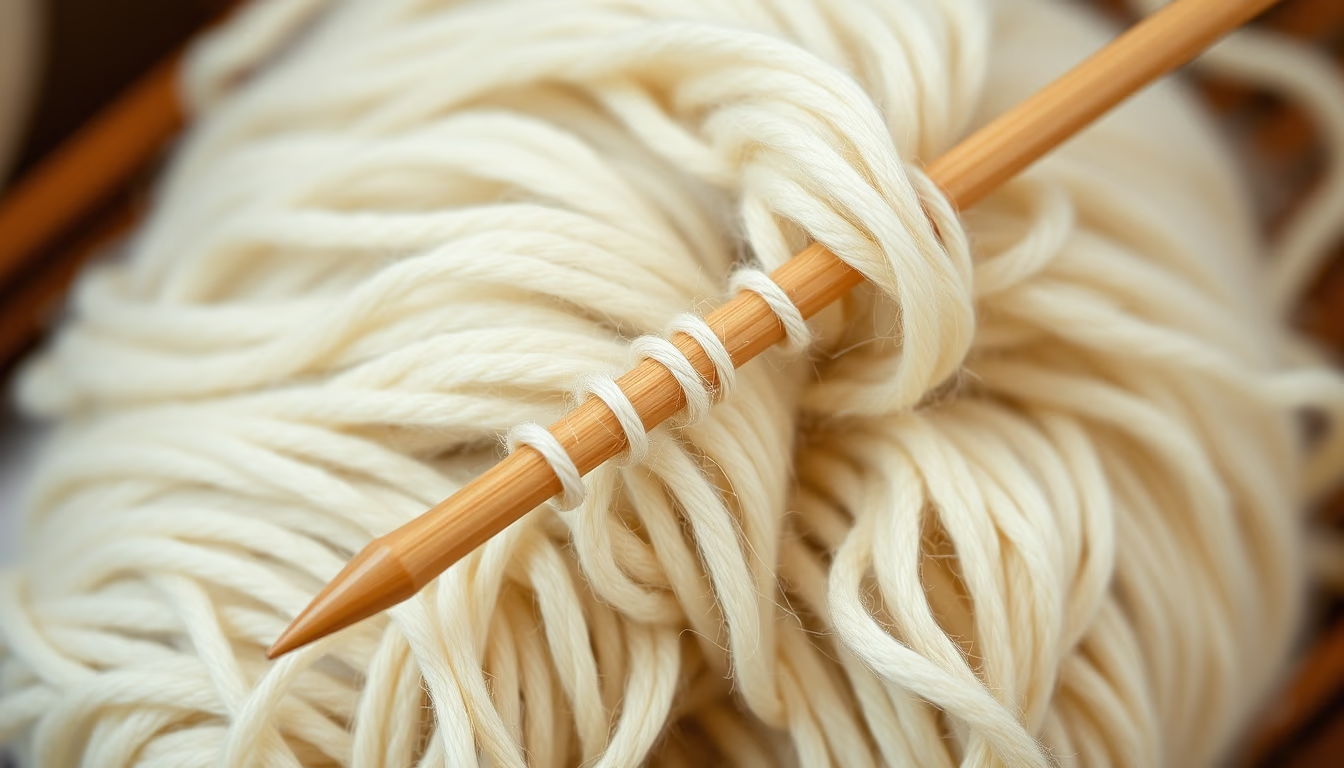
Knitting needles and balls of wool: an ancient craft combining technique, creativity, and well-being, practiced worldwide.
About this subject
Knitting is a textile technique dating back to at least the 11th century, with early examples found in Egypt and medieval Europe. Using two or more needles, the craftsman interlaces yarns of wool, cotton, or synthetic fibers to create continuous fabrics. Wool, a natural fiber from sheep, remains the most traditional material due to its thermal and elastic properties.
In Brazil, knitting arrived with European immigrants and became a popular pastime and income source, especially in rural communities of the South and Southeast. Today, the slow fashion movement values handmade knitting as a sustainable alternative to industrial production, reducing textile waste. Knitting circles in parks and cafés promote mental health and social bonding, a practice known as "yarn bombing" when applied in public spaces.
The basic technique involves stitches like stockinette and garter, which combine to create patterns such as ribbing, check, and cables. Needles of different thicknesses (2 mm to 20 mm) produce anything from delicate lace to thick blankets. Popular projects include scarves, hats, sweaters, and amigurumi, small knitted dolls originating from Japan.
Fun fact: knitting was used during wars to make uniforms and blankets, and today it is the subject of neuroscientific studies showing stress reduction and improved focus. It is estimated that over 200 million people knit worldwide, with strong traditions in countries like Iceland, Peru, and Scotland, where knitting is part of cultural identity.
Frequently Asked Questions
What is the origin of knitting?
The earliest known knitting dates back to the 11th century, with fragments found in Egypt. The technique spread across medieval Europe, initially practiced by men in professional guilds.
What are the health benefits of knitting?
Studies show that knitting reduces stress, anxiety, and blood pressure, while improving fine motor coordination and focus. The repetitive movements have a meditative effect.
How to choose the best wool for beginners?
It is recommended to use medium-weight yarn (such as DK or worsted) and needles size 4 to 5 mm. Light colors help see stitches, and natural fibers like sheep wool offer better elasticity.
Direct URL
https://pub-c7d6a6ea828543ac903a74a341ccb2e1.r2.dev/imagens/knitting-needles-wool-national-geographic-style-p3.avifHow to credit
Include a visible link back to UtilizAí. Copy one of the snippets below:
<a href="https://xn--utiliza-eza.com/en/midia/imagens/knitting-needles-wool-national-geographic-style-p3">Knitting needles wool</a> by <a href="https://xn--utiliza-eza.com">UtilizAí</a>, licensed under <a href="https://creativecommons.org/licenses/by/4.0/">CC BY 4.0</a>.
[Knitting needles wool](https://xn--utiliza-eza.com/en/midia/imagens/knitting-needles-wool-national-geographic-style-p3) by [UtilizAí](https://xn--utiliza-eza.com), CC BY 4.0
License: CC-BY-4.0