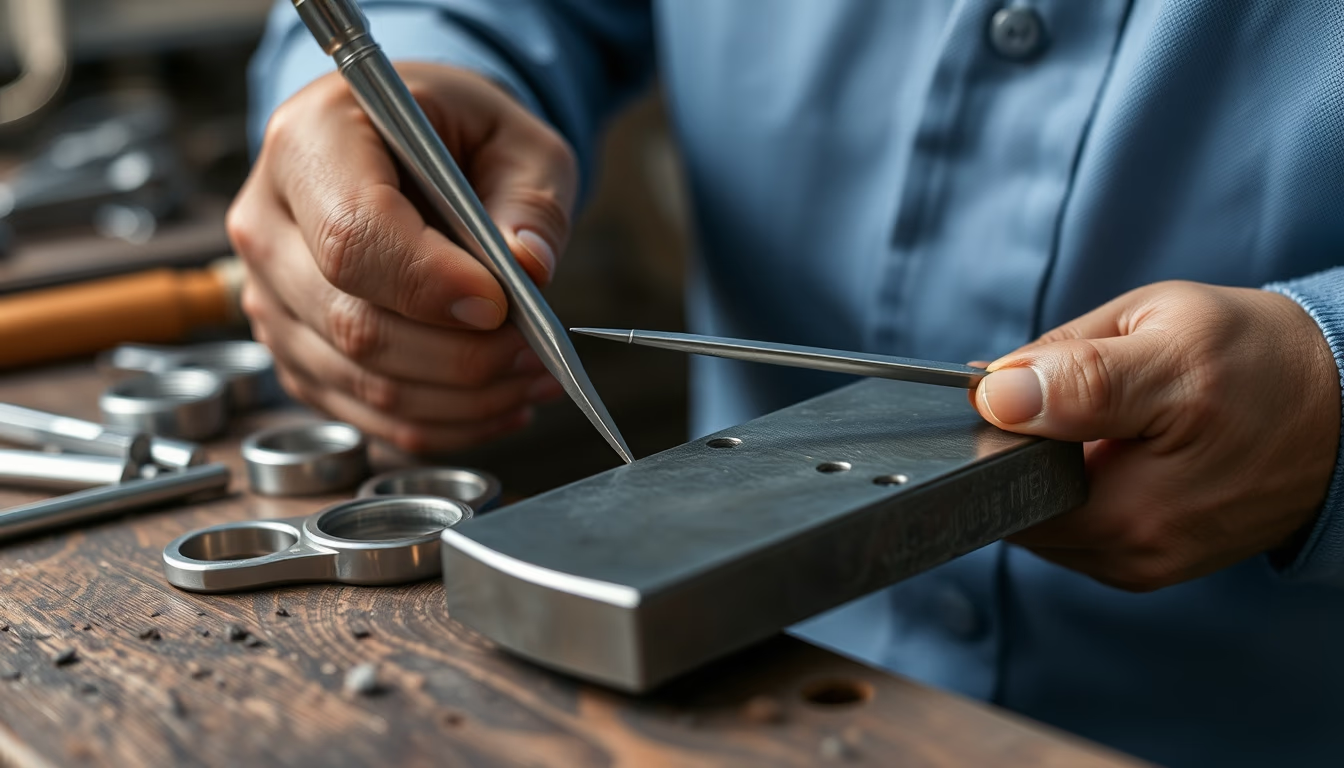
Knitting needles wool
1344×768 · AVIF · CC BY 4.0
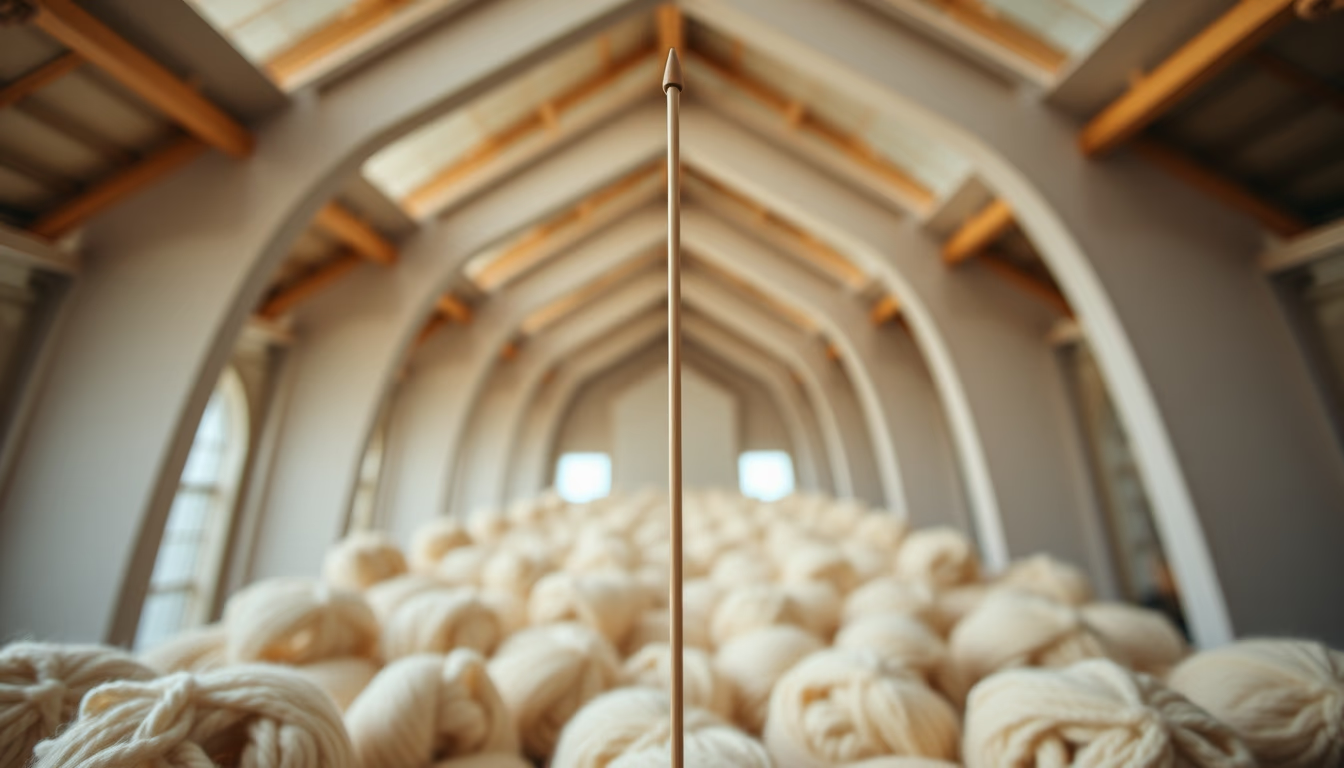
Knitting needles and balls of wool: essential tools of a centuries-old craft that combines creativity, tradition, and textile functionality.
About this subject
Knitting is a textile technique that interlaces yarn, usually wool, using two long needles. Its origins trace back to ancient Egypt around the 11th century, though more refined examples appeared in medieval Europe. Knitting needles, traditionally made of wood, metal, or bamboo, vary in thickness and length, affecting stitch tension and size. Wool, sourced from sheep, goats, or rabbits, provides unique thermal insulation and moisture absorption.
Culturally, knitting established itself as both a domestic and commercial craft. In Scotland, Aran and Fair Isle patterns gained global fame, while in Latin America knitting blended with indigenous traditions. During the 20th century, knitting was associated with women's work, but in recent decades it has attracted new followers, including men and younger generations, as a form of artistic expression and sustainable practice.
Technically, needle thickness (measured in millimeters) and yarn weight determine the gauge, or how many stitches fit in 10 centimeters. Thicker yarns, like bulky wool, produce warm, textured garments, while fine yarns, such as fingering weight, are ideal for lace and socks. The choice of needle material also affects knitting speed: metal needles glide faster, while wooden ones provide more grip for beginners.
Today, knitting is experiencing a revival driven by online communities, platforms like Ravelry, and the slow fashion movement. The practice is recognized for its therapeutic benefits, reducing stress and improving focus. The use of needles and wool continues to evolve, with innovations such as hand-dyed yarns and ergonomic needles that make the craft accessible to everyone.
Frequently Asked Questions
What is the origin of knitting?
Knitting has uncertain origins, but the earliest known examples come from ancient Egypt around the 11th century. The technique spread across Europe during the Middle Ages, with knitting guilds in Spain and France.
What are the main types of knitting needles?
The most common needles are straight (for flat pieces), circular (for tubes), and double-pointed (for socks and sleeves). They can be made of wood, bamboo, metal, or plastic, each with specific advantages.
Why has knitting become popular again?
Knitting has seen a revival thanks to the internet, which connects crafters globally, and the slow fashion movement, which values handmade and sustainable garments. Studies also show that knitting reduces stress and improves mental health.
Direct URL
https://pub-c7d6a6ea828543ac903a74a341ccb2e1.r2.dev/imagens/knitting-needles-wool-architectural-photography-p5.avifHow to credit
Include a visible link back to UtilizAí. Copy one of the snippets below:
<a href="https://xn--utiliza-eza.com/en/midia/imagens/knitting-needles-wool-architectural-photography-p5">Knitting needles wool</a> by <a href="https://xn--utiliza-eza.com">UtilizAí</a>, licensed under <a href="https://creativecommons.org/licenses/by/4.0/">CC BY 4.0</a>.
[Knitting needles wool](https://xn--utiliza-eza.com/en/midia/imagens/knitting-needles-wool-architectural-photography-p5) by [UtilizAí](https://xn--utiliza-eza.com), CC BY 4.0
License: CC-BY-4.0