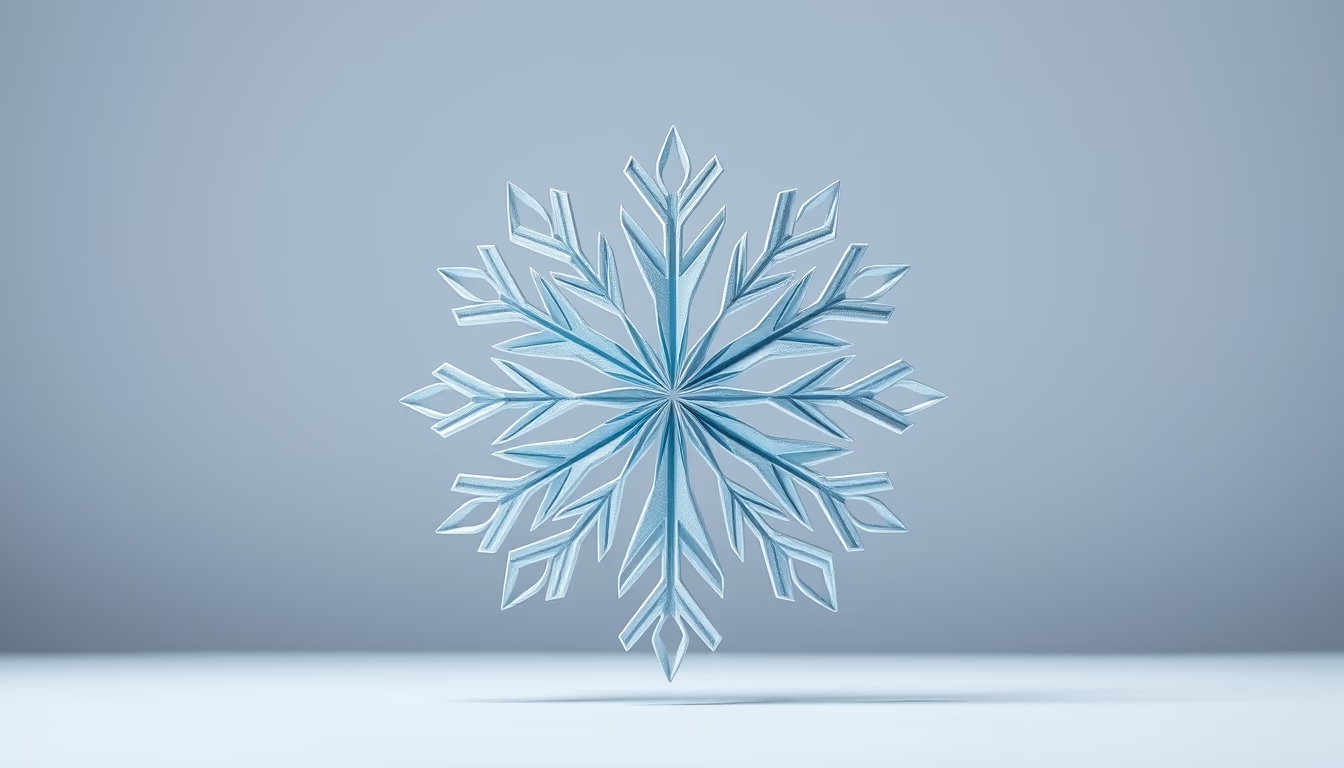
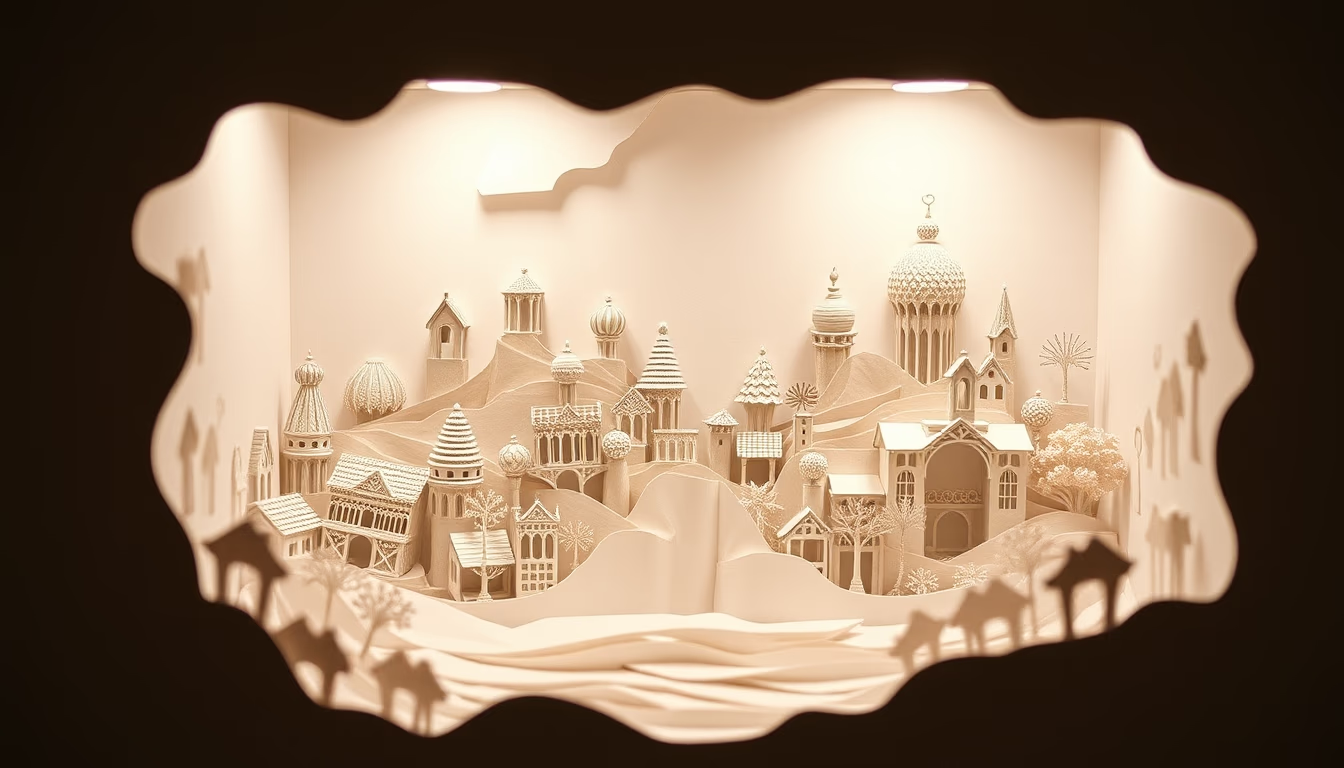
Kirigami snowflake
1344×768 · AVIF · CC BY 4.0
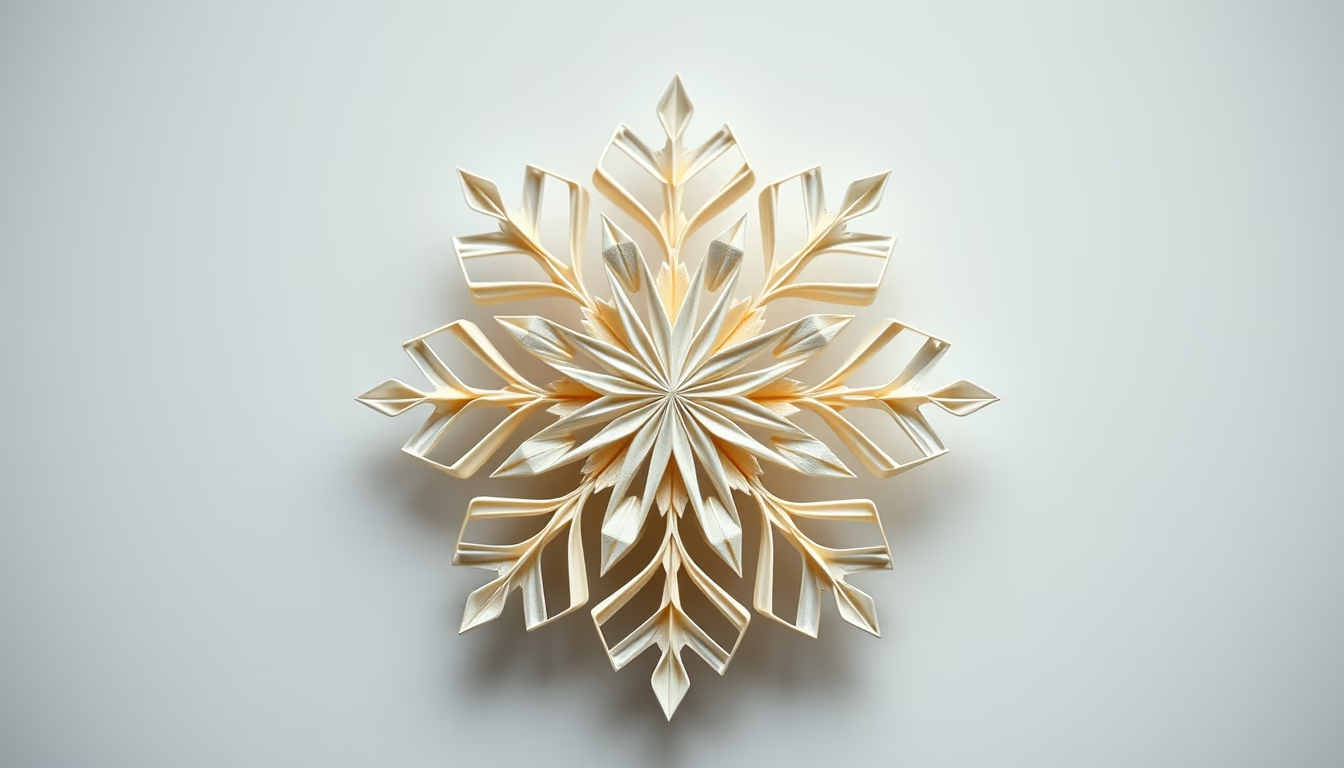
Kirigami snowflake: the Japanese art of paper cutting that turns a simple sheet into delicate geometric structures inspired by nature.
About this subject
Kirigami is a variation of origami that allows cutting the paper, creating cutout and three-dimensional shapes. Unlike pure origami, which only folds, kirigami uses scissors or craft knives to remove parts of the paper, resulting in openwork patterns like snowflakes. This technique originated in 7th-century Japan, associated with Shinto religious ceremonies, but became globally popular in the 20th century as decorative art.
Natural snowflakes have hexagonal symmetry, and kirigami snowflakes explore that geometry. Each paper snowflake is unique, like real ones, due to the combination of folds and cuts. Radial symmetry is achieved by folding the paper into six or eight parts before cutting, generating patterns that repeat around a common center. This technique is used for seasonal decorations, especially in winter and Christmas, both in Japan and the West.
In Japanese culture, kirigami is more than a hobby: it is a form of meditation and artistic expression, often taught in schools to develop fine motor skills. The kirigami snowflake appears in cards, window ornaments, and art installations. Due to paper fragility, artists need surgical precision to avoid tearing fine details. Complex works can take hours to complete.
Curiosity: the largest kirigami snowflake ever recorded measured over 2 meters in diameter, created by an artist team in China in 2015. Beyond traditional washi paper, modern artists use vellum, cardboard, and even thin metal for durable versions. The kirigami snowflake exemplifies how an ancient tradition adapts to universal themes of nature.
Frequently Asked Questions
What is the difference between kirigami and origami?
In origami, only folding is allowed; in kirigami, cuts are also made in the paper to create openwork or three-dimensional patterns.
Why do kirigami snowflakes have symmetry?
Symmetry is achieved by folding the paper into equal parts (like 6 or 8) before cutting, ensuring the pattern repeats radially, mimicking real snowflakes.
What type of paper is used for kirigami snowflakes?
Traditional washi paper is common, but thin papers like copy paper, vellum, or cardstock also work. The choice depends on the desired complexity and durability.
Direct URL
https://pub-c7d6a6ea828543ac903a74a341ccb2e1.r2.dev/imagens/kirigami-snowflake-documentary-nature-style-fresh13.avifHow to credit
Include a visible link back to UtilizAí. Copy one of the snippets below:
<a href="https://xn--utiliza-eza.com/en/midia/imagens/kirigami-snowflake-documentary-nature-style-fresh13">Kirigami snowflake</a> by <a href="https://xn--utiliza-eza.com">UtilizAí</a>, licensed under <a href="https://creativecommons.org/licenses/by/4.0/">CC BY 4.0</a>.
[Kirigami snowflake](https://xn--utiliza-eza.com/en/midia/imagens/kirigami-snowflake-documentary-nature-style-fresh13) by [UtilizAí](https://xn--utiliza-eza.com), CC BY 4.0
License: CC-BY-4.0