Kelp forest underwater
1344×768 · AVIF · CC BY 4.0
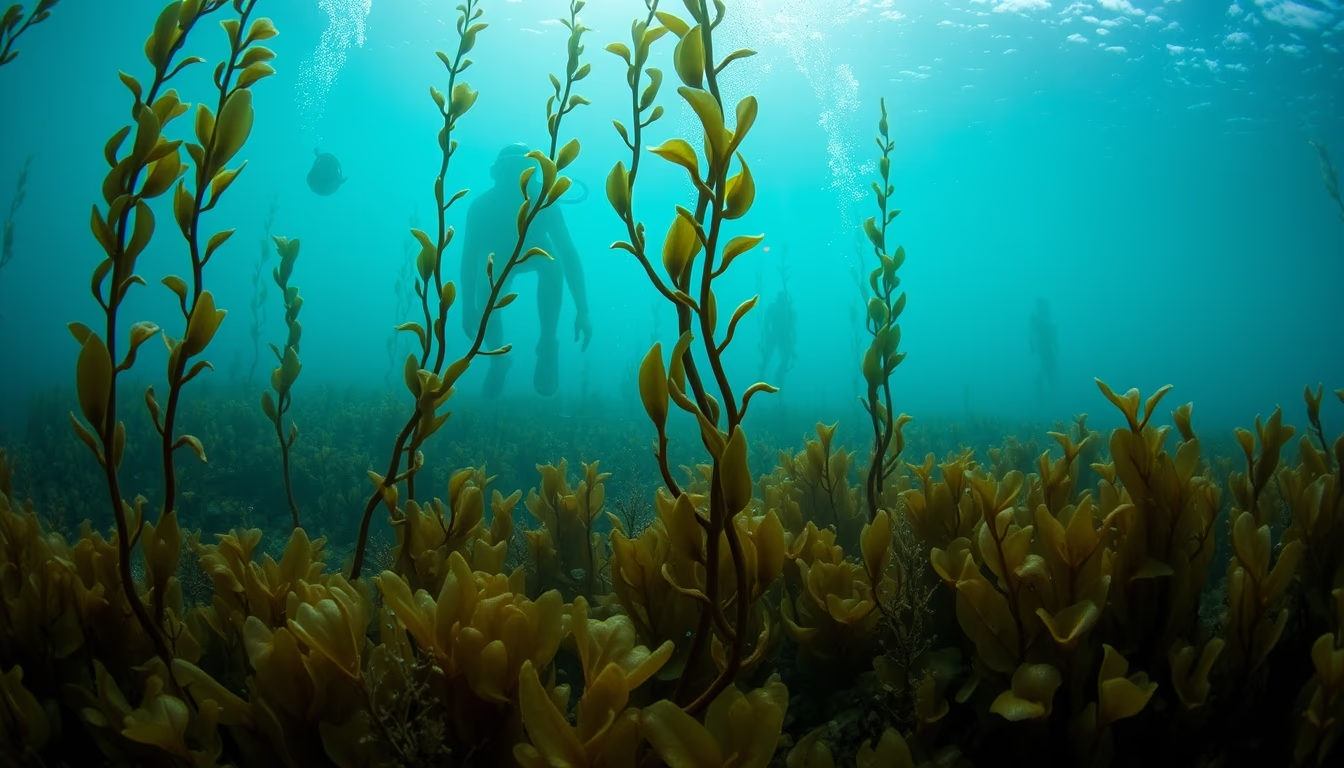
As florestas de kelp são ecossistemas subaquáticos formados por algas gigantes, vitais para a vida marinha e o clima global.
Sobre o tema
As florestas de kelp são formações subaquáticas dominadas por algas pardas da ordem Laminariales, capazes de atingir dezenas de metros de altura. Elas se desenvolvem em águas frias e ricas em nutrientes, típicas de costas temperadas e polares, como as da Califórnia, Japão, Chile e Nova Zelândia. Essas estruturas tridimensionais criam habitats complexos que abrigam uma enorme diversidade de espécies marinhas, incluindo peixes, crustáceos, moluscos e mamíferos como as lontras-marinhas.
Além de servirem como berçário e refúgio para a fauna, as florestas de kelp desempenham um papel relevante na regulação climática. Elas absorvem dióxido de carbono da atmosfera através da fotossíntese, funcionando como sumidouros de carbono tão eficientes quanto as florestas tropicais. Estima-se que os ecossistemas de kelp sequestrem cerca de 200 milhões de toneladas de CO2 por ano globalmente. Suas frondes também reduzem a energia das ondas, ajudando a proteger a linha costeira da erosão.
Apesar de sua resiliência, as florestas de kelp enfrentam ameaças crescentes. O aquecimento dos oceanos, a poluição e a proliferação descontrolada de ouriços-do-mar, impulsionada pela sobrepesca de seus predadores naturais, têm provocado declínios alarmantes em regiões como a costa da Califórnia, onde mais de 90% das florestas de kelp já desapareceram em algumas áreas. Iniciativas de restauração, como o replantio de algas e o manejo de ouriços, estão em andamento para reverter esse quadro.
Uma curiosidade notável é a taxa de crescimento do kelp: sob condições ideais, algumas espécies podem crescer até 30 centímetros por dia, o que as torna um dos organismos de crescimento mais rápido do planeta. Essa característica as posiciona como uma fonte promissora de biomassa para biocombustíveis e outros produtos sustentáveis.
Perguntas frequentes
O que são florestas de kelp?
São ecossistemas subaquáticos formados por algas pardas gigantes do grupo Laminariales. Elas criam habitats tridimensionais que abrigam grande biodiversidade marinha.
Onde as florestas de kelp são encontradas?
Ocorrem em águas frias e ricas em nutrientes ao longo de costas temperadas e polares, como no Pacífico Norte, Atlântico Norte, Chile, Japão e Nova Zelândia.
Qual a importância das florestas de kelp para o clima?
Atuam como importantes sumidouros de carbono, absorvendo CO2 da atmosfera. Além disso, protegem a costa contra erosão e fornecem habitat essencial para a vida marinha.
URL direta
https://pub-c7d6a6ea828543ac903a74a341ccb2e1.r2.dev/imagens/kelp-forest-underwater-documentary-photography-p0.avifComo creditar
Inclua um link visível de volta pro UtilizAí. Copie um dos snippets abaixo:
<a href="https://xn--utiliza-eza.com/midia/imagens/kelp-forest-underwater-documentary-photography-p0">Kelp forest underwater</a> by <a href="https://xn--utiliza-eza.com">UtilizAí</a>, licensed under <a href="https://creativecommons.org/licenses/by/4.0/">CC BY 4.0</a>.
[Kelp forest underwater](https://xn--utiliza-eza.com/midia/imagens/kelp-forest-underwater-documentary-photography-p0) by [UtilizAí](https://xn--utiliza-eza.com), CC BY 4.0
Licença: CC-BY-4.0