Kabuki stage japanese
1344×768 · AVIF · CC BY 4.0
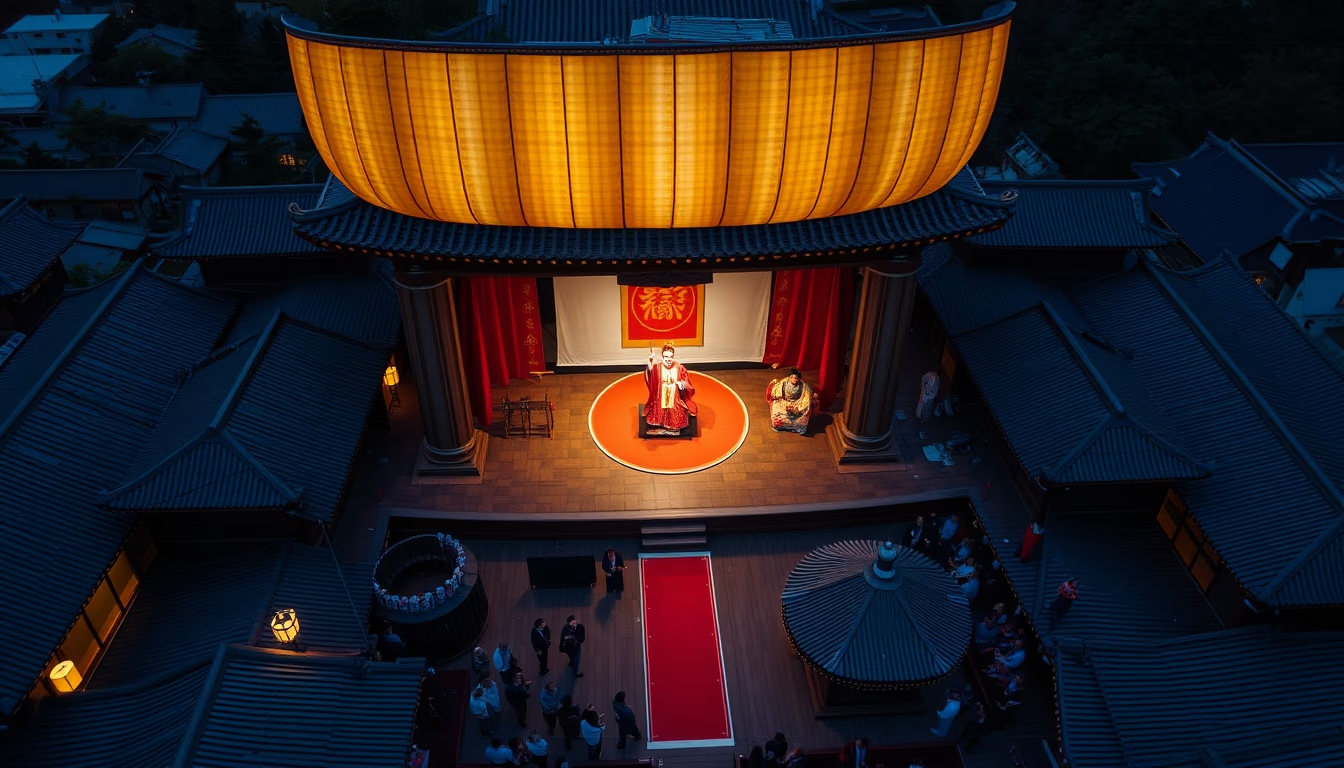
The kabuki stage in traditional Japanese theater features elaborate sets and rotating mechanisms for dramatic and visually striking performances.
About this subject
Kabuki is a traditional Japanese performing art that originated in the Edo period around the 17th century. Recognized by UNESCO as an Intangible Cultural Heritage, kabuki combines dance, music, and dramatic acting in plays depicting historical events, moral conflicts, and romances. The kabuki stage is a feat of theatrical engineering, designed to maximize visual impact and storytelling.
The main stage is flanked by a walkway called hanamichi, which extends into the audience, allowing dramatic actor entrances and exits. The mawari-butai, or revolving stage, is an 18th-century innovation that enables quick scene changes without interrupting the play. Additionally, trapdoors (seri) lift actors or props from below, creating surprising effects.
Kabuki actors wear elaborate makeup (kumadori) to express emotions and personalities, with symbolic colors such as red for heroism and blue for villainy. Costumes are opulent, with heavy kimonos and fans, and the performance includes stylized movements. The audience participates with encouraging shouts (kakegoe) during key moments.
Kabuki has influenced filmmakers like Akira Kurosawa and continues to attract audiences in Japan and abroad. Despite its historical origin, kabuki remains vibrant with traditional repertoire and contemporary adaptations, serving as a central expression of Japanese culture.
Frequently Asked Questions
What does the word kabuki mean?
The word kabuki derives from the Japanese verb 'kabuku', meaning 'to lean' or 'to behave in an eccentric manner'. Originally, the term referred to something outlandish or shocking, reflecting the innovative and dramatic style of the theater.
How does the revolving stage in kabuki work?
The mawari-butai is a circular stage that rotates on a central axis. It allows quick scene changes while the play continues, creating smooth transitions. It was introduced in the 18th century and is one of kabuki's most iconic innovations.
What are the main elements of the kabuki stage?
The main elements are: the main stage (butai), the hanamichi walkway through the audience, the revolving stage mawari-butai, the trapdoors seri for special effects, and the actors' dressing room gakuya. Every detail is designed to enhance the visual experience.
Direct URL
https://pub-c7d6a6ea828543ac903a74a341ccb2e1.r2.dev/imagens/kabuki-stage-japanese-aerial-drone-shot-fresh6.avifHow to credit
Include a visible link back to UtilizAí. Copy one of the snippets below:
<a href="https://xn--utiliza-eza.com/en/midia/imagens/kabuki-stage-japanese-aerial-drone-shot-fresh6">Kabuki stage japanese</a> by <a href="https://xn--utiliza-eza.com">UtilizAí</a>, licensed under <a href="https://creativecommons.org/licenses/by/4.0/">CC BY 4.0</a>.
[Kabuki stage japanese](https://xn--utiliza-eza.com/en/midia/imagens/kabuki-stage-japanese-aerial-drone-shot-fresh6) by [UtilizAí](https://xn--utiliza-eza.com), CC BY 4.0
License: CC-BY-4.0