Grande Mancha Vermelha de Júpiter
1344×768 · AVIF · CC BY 4.0
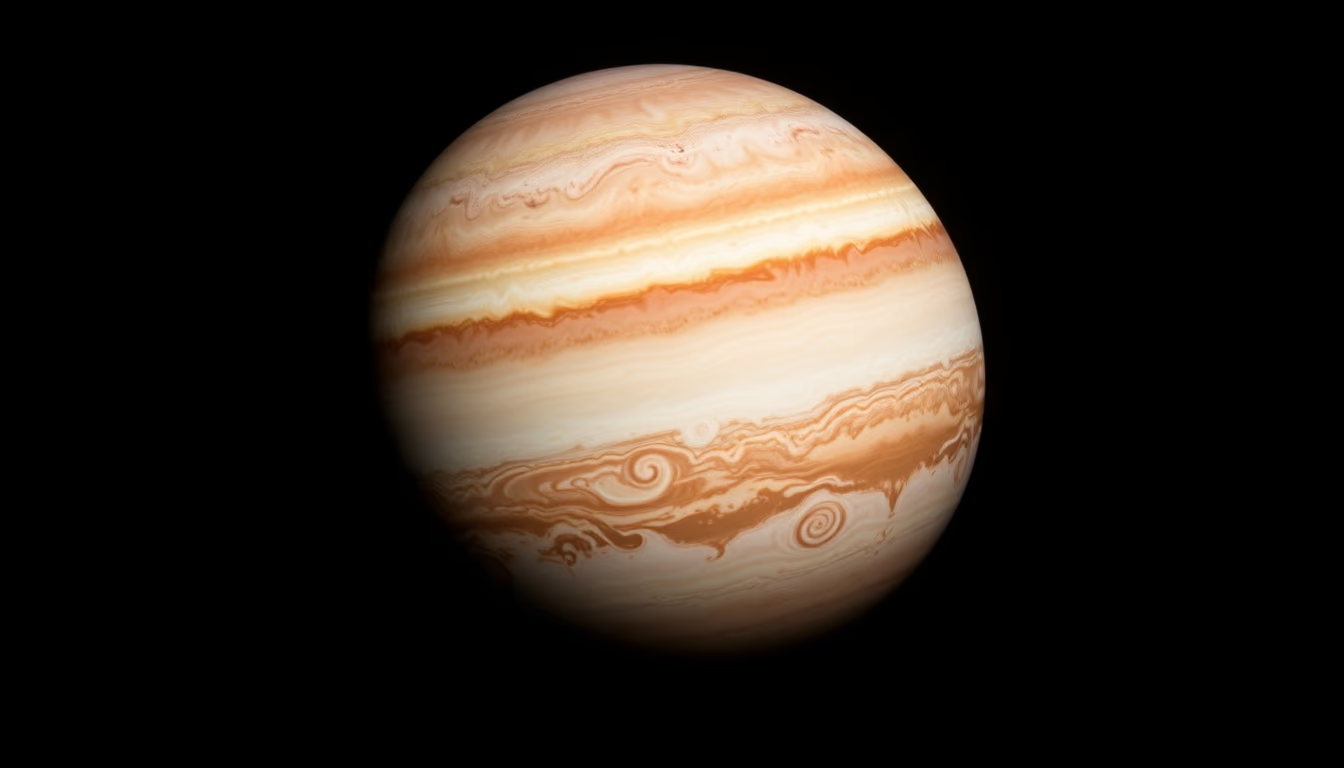
A Grande Mancha Vermelha de Júpiter é uma tempestade anticiclônica persistente, maior que a Terra, observada há séculos no gigante gasoso.
Sobre o tema
A Grande Mancha Vermelha é uma das características mais icônicas de Júpiter, o maior planeta do Sistema Solar. Trata-se de uma tempestade anticiclônica de alta pressão, localizada no hemisfério sul do planeta, na região de sua Zona Equatorial Sul. Estima-se que a tempestade tenha pelo menos 350 anos de idade, com observações registradas desde o século XVII, possivelmente pelo astrônomo Giovanni Cassini em 1665. No entanto, algumas evidências sugerem que a mancha observada naquela época pode ser diferente da atual, devido a possíveis interrupções e reformações.
Quanto ao seu tamanho, a Grande Mancha Vermelha é colossal: tem dimensões que variam, mas atualmente mede cerca de 16.000 km de largura, o que significa que poderia engolir a Terra inteira. No passado, era ainda maior; no século XIX, estima-se que tinha até 40.000 km de diâmetro. Observações da sonda Voyager na década de 1970 e do telescópio Hubble nas últimas décadas mostram que a mancha está diminuindo gradualmente, embora sua cor e intensidade variem. A coloração avermelhada característica ainda não é totalmente compreendida, mas acredita-se que seja resultado de compostos químicos como fósforo, enxofre ou hidrocarbonetos na atmosfera joviana.
A dinâmica da mancha é complexa. Os ventos em suas bordas atingem velocidades de até 432 km/h, enquanto o centro é relativamente calmo. A tempestade é tão duradoura porque Júpiter não possui uma superfície sólida que dissipe sua energia; além disso, ela é alimentada por correntes de gás e pela rotação rápida do planeta (um dia em Júpiter dura apenas cerca de 10 horas). A Grande Mancha Vermelha é um laboratório natural para o estudo de fenômenos meteorológicos extremos em atmosferas planetárias, fornecendo insights sobre a dinâmica de fluidos e a estabilidade de tempestades em gigantes gasosos.
Apesar de sua constância, a mancha interage com outras estruturas atmosféricas, como faixas e zonas, e ocasionalmente engole tempestades menores. A sonda Juno, em órbita de Júpiter desde 2016, tem fornecido dados detalhados sobre sua estrutura vertical, mostrando que a tempestade se estende por centenas de quilômetros abaixo das nuvens. O estudo contínuo da Grande Mancha Vermelha ajuda astrônomos a entender não apenas Júpiter, mas também a evolução de atmosferas em outros planetas e exoplanetas.
Perguntas frequentes
Por que a Grande Mancha Vermelha é vermelha?
A coloração avermelhada ainda não é totalmente explicada, mas acredita-se que seja causada por compostos químicos como fósforo, enxofre ou hidrocarbonetos que reagem com a radiação solar na atmosfera superior de Júpiter. A cor varia com o tempo, indicando mudanças na composição química ou na altitude das nuvens.
A Grande Mancha Vermelha está diminuindo de tamanho?
Sim, observações mostram que a mancha vem encolhendo gradualmente. No século XIX, seu diâmetro era de cerca de 40.000 km, e atualmente mede aproximadamente 16.000 km. O motivo da redução ainda é estudado, mas pode estar relacionado a mudanças na dinâmica atmosférica joviana.
A Grande Mancha Vermelha pode desaparecer completamente?
É possível. Os cientistas não sabem ao certo se a tempestade se dissipará ou se estabilizará em um tamanho menor. Dados da sonda Juno e de telescópios ajudam a monitorar sua evolução. O desaparecimento não seria imediato, mas poderia ocorrer ao longo de décadas ou séculos.
URL direta
https://pub-c7d6a6ea828543ac903a74a341ccb2e1.r2.dev/imagens/jupiter-great-red-spot-magazine-editorial-p9.avifComo creditar
Inclua um link visível de volta pro UtilizAí. Copie um dos snippets abaixo:
<a href="https://xn--utiliza-eza.com/midia/imagens/jupiter-great-red-spot-magazine-editorial-p9">Grande Mancha Vermelha de Júpiter</a> by <a href="https://xn--utiliza-eza.com">UtilizAí</a>, licensed under <a href="https://creativecommons.org/licenses/by/4.0/">CC BY 4.0</a>.
[Grande Mancha Vermelha de Júpiter](https://xn--utiliza-eza.com/midia/imagens/jupiter-great-red-spot-magazine-editorial-p9) by [UtilizAí](https://xn--utiliza-eza.com), CC BY 4.0
Licença: CC-BY-4.0