Jade carved chinese
1344×768 · AVIF · CC BY 4.0
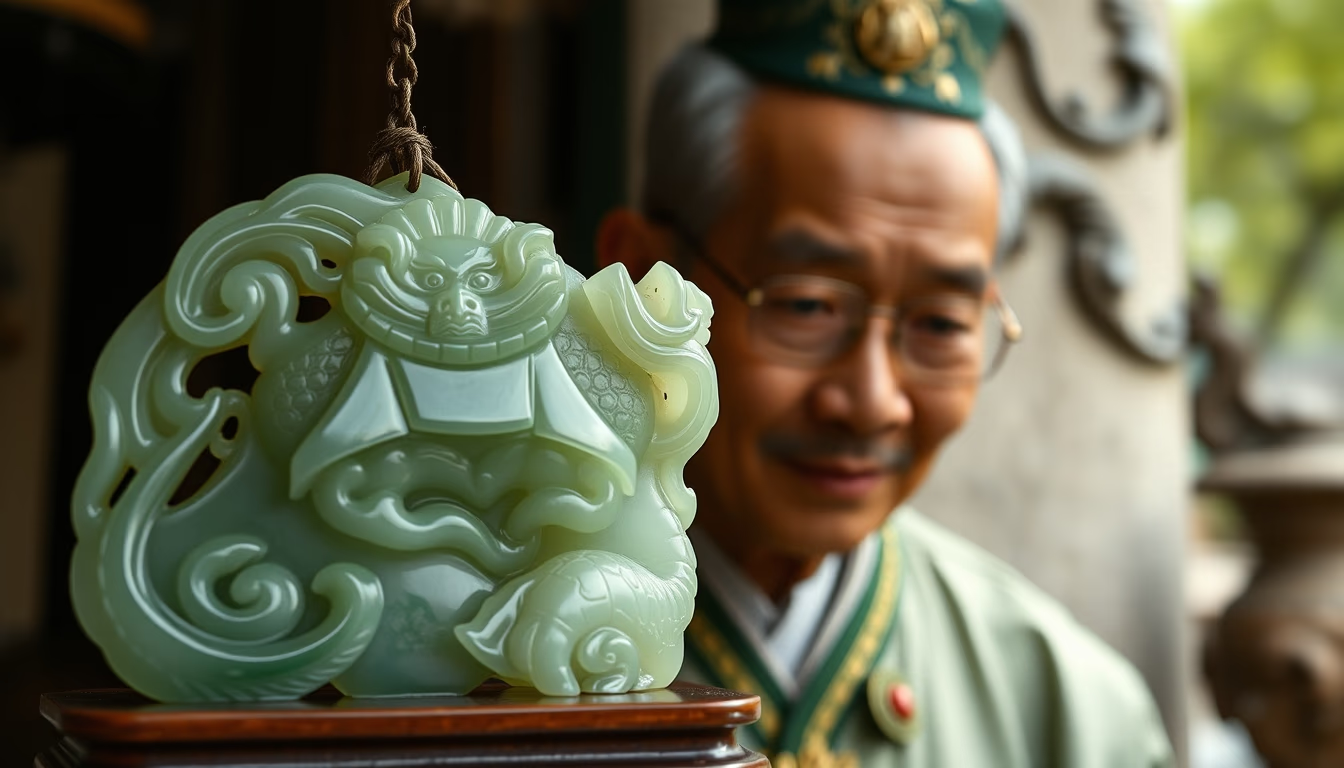
Image of Chinese carved jade, a millenary art symbolizing purity and virtue in Chinese culture, used in rituals and adornments since the Neolithic period.
About this subject
Chinese carved jade represents one of the oldest and most continuous artistic traditions in the world. Dating back to the Neolithic period (around 5000 BCE), jade was worked with quartz tools and sand, requiring extraordinary patience and skill. Early pieces include ritual objects such as the bi (perforated disc) and the cong (square cylinder), associated with ceremonies venerating ancestors and the earth.
During the Shang dynasty (1600-1046 BCE), jade acquired strong political and religious symbolism, used in ceremonial weapons and elite adornments. In the Zhou dynasty (1046-256 BCE), jade carving became more sophisticated with zoomorphic and geometric forms, reflecting Confucian philosophy that associated jade with human virtues: benevolence, righteousness, wisdom, courage, and purity.
From the Han dynasty (206 BCE-220 CE) onward, jade became popular in funerary objects, most famously the jade burial suits made of thousands of plaques sewn with gold wire, believed to preserve the body. Under the Qing dynasty (1644-1912), carving reached its technical peak, with imperial green jadeite and intricate sculptures of mythical figures, vases, and birds.
Two main types of jade are used in China: nephrite, a fibrous mineral more common and available in various colors (white, green, brown), and jadeite, rarer and more translucent, prized for its emerald-green color. Jade remains a symbol of status, protection, and harmony; ancient pieces are highly sought after by collectors and museums, such as the Palace Museum in Beijing and the Smithsonian National Museum of Natural History.
Frequently Asked Questions
What does jade symbolize in Chinese culture?
Jade symbolizes purity, virtue, wisdom, courage, and benevolence. For Confucians, its physical qualities (hardness, luster, sound) reflected moral ideals, and it was considered the 'gem of heaven'.
What is the difference between nephrite and jadeite?
Nephrite is a more common fibrous mineral with varied colors (white, green, brown) and greater toughness. Jadeite is rarer, more translucent, and vividly colored, like imperial emerald green, making it more prized in modern jewelry.
Where does Chinese jade come from?
The main historical source of nephrite in China is the Hotan region in Xinjiang. Jadeite was imported from Myanmar (Burma), especially from the Qing dynasty onward.
Direct URL
https://pub-c7d6a6ea828543ac903a74a341ccb2e1.r2.dev/imagens/jade-carved-chinese-film-grain-authentic-p6.avifHow to credit
Include a visible link back to UtilizAí. Copy one of the snippets below:
<a href="https://xn--utiliza-eza.com/en/midia/imagens/jade-carved-chinese-film-grain-authentic-p6">Jade carved chinese</a> by <a href="https://xn--utiliza-eza.com">UtilizAí</a>, licensed under <a href="https://creativecommons.org/licenses/by/4.0/">CC BY 4.0</a>.
[Jade carved chinese](https://xn--utiliza-eza.com/en/midia/imagens/jade-carved-chinese-film-grain-authentic-p6) by [UtilizAí](https://xn--utiliza-eza.com), CC BY 4.0
License: CC-BY-4.0