Iot sensor industrial
1344×768 · AVIF · CC BY 4.0
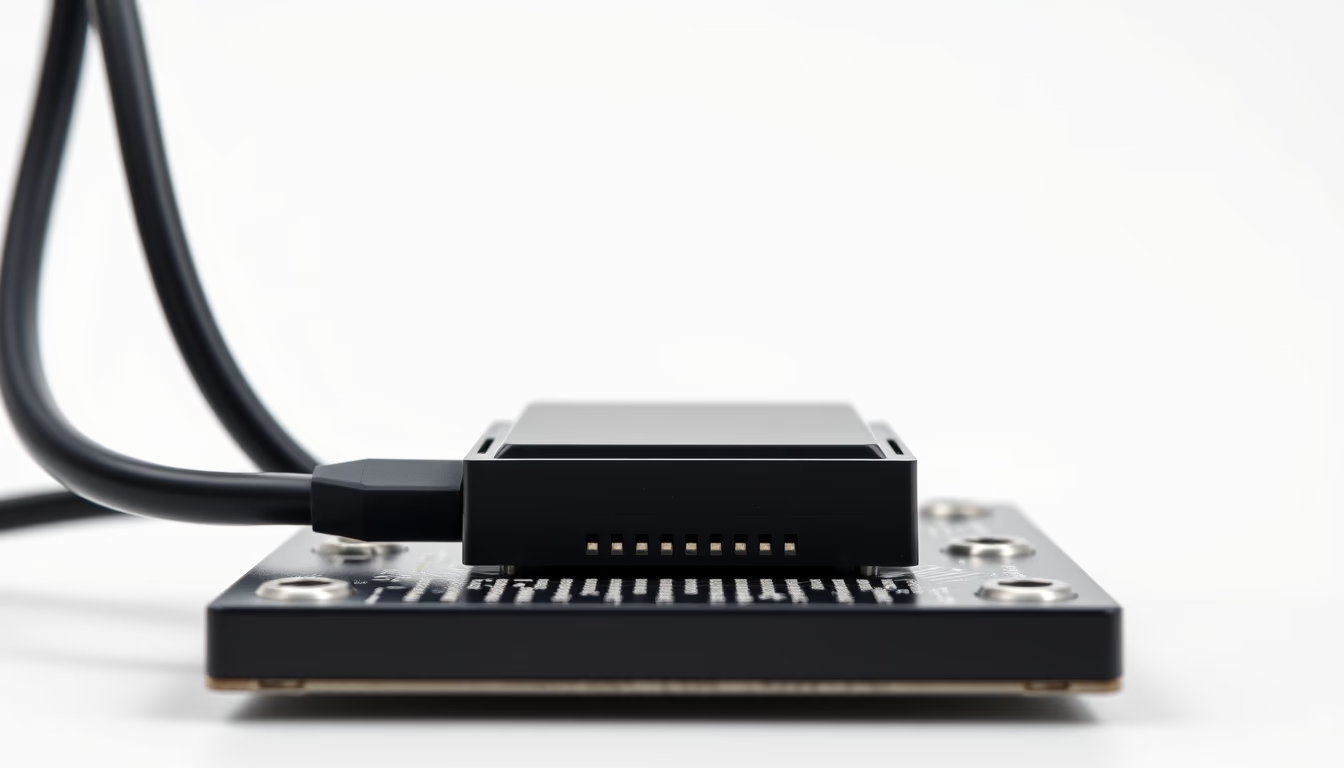
Industrial IoT sensors monitor temperature, vibration, and pressure in machinery, optimizing predictive maintenance and reducing unplanned downtime.
About this subject
Industrial IoT sensors are connected devices that collect real-time data from physical assets such as motors, pumps, and turbines. They measure variables like temperature, humidity, vibration, pressure, and electrical current, transmitting the information to cloud or edge computing analytics platforms. This technology underpins Industry 4.0, enabling factories to make data-driven decisions and automate processes.
In Brazil, adoption is growing especially in oil and gas, agribusiness, and manufacturing sectors. For instance, sensors on oil platforms detect leaks early, preventing environmental disasters. In agriculture, sensors in silos monitor grain temperature and humidity, preventing post-harvest losses. A McKinsey study estimates that industrial IoT could generate up to $3.7 trillion in global economic value by 2030, with predictive maintenance and operational efficiency leading the way.
Security of these sensors is critical: they are targets of cyberattacks that can disrupt production. Therefore, protocols like MQTT with TLS encryption are standard, along with private 5G networks for low latency. The trend for 2026 is integration with artificial intelligence, where sensors make autonomous decisions, such as adjusting conveyor belt speed without human intervention.
Interesting fact: the first industrial IoT sensor was created in the 1990s at Carnegie Mellon University, when a refrigerator was connected to the internet to monitor beverage quantity. Today, tiny sensors less than 1 cm in size can be embedded in machine bearings to predict failures up to 30 days in advance.
Frequently Asked Questions
What are the main benefits of industrial IoT sensors?
Cost reduction through predictive maintenance, increased operational efficiency, improved worker safety, and reduced unplanned downtime.
Can industrial IoT sensors operate in harsh environments like high temperatures or vibrations?
Yes. Industrial sensors are built with rugged enclosures (IP67 or higher) and can operate in temperature ranges from -40°C to +125°C, depending on the model.
What is the difference between an IoT sensor and a regular sensor?
A regular sensor only measures and displays data locally. An IoT sensor adds network connectivity, enabling remote data transmission, integration into larger systems, and real-time analysis.
Direct URL
https://pub-c7d6a6ea828543ac903a74a341ccb2e1.r2.dev/imagens/iot-sensor-industrial-commercial-product-photography-p6.avifHow to credit
Include a visible link back to UtilizAí. Copy one of the snippets below:
<a href="https://xn--utiliza-eza.com/en/midia/imagens/iot-sensor-industrial-commercial-product-photography-p6">Iot sensor industrial</a> by <a href="https://xn--utiliza-eza.com">UtilizAí</a>, licensed under <a href="https://creativecommons.org/licenses/by/4.0/">CC BY 4.0</a>.
[Iot sensor industrial](https://xn--utiliza-eza.com/en/midia/imagens/iot-sensor-industrial-commercial-product-photography-p6) by [UtilizAí](https://xn--utiliza-eza.com), CC BY 4.0
License: CC-BY-4.0