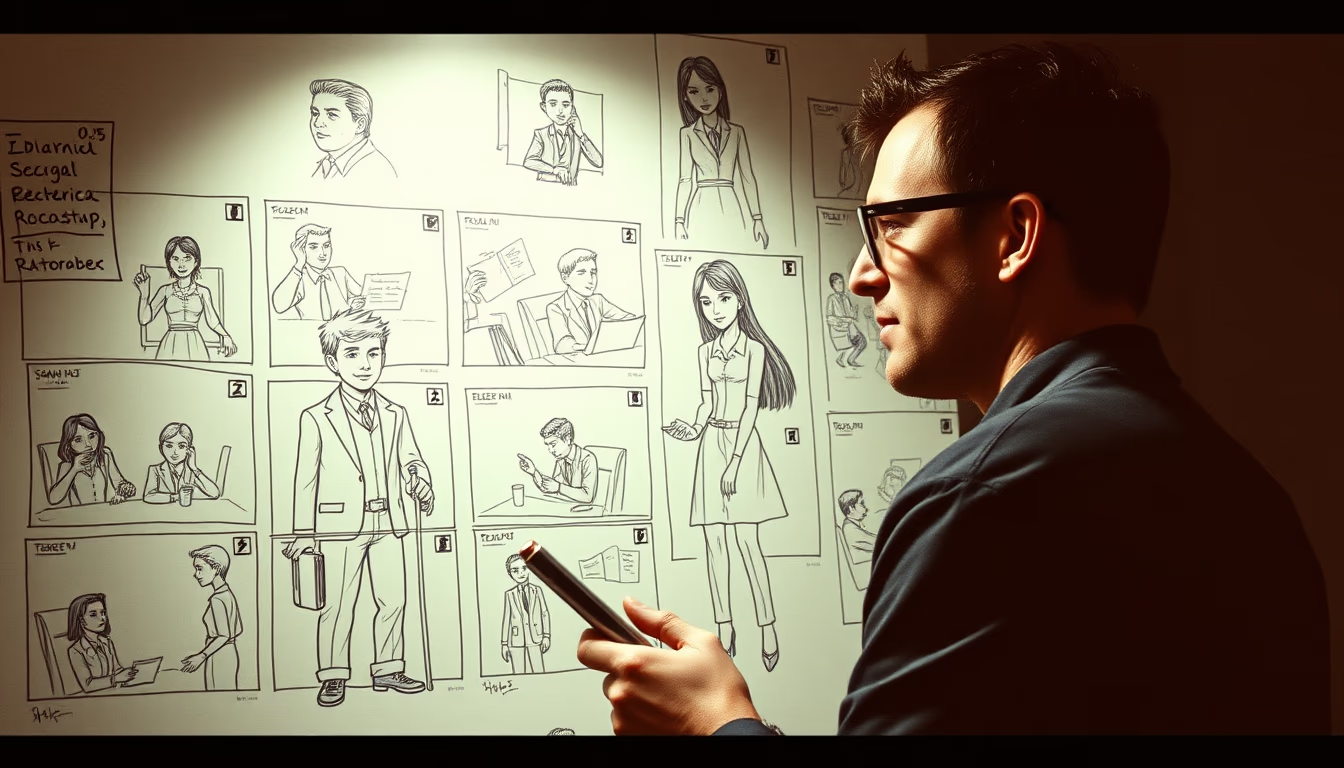
Inking pen workshop
1344×768 · AVIF · CC BY 4.0
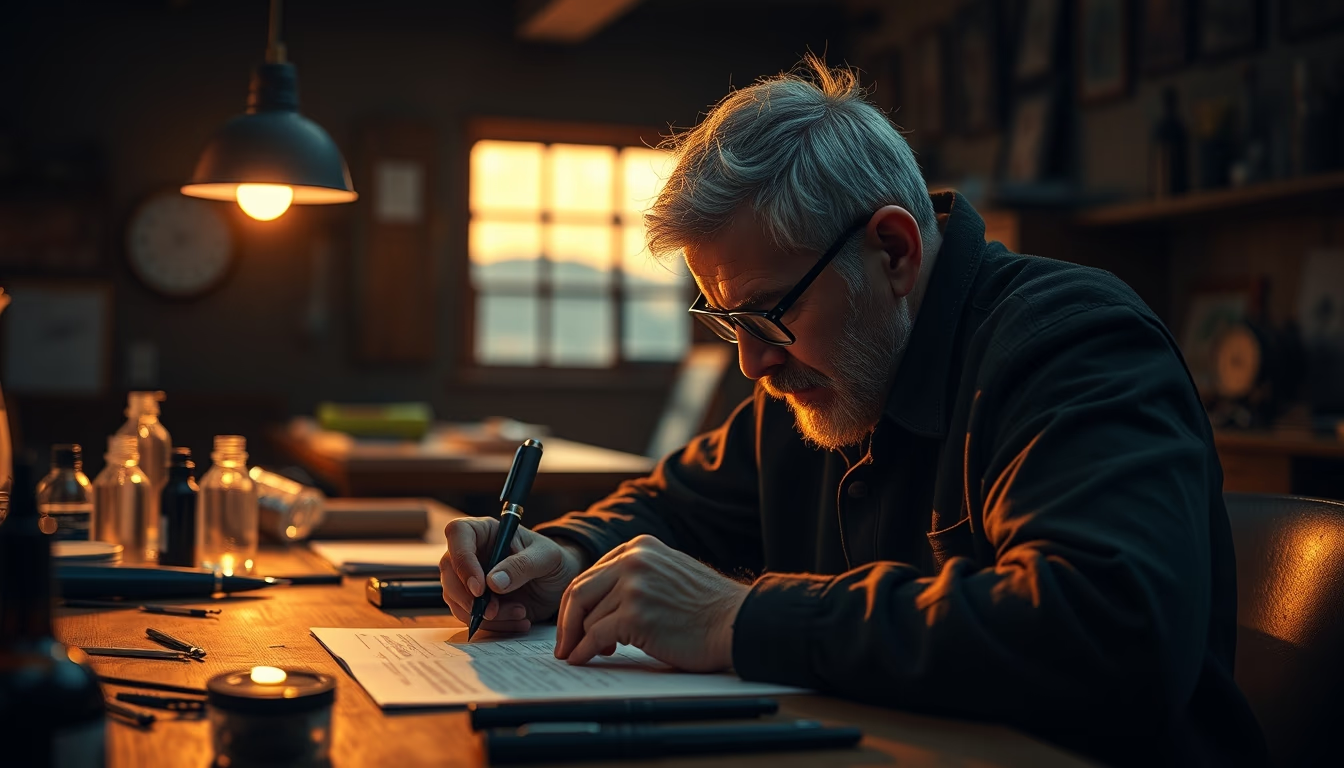
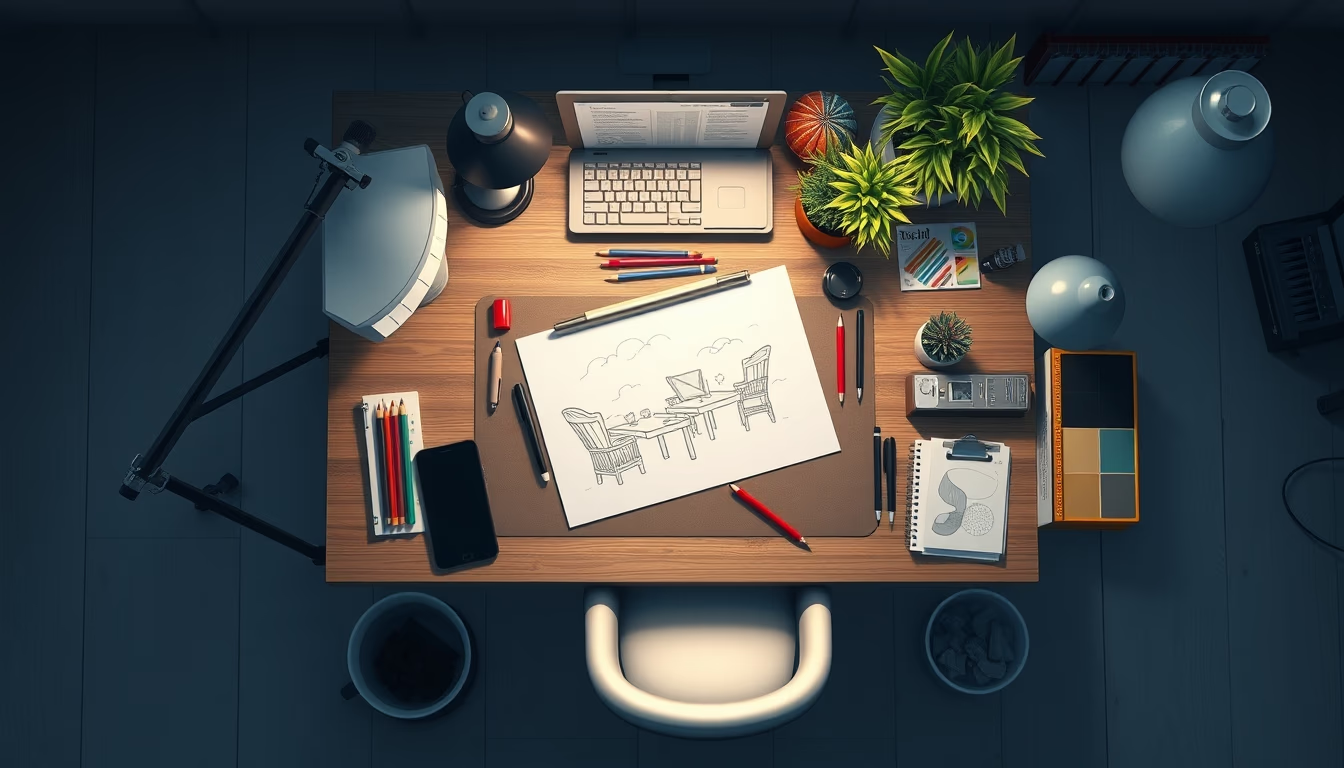
Inking pen workshop: techniques, materials, and the role of linework in visual storytelling for comics.
About this subject
Inking pens are crucial tools in the creation of comic books and graphic novels, used to define outlines, textures, and shadows after the pencil sketch. A workshop focused on these instruments typically covers the anatomy of nibs, such as fine-tip models (C-6, G-pen) and flat-tip ones, as well as disposable technical pens and brushes with India ink. Mastering line weight variation, achieved through pressure and angle, is essential for giving volume and depth to drawings.
Historically, the use of India ink pens became standard in the early 20th century with artists like Winsor McCay and Hal Foster, who established finishing standards. In Brazil, inking gained prominence in Mauricio de Sousa's comics and the lines of Mike Deodato. A typical workshop includes exercises in hatching, stippling, and cross-hatching, techniques that create light and shadow effects without relying on color. Materials range from high-grammage paper, such as Bristol board, to waterproof inks to prevent smudging.
Interestingly, many contemporary artists combine traditional methods with iPads and stylus pens, but the manual foundation is still taught as a way to understand line flow. The choice of pen can define style: looser, more organic lines versus rigid, clean lines. In advanced workshops, the relationship between inker and penciler is discussed, as the inker often interprets and complements the original pencil work, adding textures that enrich visual storytelling. Constant practice is the only path to develop the motor coordination and aesthetic sense required for the craft.
Frequently Asked Questions
What is the difference between an India ink pen and a technical pen?
An India ink pen is refillable or uses cartridges with traditional India ink, allowing line variation. A technical pen has an ink reservoir and a fixed-diameter tubular tip, ideal for uniform lines in technical drawing.
What are the main types of dip pen nibs for inking?
Common nibs include the G-pen (flexible, for thick and thin lines), the Spoon-pen (broad tip, good for filling), the Maru-pen (very fine, for details), and the Kabura-pen (rigid, for straight lines).
How does linework influence storytelling in comics?
Linework sets the emotional tone: thick, jagged lines convey tension; fine, smooth lines suggest calm. Line weight variation guides the reader's eye and emphasizes actions or expressions.
Direct URL
https://pub-c7d6a6ea828543ac903a74a341ccb2e1.r2.dev/imagens/inking-pen-workshop-cinematic-wide-shot-fresh7.avifHow to credit
Include a visible link back to UtilizAí. Copy one of the snippets below:
<a href="https://xn--utiliza-eza.com/en/midia/imagens/inking-pen-workshop-cinematic-wide-shot-fresh7">Inking pen workshop</a> by <a href="https://xn--utiliza-eza.com">UtilizAí</a>, licensed under <a href="https://creativecommons.org/licenses/by/4.0/">CC BY 4.0</a>.
[Inking pen workshop](https://xn--utiliza-eza.com/en/midia/imagens/inking-pen-workshop-cinematic-wide-shot-fresh7) by [UtilizAí](https://xn--utiliza-eza.com), CC BY 4.0
License: CC-BY-4.0