Ink wells antique brass
1344×768 · AVIF · CC BY 4.0

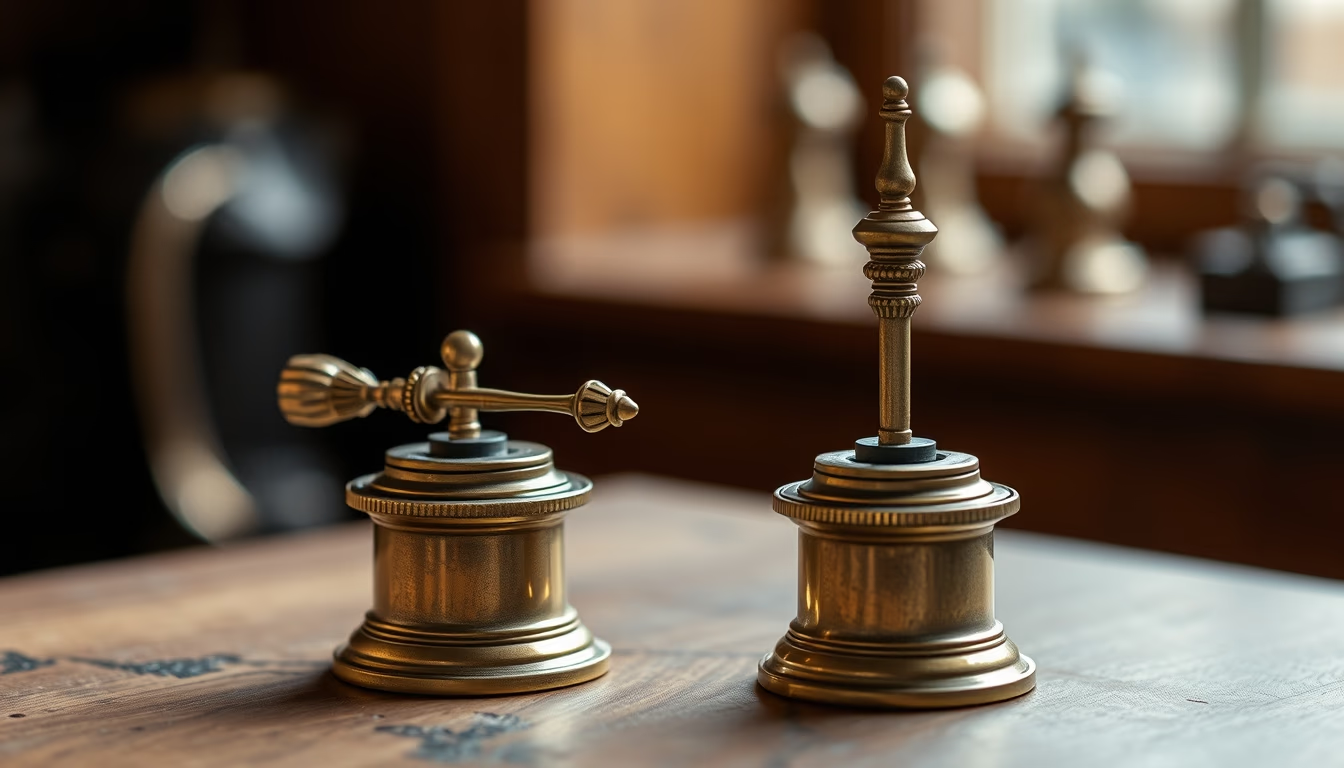
Antique brass ink wells used with dip pens, symbols of 19th century handwriting, with ornate details and lasting functionality.
About this subject
Antique brass ink wells were containers designed to hold ink for use with dip pens, common before the popularization of fountain pens and ballpoints. During the 18th and 19th centuries, these objects were essential in offices, libraries, schools, and government bureaus. Brass, an alloy of copper and zinc, was a popular material for its durability, corrosion resistance, and ease of shaping, allowing the creation of ornate pieces with floral, geometric, or classical motifs.
Many brass ink wells feature a two-part design with two compartments: one for black ink and another for red ink, used for highlights or corrections. Traveling models with screw-on caps to prevent spills were common among professionals like postal workers and notaries. Some examples include non-slip bases or pen holders, integrated into desk sets known as “inkwell stands.”
The production of brass ink wells peaked during the Victorian era (1837, 1901), when literacy expanded and handwriting was the primary means of formal communication. Manufacturers such as the English William Mitchell or the French J. Herbin produced models that are now collector's items. The natural patina of brass, which darkens over time, enhances the aged appearance, serving as a mark of authenticity for antique dealers.
Today, antique brass ink wells are sought after by collectors of writing instruments and history enthusiasts. They represent not only functional tools but also a testament to the evolution of writing technology. Unlike modern versions in glass or plastic, brass ink wells offer weight and a sense of quality, often displayed as decorative pieces in vintage settings.
Frequently Asked Questions
How were brass ink wells used in daily life?
Ink wells were filled with liquid ink and placed on the desk. The writer dipped the nib of the dip pen into the ink well and then wrote, repeating the process as the ink dried. Models with lids helped prevent evaporation or spills.
What is the historical significance of brass ink wells?
They were central to written communication before the invention of the fountain pen. Their mass production reflects the rise in literacy and bureaucracy in the 19th century, and ornate ones served as status symbols.
How to identify an original antique brass ink well?
Check for natural patina, maker's marks or country of origin, and quality of details. Antique ink wells usually show even wear and hand-soldered joints. Modern pieces often have too-smooth finishes or electrostatic paint.
Direct URL
https://pub-c7d6a6ea828543ac903a74a341ccb2e1.r2.dev/imagens/ink-wells-antique-brass-rembrandt-lighting-dramatic-shadows-fresh18.avifHow to credit
Include a visible link back to UtilizAí. Copy one of the snippets below:
<a href="https://xn--utiliza-eza.com/en/midia/imagens/ink-wells-antique-brass-rembrandt-lighting-dramatic-shadows-fresh18">Ink wells antique brass</a> by <a href="https://xn--utiliza-eza.com">UtilizAí</a>, licensed under <a href="https://creativecommons.org/licenses/by/4.0/">CC BY 4.0</a>.
[Ink wells antique brass](https://xn--utiliza-eza.com/en/midia/imagens/ink-wells-antique-brass-rembrandt-lighting-dramatic-shadows-fresh18) by [UtilizAí](https://xn--utiliza-eza.com), CC BY 4.0
License: CC-BY-4.0