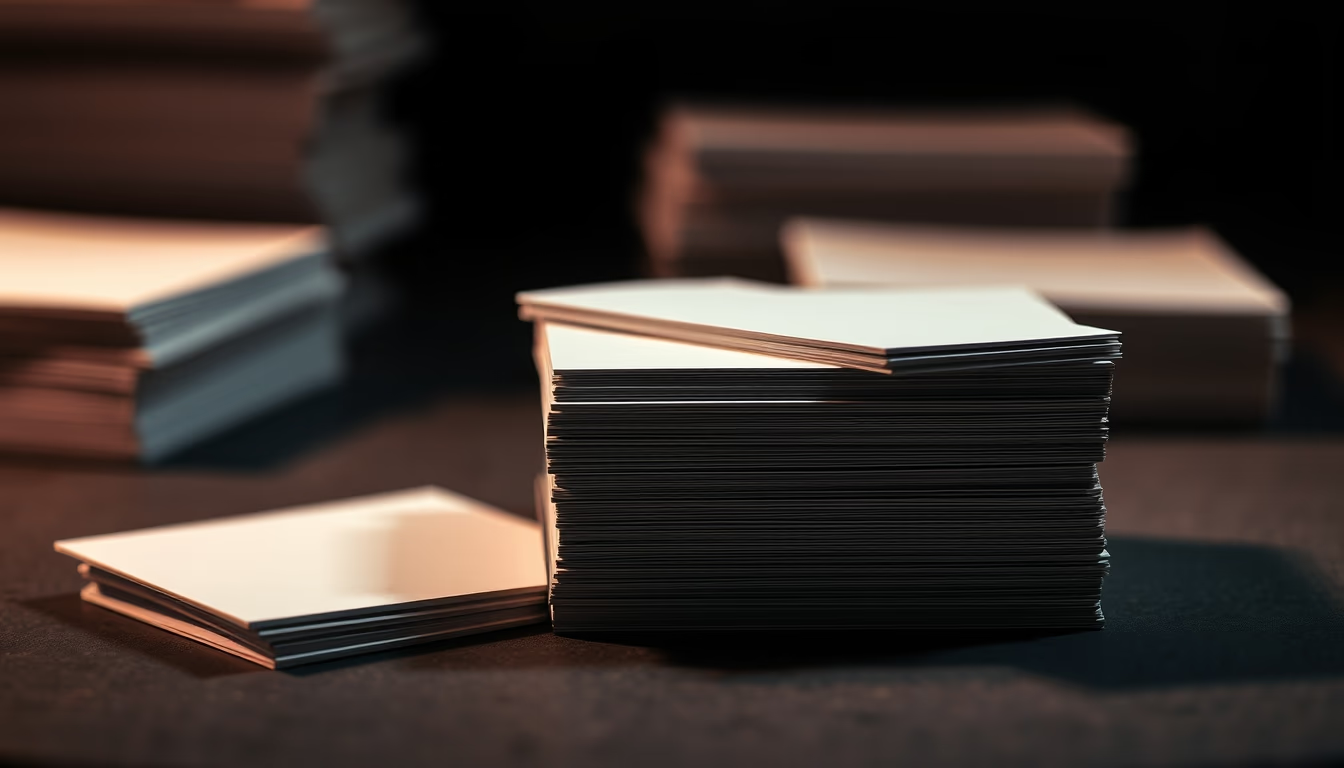
Index cards stacked
1344×768 · AVIF · CC BY 4.0
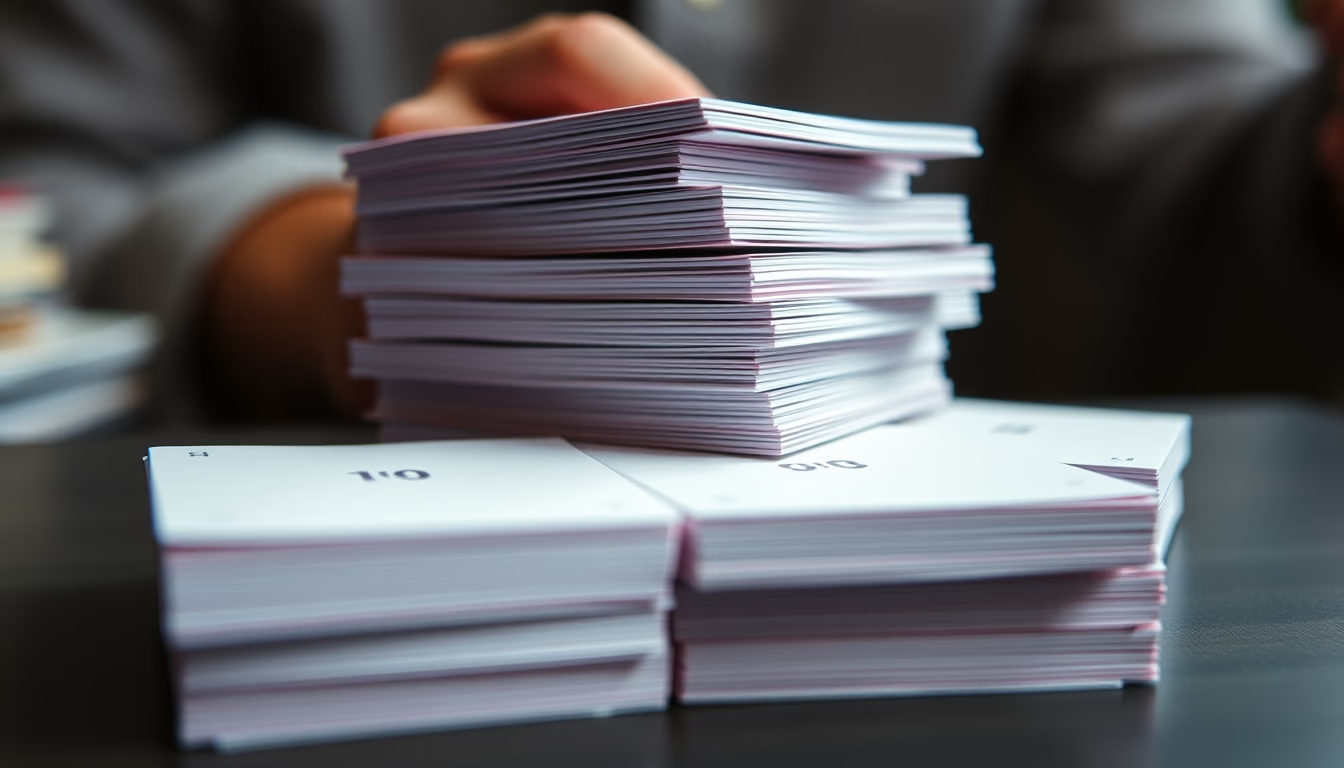
Stacked index cards: small cardboard cards used for centuries to organize ideas, study, and manage tasks.
About this subject
Index cards, also known as note cards or flashcards, are small pieces of cardboard (typically 3 x 5 inches or 7.6 x 12.7 cm) used to record information in a compact and organized manner. Their simplicity allows them to be employed in various fields: from academic memorization to project management in agile methodologies.
The history of index cards dates back to the 18th century, when Swedish naturalist Carl Linnaeus used a card system to catalog species. However, it was in the 19th century that they became popular with the development of library catalogs, particularly due to Melvil Dewey. In the 20th century, sociologist Niklas Luhmann created the Zettelkasten method (slip box) for his scientific production, generating over 70 books and hundreds of articles. This method even influenced the creation of note-taking software like Obsidian and Roam Research.
Today, index cards remain relevant. Students use them as flashcards for spaced repetition, while tech professionals employ them in physical Kanban boards to visualize workflows. A curiosity: the standard 3 x 5 inch size was defined decades ago and remains universal, making storage in boxes and files easy. Even in the digital age, the physical act of handwriting on a card aids information retention, according to neuroscience studies.
Frequently Asked Questions
What is the origin of index cards?
Modern index cards emerged in the 19th century for library catalogs, but their precursor was Carl Linnaeus' card system in the 18th century. Niklas Luhmann's Zettelkasten method popularized their use for research.
How to use index cards for studying?
Write a question or key concept on the front and the answer on the back. Use spaced repetition: review cards at increasing intervals (1 day, 3 days, 1 week) to reinforce learning.
What is the standard size of an index card?
The most common size is 3 x 5 inches (7.6 x 12.7 cm). Variations include 4 x 6 inches (10.2 x 15.2 cm) and 5 x 8 inches (12.7 x 20.3 cm), used for longer notes.
Direct URL
https://pub-c7d6a6ea828543ac903a74a341ccb2e1.r2.dev/imagens/index-cards-stacked-lo-fi-disposable-camera-fresh5.avifHow to credit
Include a visible link back to UtilizAí. Copy one of the snippets below:
<a href="https://xn--utiliza-eza.com/en/midia/imagens/index-cards-stacked-lo-fi-disposable-camera-fresh5">Index cards stacked</a> by <a href="https://xn--utiliza-eza.com">UtilizAí</a>, licensed under <a href="https://creativecommons.org/licenses/by/4.0/">CC BY 4.0</a>.
[Index cards stacked](https://xn--utiliza-eza.com/en/midia/imagens/index-cards-stacked-lo-fi-disposable-camera-fresh5) by [UtilizAí](https://xn--utiliza-eza.com), CC BY 4.0
License: CC-BY-4.0