Incan terraces
1344×768 · AVIF · CC BY 4.0
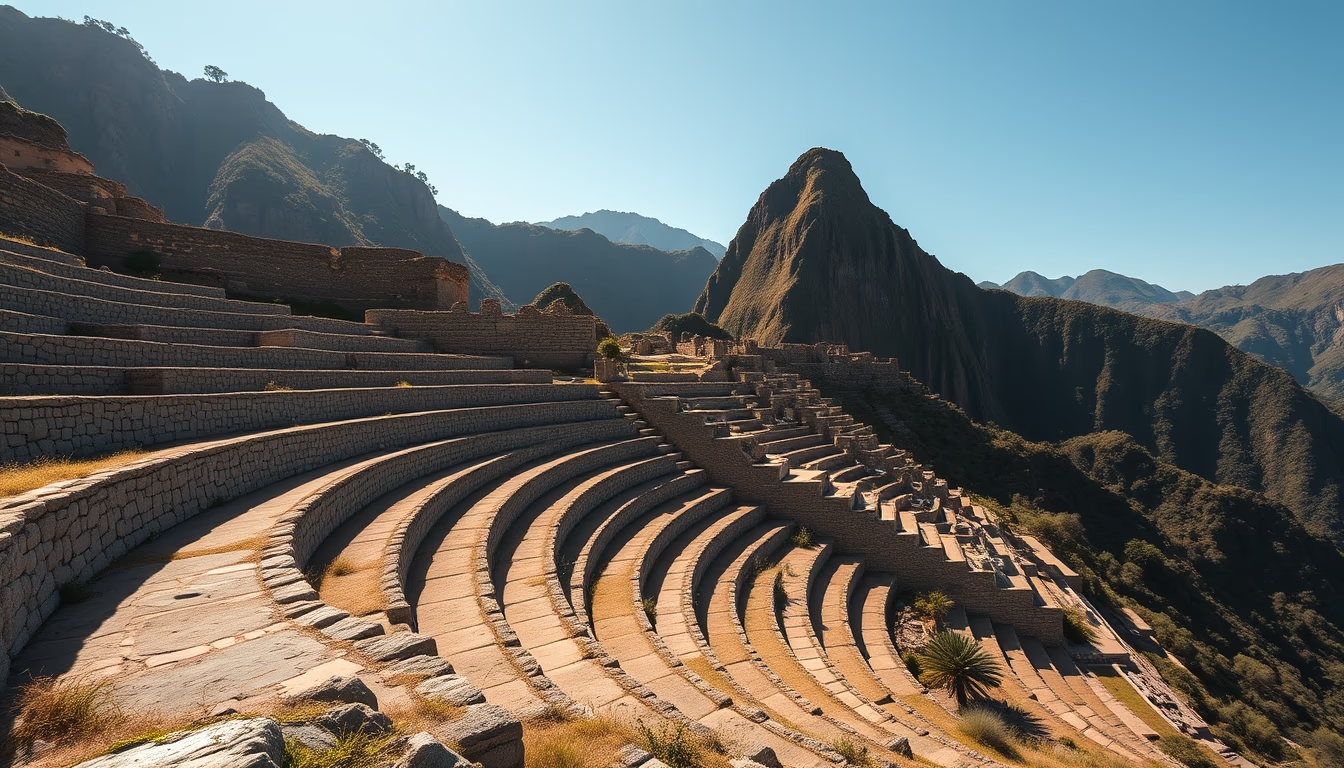
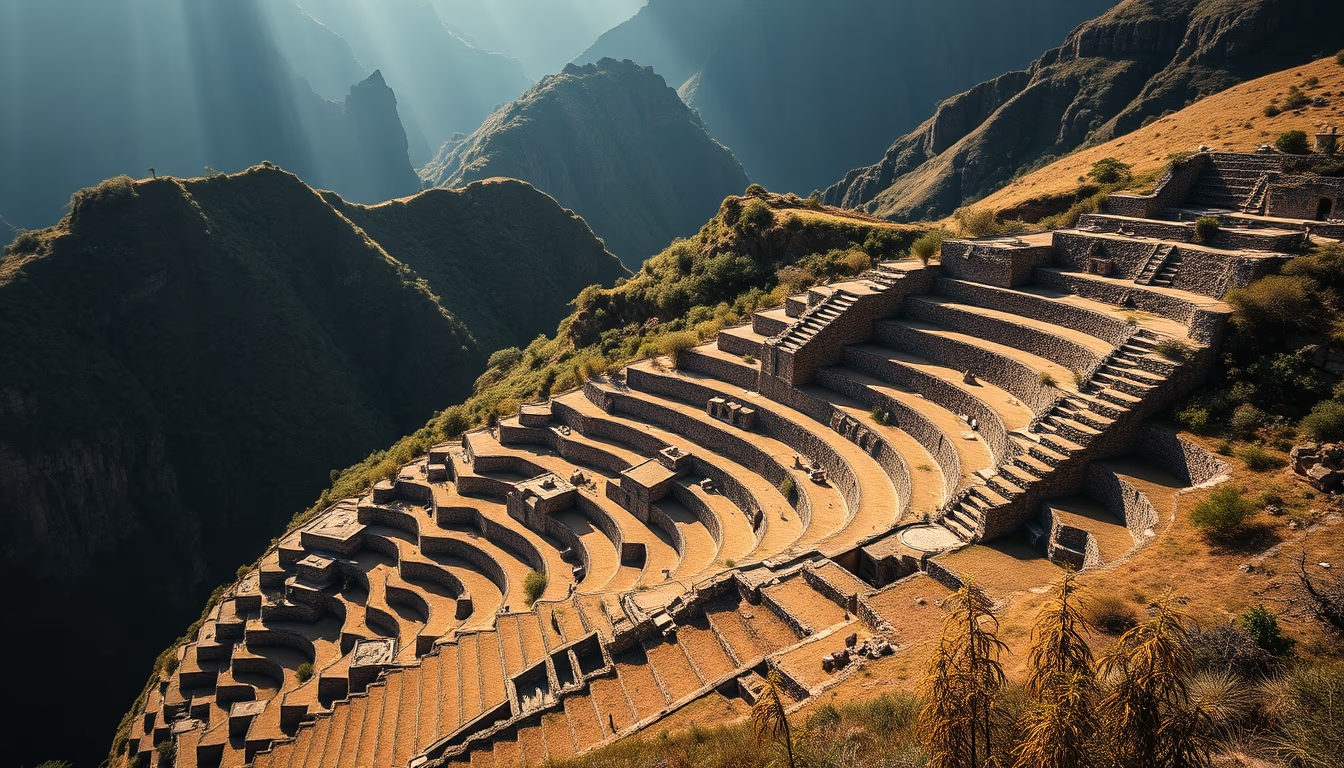
Incan terraces, or andenes, are impressive stepped agricultural systems carved into the slopes of the Andes, enabling farming at extreme altitudes.
About this subject
Incan terraces, known as andenes, are among the most remarkable agricultural engineering feats in history. Built between the 13th and 16th centuries, these terraces transformed the steep slopes of the Andes into fertile farmland, enabling the Inca Empire to sustain a population of millions. They spread across vast areas of Peru, Bolivia, Ecuador, Chile, and Argentina, with iconic examples at Machu Picchu, the Sacred Valley, and the archaeological site of Moray.
Construction involved sophisticated techniques. The Incas first carved horizontal platforms into the hillsides, then built retaining walls using precisely fitted stones without mortar, a method that ensured drainage and stability. On top of the rocky base, they layered gravel, sand, clay, and fertile topsoil brought from lower valleys. This system not only prevented erosion but also created microclimates, with temperature differences between steps allowing the cultivation of over 200 varieties of potatoes, maize, quinoa, and other crops.
The significance of the terraces extends beyond food production. They demonstrate the Incas' deep understanding of hydrology and high-altitude agriculture. Carefully planned irrigation channels diverted water from springs and glaciers, while drainage systems prevented waterlogging. In Moray, for instance, concentric circular terraces created thermal gradients mimicking different ecological zones, functioning as an agricultural experimental station.
Today, many Incan terraces are still used by local communities who preserve ancestral techniques. They are also studied for sustainable farming projects in mountainous regions, highlighting the contemporary relevance of this legacy. UNESCO has recognized several sites with Incan terraces as World Heritage, underscoring their cultural and technical value.
Frequently Asked Questions
How were Incan terraces built?
They were built by carving horizontal platforms into slopes and erecting stone walls without mortar. The base was layered with gravel, sand, and fertile soil to ensure drainage and stability.
What is the typical altitude of Incan terraces?
Incan terraces were constructed at altitudes ranging from 2,000 to 4,000 meters above sea level, such as in the Cusco region and the Sacred Valley.
Are Incan terraces still used today?
Yes, many Andean communities still use Incan terraces to grow potatoes, maize, and quinoa, preserving traditional irrigation and farming methods.
Direct URL
https://pub-c7d6a6ea828543ac903a74a341ccb2e1.r2.dev/imagens/incan-terraces-minimalist-composition-p10.avifHow to credit
Include a visible link back to UtilizAí. Copy one of the snippets below:
<a href="https://xn--utiliza-eza.com/en/midia/imagens/incan-terraces-minimalist-composition-p10">Incan terraces</a> by <a href="https://xn--utiliza-eza.com">UtilizAí</a>, licensed under <a href="https://creativecommons.org/licenses/by/4.0/">CC BY 4.0</a>.
[Incan terraces](https://xn--utiliza-eza.com/en/midia/imagens/incan-terraces-minimalist-composition-p10) by [UtilizAí](https://xn--utiliza-eza.com), CC BY 4.0
License: CC-BY-4.0