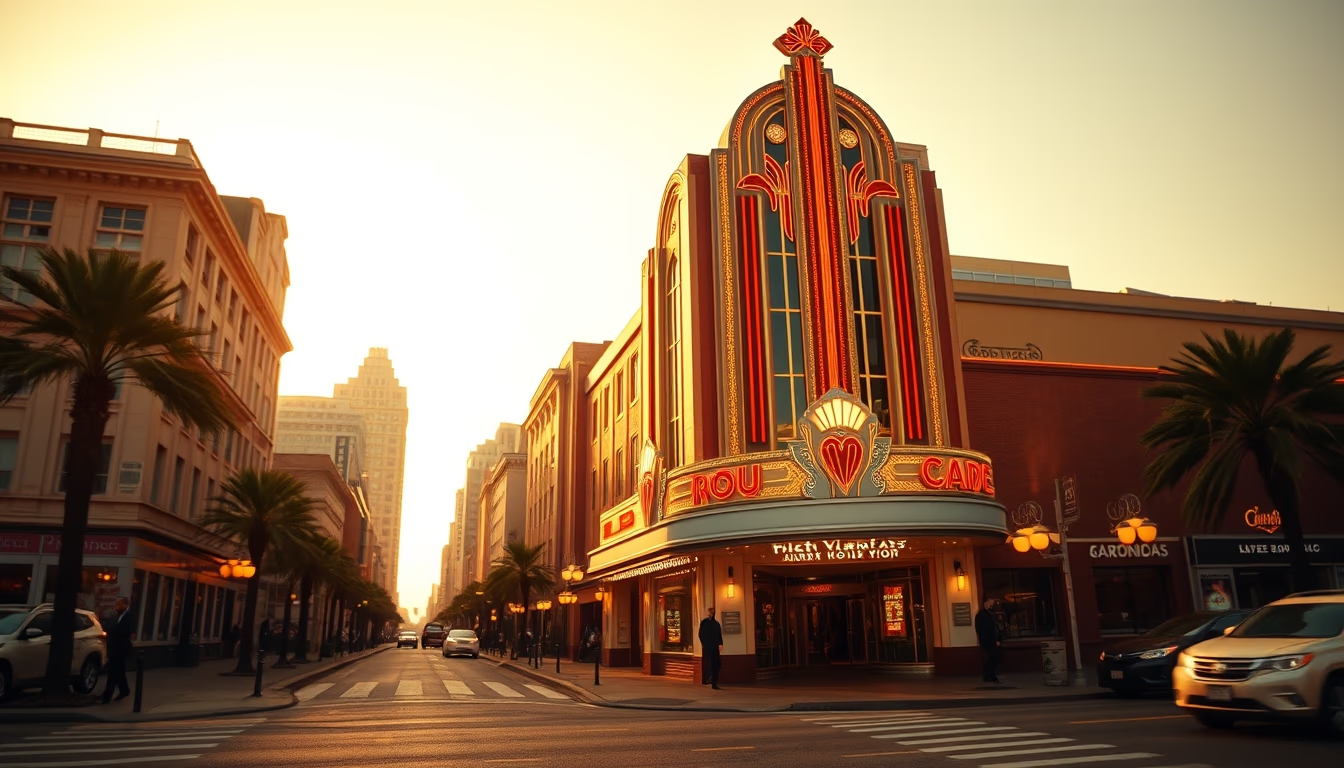
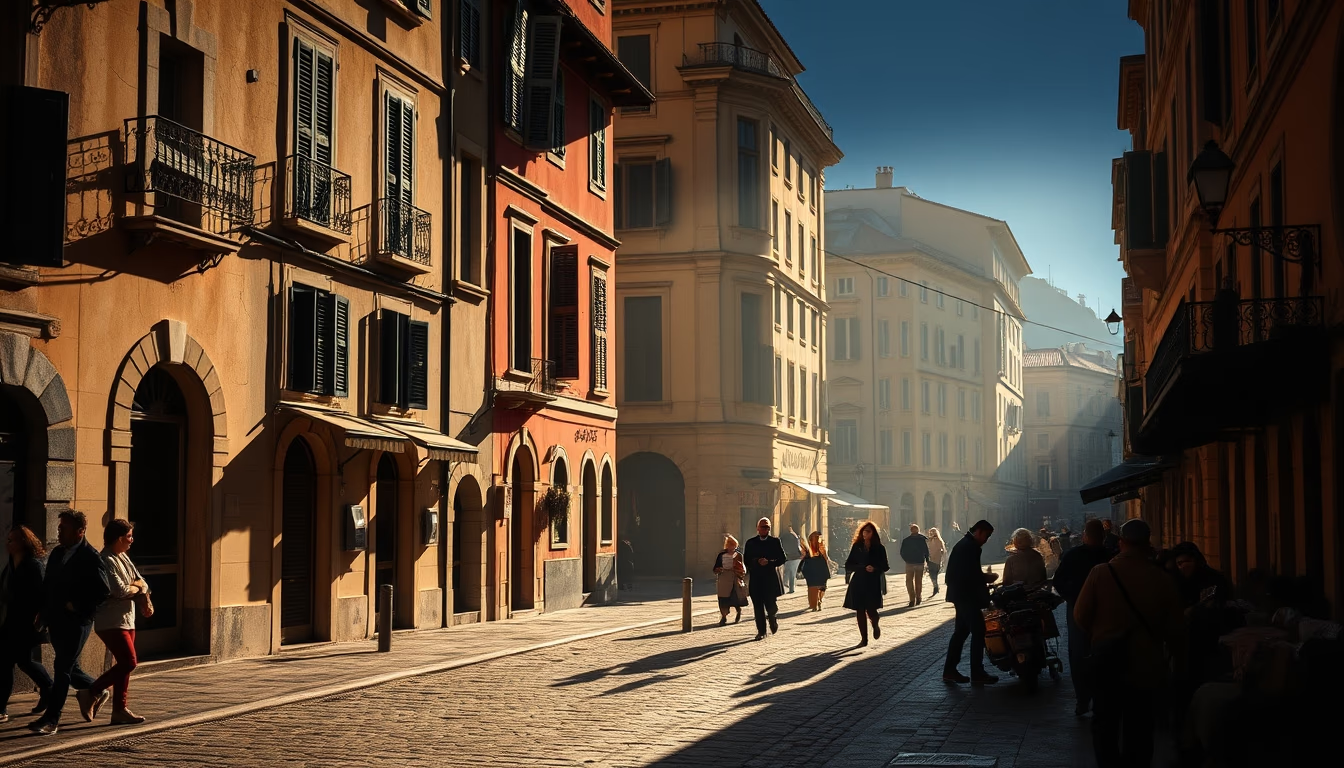
Illustrated postcard 1900
1344×768 · AVIF · CC BY 4.0
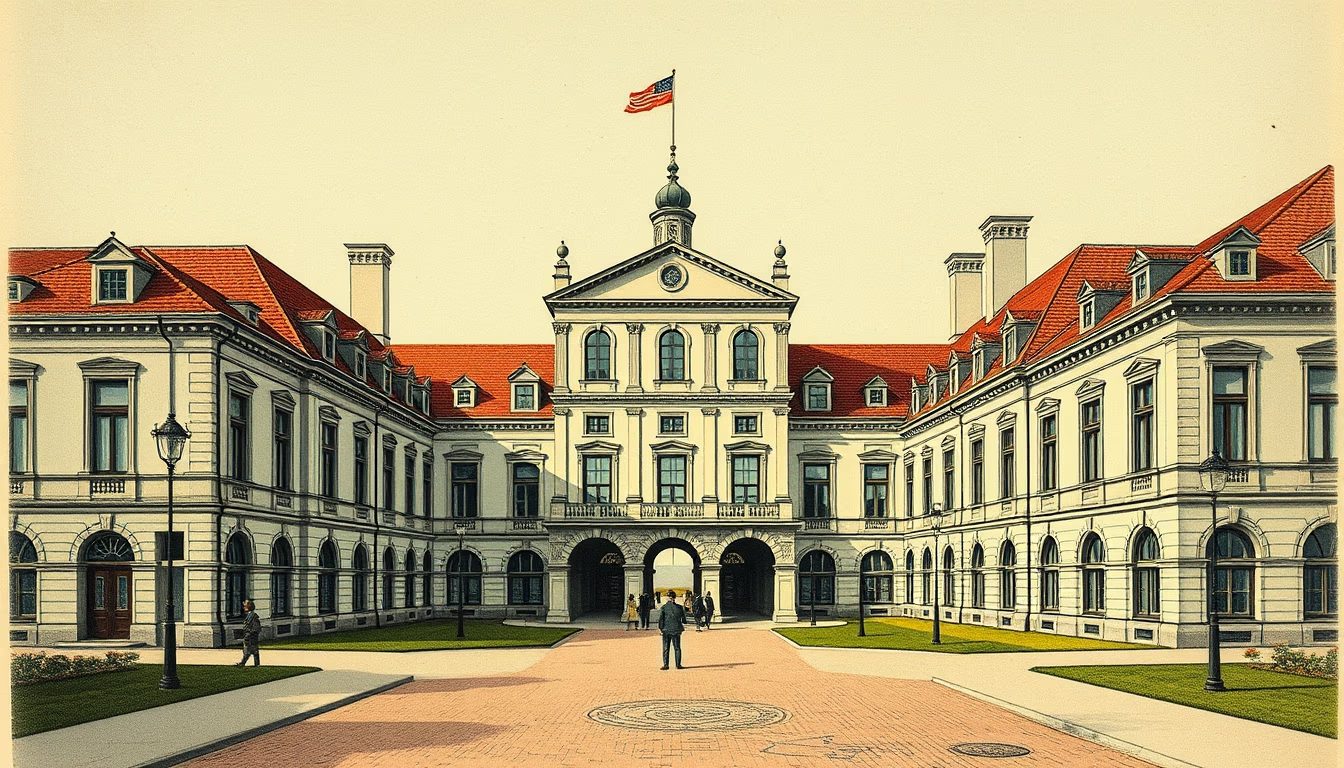
Cartões postais ilustrados do ano 1900 capturavam monumentos arquitetônicos com riqueza de detalhes, sendo hoje valiosos registros históricos e culturais.
Sobre o tema
Os cartões postais ilustrados de 1900 representam um fascinante capítulo da história da comunicação visual. Produzidos em larga escala durante a Belle Époque, esses itens combinavam técnicas de cromolitografia e coloração manual para reproduzir cenas arquitetônicas com impressionante fidelidade. A virada do século foi marcada por otimismo tecnológico e grandes exposições universais, especialmente a Exposição de Paris em 1900, que impulsionou a temática arquitetônica nos postais.
As imagens mais comuns retratavam ícones como a Torre Eiffel, estações ferroviárias grandiosas (como a Gare de Lyon e a Estação da Luz em São Paulo), teatros e palácios. Esses postais não eram apenas lembranças de viagem, mas também ferramentas de propaganda urbana e símbolos de modernidade. Muitos eram enviados pelo correio com selos e carimbos, criando uma camada extra de informação histórica sobre rotas postais e comunicação cotidiana.
Atualmente, colecionadores e historiadores valorizam esses postais como fontes primárias para entender a evolução urbana e o gosto estético do período. Cada exemplar pode revelar detalhes sobre técnicas construtivas, estilos arquitetônicos e até mesmo a vegetação ou mobiliário urbano da época. A durabilidade do papel e a preservação em álbuns familiares permitem que essas imagens cheguem até nós com mais de um século de existência.
Curiosamente, muitos postais de 1900 apresentam vistas compostas ou panorâmicas, mostrando ruas e praças que hoje foram profundamente transformadas. Eles oferecem um testemunho visual comparativo essencial para estudos de restauro e memória cultural. Além disso, a circulação global desses cartões contribuiu para a difusão de referências arquitetônicas entre continentes, influenciando o design de edifícios em diferentes países.
Perguntas frequentes
Como eram produzidos os cartões postais ilustrados em 1900?
Eram geralmente produzidos por cromolitografia, um processo que aplicava múltiplas cores com pedras litográficas, ou por fotografias coloridas à mão, resultando em imagens detalhadas e vibrantes.
Quais edificações eram comuns em postais de 1900?
Predominavam construções icônicas como a Torre Eiffel, a Estação de São Bento no Porto, o Teatro Municipal do Rio de Janeiro e outros símbolos da arquitetura da Belle Époque.
Qual a importância histórica desses postais atualmente?
Servem como registros visuais de como eram as cidades e monumentos há mais de 120 anos, auxiliando historiadores e arquitetos em estudos de restauro e memória urbana.
URL direta
https://pub-c7d6a6ea828543ac903a74a341ccb2e1.r2.dev/imagens/illustrated-postcard-1900-architectural-photography-fresh7.avifComo creditar
Inclua um link visível de volta pro UtilizAí. Copie um dos snippets abaixo:
<a href="https://xn--utiliza-eza.com/midia/imagens/illustrated-postcard-1900-architectural-photography-fresh7">Illustrated postcard 1900</a> by <a href="https://xn--utiliza-eza.com">UtilizAí</a>, licensed under <a href="https://creativecommons.org/licenses/by/4.0/">CC BY 4.0</a>.
[Illustrated postcard 1900](https://xn--utiliza-eza.com/midia/imagens/illustrated-postcard-1900-architectural-photography-fresh7) by [UtilizAí](https://xn--utiliza-eza.com), CC BY 4.0
Licença: CC-BY-4.0