Ikebana japanese arrangement
1344×768 · AVIF · CC BY 4.0
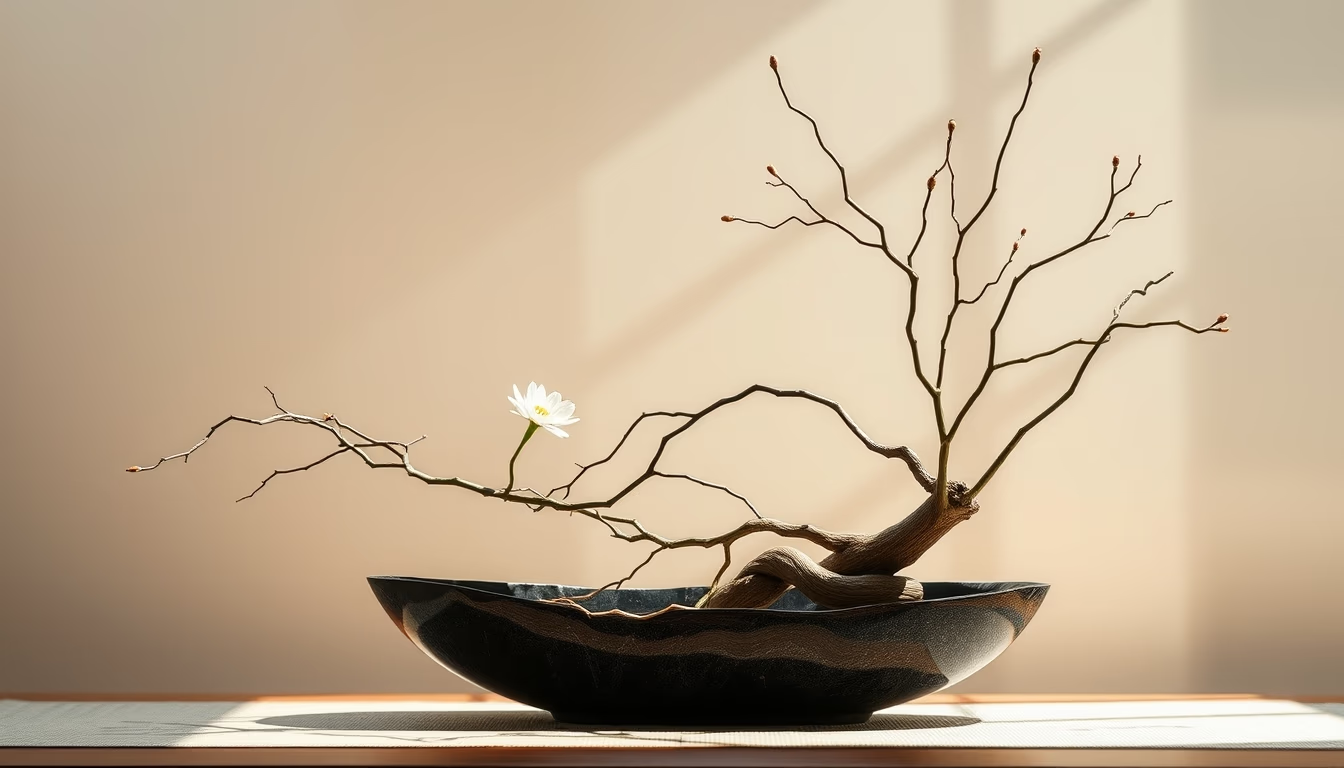
Ikebana is the Japanese art of minimalist floral arrangements, emphasizing simplicity and harmony between natural elements and empty space.
About this subject
Ikebana, also known as kado (the way of flowers), is an ancient Japanese art form that transforms floral arrangements into aesthetic and philosophical expressions. Originating in the 6th century with the arrival of Buddhism in Japan, the practice evolved from flower offerings at temples, gaining structured form during the Muromachi period (1336-1573). Unlike Western floristry, which seeks abundance and symmetry, ikebana values asymmetry, curved lines, and the use of empty spaces, called "ma", to create movement and depth.
There are hundreds of ikebana schools, the main ones being Ikenobo (the oldest, founded in the 15th century), Sogetsu (modern and creative), and Ohara (which incorporates natural landscapes). Each school has specific rules for angles, heights, and positioning of branches, leaves, and flowers. Typical materials include cherry branches, pine, bamboo, chrysanthemums, and lilies, but any natural element can be used as long as it respects the season and the place where it will be displayed.
Ikebana is not just decoration; it is a meditative practice that teaches patience, observation, and respect for nature. The arranger must consider the relationship between elements, colors, and textures, seeking a balance that reflects the impermanence of life. In Japan, ikebana displays are common at festivals, tea ceremonies, and homes, and it is recognized as intangible cultural heritage in some regions. Today, ikebana influences designers and artists worldwide, appearing in contemporary art exhibitions as a form of organic minimalism.
Frequently Asked Questions
What is the difference between ikebana and Western flower arrangements?
Ikebana focuses on simplicity, asymmetry, and the use of empty spaces (ma), while Western arrangements generally seek volume, symmetry, and vibrant colors.
What are the main schools of ikebana?
The three major schools are Ikenobo (traditional and classical), Sogetsu (modern and free), and Ohara (which depicts natural landscapes).
Can I practice ikebana using any type of flower?
Yes, but it is recommended to choose seasonal materials and respect local culture. Branches, leaves, and flowers should be arranged to convey harmony.
Direct URL
https://pub-c7d6a6ea828543ac903a74a341ccb2e1.r2.dev/imagens/ikebana-japanese-arrangement-minimalist-composition-fresh7.avifHow to credit
Include a visible link back to UtilizAí. Copy one of the snippets below:
<a href="https://xn--utiliza-eza.com/en/midia/imagens/ikebana-japanese-arrangement-minimalist-composition-fresh7">Ikebana japanese arrangement</a> by <a href="https://xn--utiliza-eza.com">UtilizAí</a>, licensed under <a href="https://creativecommons.org/licenses/by/4.0/">CC BY 4.0</a>.
[Ikebana japanese arrangement](https://xn--utiliza-eza.com/en/midia/imagens/ikebana-japanese-arrangement-minimalist-composition-fresh7) by [UtilizAí](https://xn--utiliza-eza.com), CC BY 4.0
License: CC-BY-4.0