Ikebana japanese arrangement
1344×768 · AVIF · CC BY 4.0
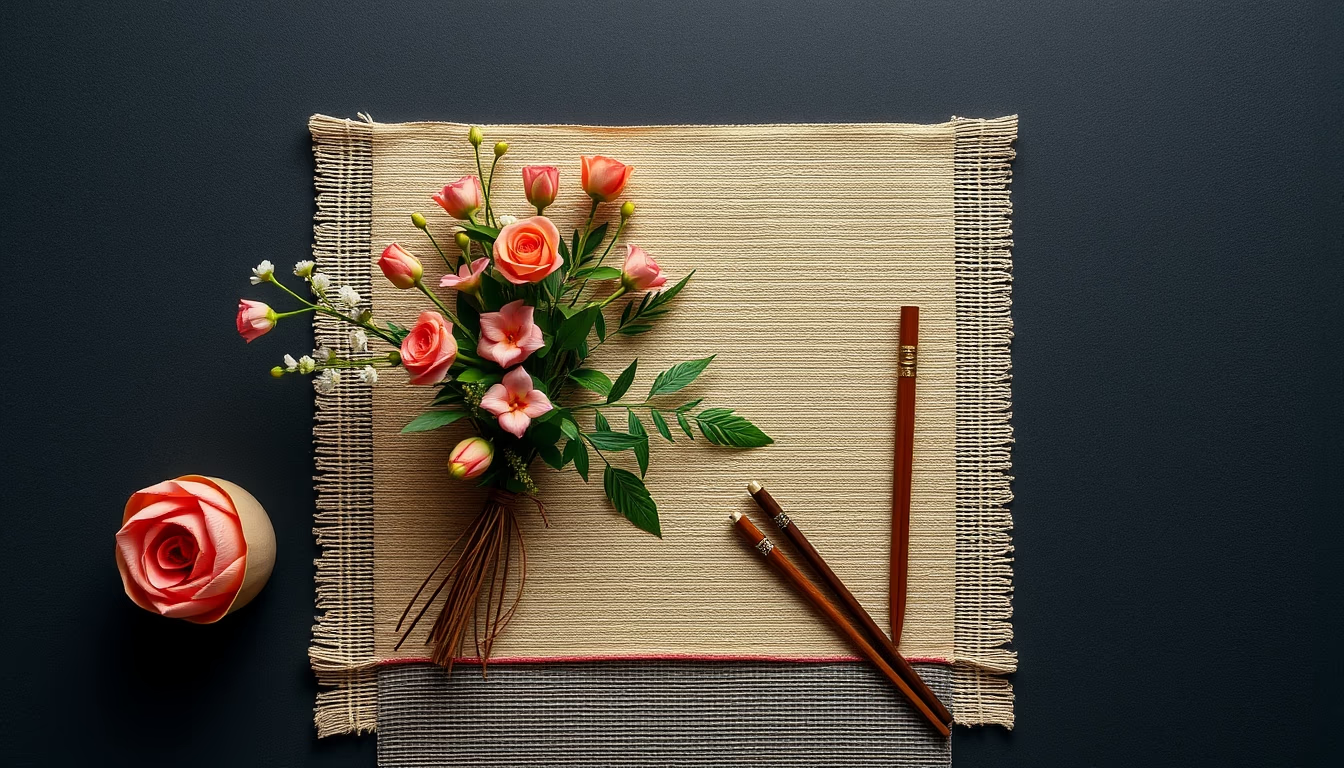
Ikebana is the Japanese art of flower arrangement that emphasizes simplicity, balance, and harmony between natural elements.
About this subject
Ikebana, also known as kadō (the way of flowers), is a centuries-old Japanese practice that goes beyond simply arranging flowers. Originating in the 6th century with Buddhist floral offerings, the art evolved into an aesthetic and spiritual discipline. Unlike Western arrangements, which aim for symmetry and abundant color, ikebana favors asymmetry, empty space, and the line of branches, creating compositions that evoke nature in its pure form.
Three key elements guide the arrangement: heaven, earth, and humanity, represented by three main stems of different heights. The use of seasonal materials is essential, reflecting the passage of time and impermanence. Shallow containers and holders such as the kenzan (needle base) are common for securing stems, allowing precise angles.
The main schools of ikebana include Ikenobo, the oldest (founded in the 15th century), emphasizing verticality and simplicity; Ohara, which incorporates miniature landscapes; and Sogetsu, more free-form and adaptable to modern spaces. Each school has specific rules for proportion and placement, but all value the practitioner's intention and mindfulness.
Today, ikebana is practiced worldwide as a form of meditation and artistic expression. In Japan, it appears in tea ceremonies, festivals, and interior decoration. The practice cultivates patience, observation, and respect for nature, and is recognized as an intangible cultural heritage in various regions.
Frequently Asked Questions
What is the difference between ikebana and Western flower arrangements?
Western arrangements emphasize symmetry, bright colors, and fullness, while ikebana values asymmetry, empty space, and minimal lines. The aim is to capture nature's essence and express harmony among elements.
What are the main schools of ikebana?
The three best-known schools are Ikenobo (the oldest, focusing on verticality), Ohara (depicting landscapes), and Sogetsu (modern and free-form). Each has distinct rules and styles.
Is ikebana practiced only in Japan?
No. Ikebana is practiced in many countries, with international schools and associations. Though rooted in Japan, it is widespread globally as an art form and meditative practice.
Direct URL
https://pub-c7d6a6ea828543ac903a74a341ccb2e1.r2.dev/imagens/ikebana-japanese-arrangement-isometric-flat-lay-fresh18.avifHow to credit
Include a visible link back to UtilizAí. Copy one of the snippets below:
<a href="https://xn--utiliza-eza.com/en/midia/imagens/ikebana-japanese-arrangement-isometric-flat-lay-fresh18">Ikebana japanese arrangement</a> by <a href="https://xn--utiliza-eza.com">UtilizAí</a>, licensed under <a href="https://creativecommons.org/licenses/by/4.0/">CC BY 4.0</a>.
[Ikebana japanese arrangement](https://xn--utiliza-eza.com/en/midia/imagens/ikebana-japanese-arrangement-isometric-flat-lay-fresh18) by [UtilizAí](https://xn--utiliza-eza.com), CC BY 4.0
License: CC-BY-4.0