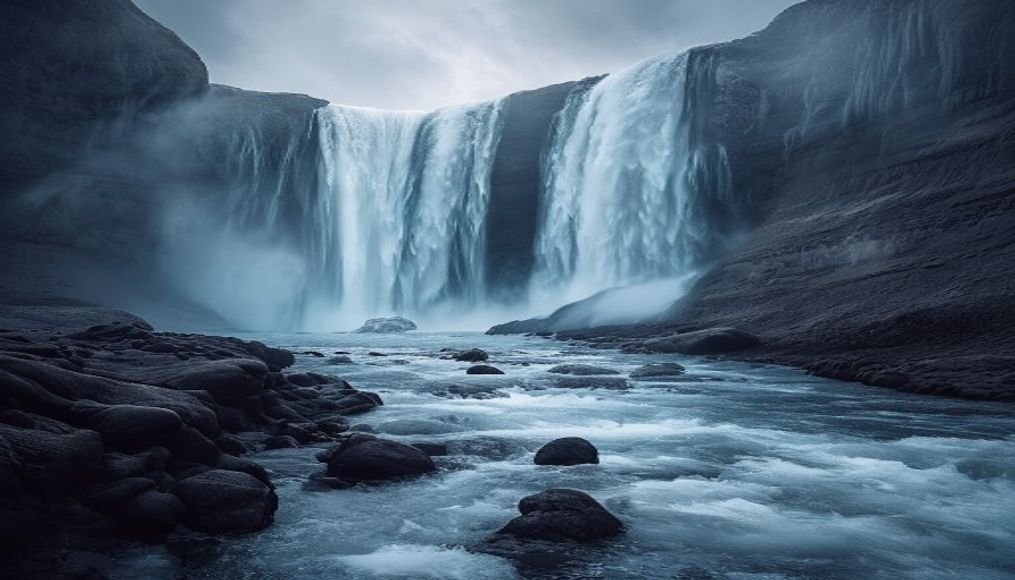
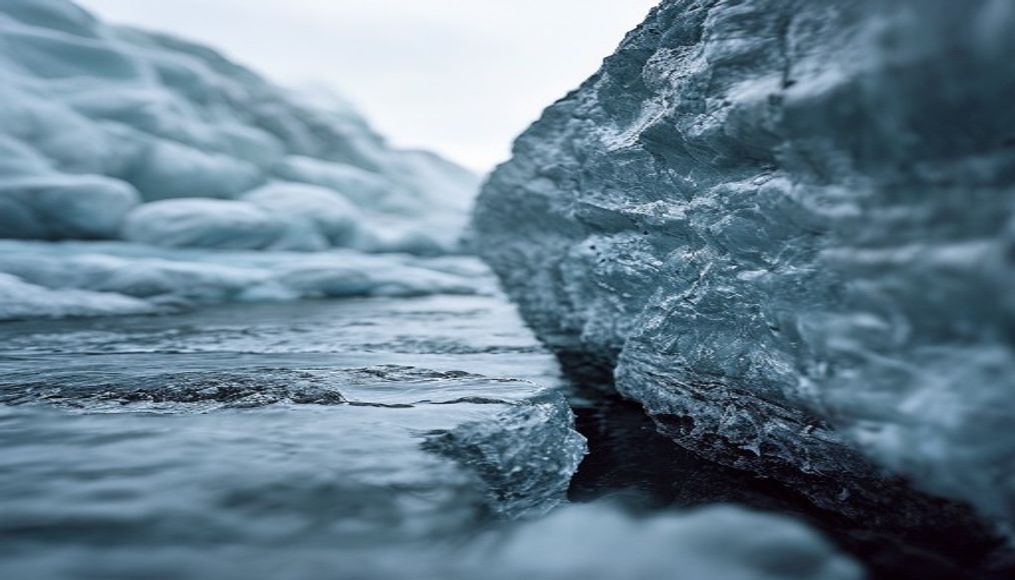
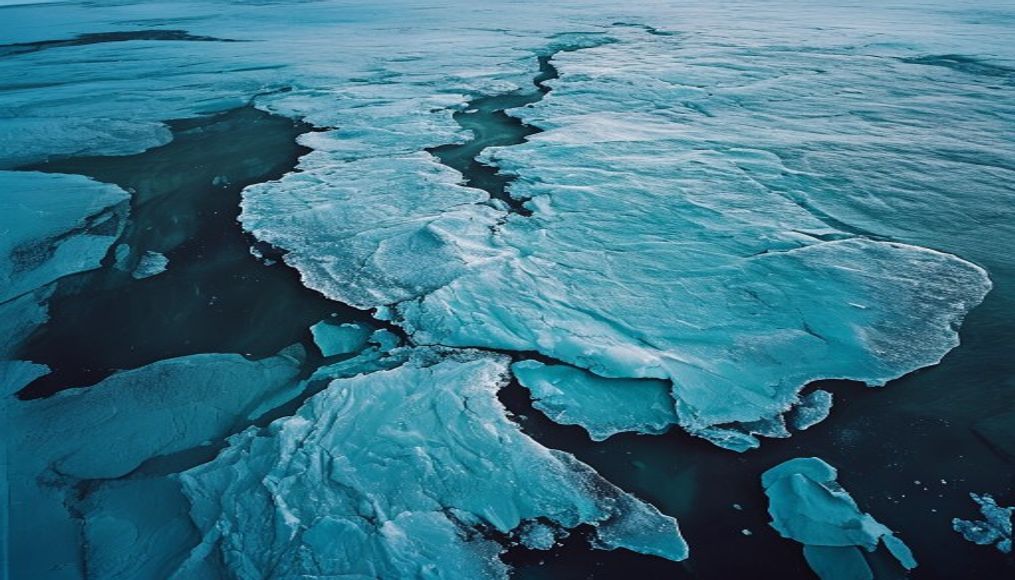
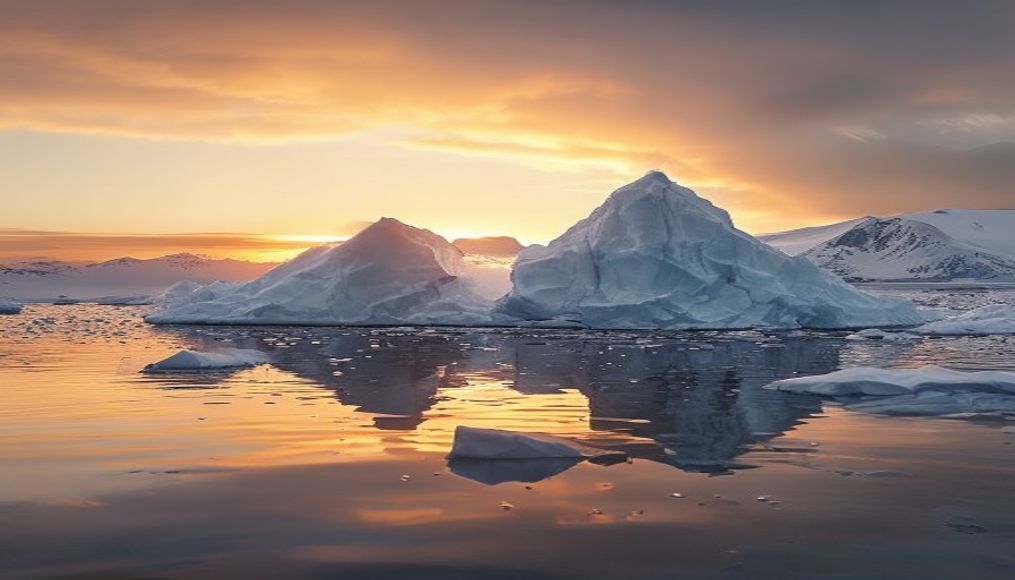
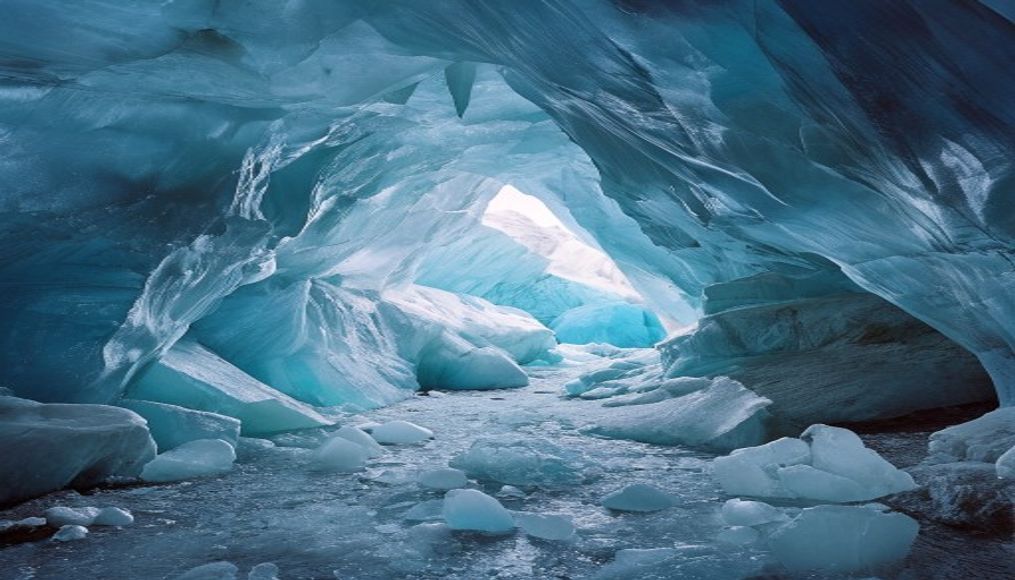
Iceberg breaking calving
1344×768 · AVIF · CC BY 4.0
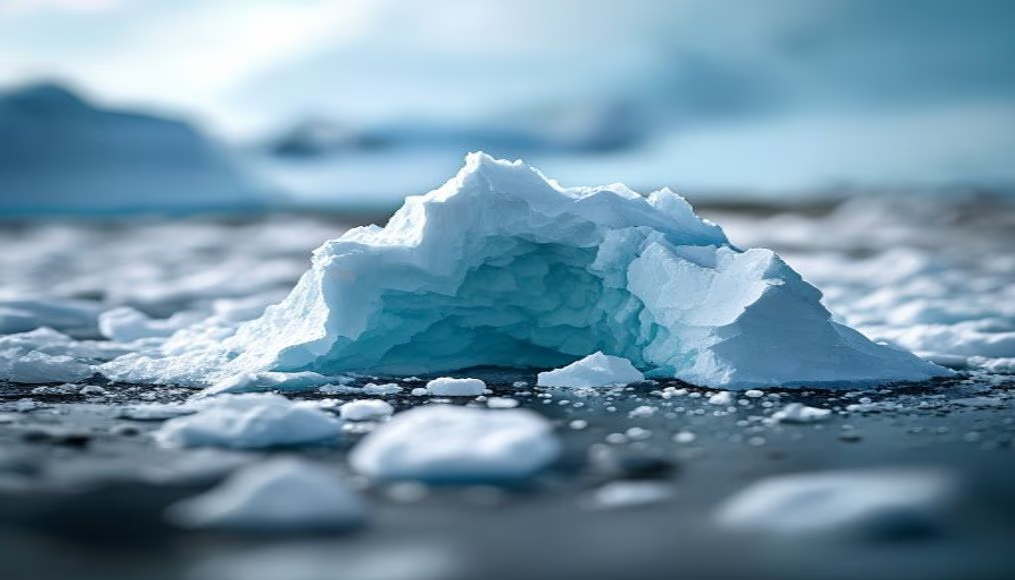
Iceberg calving is a natural process where chunks of ice break off from glaciers or ice shelves, driven by forces such as gravity and basal melting.
About this subject
Iceberg calving is a natural process where chunks of ice break off from glaciers or ice shelves, driven by forces such as gravity and basal melting. This phenomenon occurs when internal stresses exceed the ice's strength, causing fractures that release blocks ranging from small fragments to giants spanning kilometers. It is typical of tidewater glaciers, such as those in Greenland and Antarctica, as well as glacial lakes like Jökulsárlón in Iceland. In the Arctic, Jakobshavn Glacier is one of the most active, contributing about 10% of all Greenland icebergs.
Causes of calving include glacier advance into water, where buoyancy reduces basal friction, and melting at the grounding line, which destabilizes the ice front. Ocean waves and tides can also trigger fractures. In Patagonia, Perito Moreno Glacier periodically calves, attracting global tourists. In Antarctica, ice shelves like Larsen C have produced colossal icebergs, such as A68, which measured 5,800 km² in 2017.
Calving directly impacts sea-level rise, as terrestrial ice lost to the ocean adds volume. This process is accelerated by global warming, which weakens ice shelves and increases surface melting. NASA studies show that Greenland's mass loss has doubled in the last 20 years. Additionally, drifting icebergs affect navigation and marine ecosystems, releasing nutrients and sediments.
Notably, calving also occurs on a smaller scale in mountain glaciers, where ice falls into lakes or rivers. The process can last seconds to minutes, and the sound of ice breaking is often compared to thunder. Tilt-shift photography, which makes the scene look like a miniature, is frequently used to highlight the grandeur of these events, but the real phenomenon impresses with its scale and power.
Frequently Asked Questions
What causes iceberg calving?
Calving is caused by forces such as gravity, basal melting, buoyancy in water, waves and tides, which create stresses that fracture the ice.
Does calving contribute to sea level rise?
Yes, terrestrial ice that breaks off and floats in the ocean was previously on land, so its addition to the sea directly contributes to global sea level rise.
Where do the largest calving events occur?
The largest events occur in Antarctica, especially on ice shelves like Ross and Larsen, and in Greenland, particularly at Jakobshavn Glacier.
Direct URL
https://pub-c7d6a6ea828543ac903a74a341ccb2e1.r2.dev/imagens/iceberg-breaking-calving-tilt-shift-miniature-p2.avifHow to credit
Include a visible link back to UtilizAí. Copy one of the snippets below:
<a href="https://xn--utiliza-eza.com/en/midia/imagens/iceberg-breaking-calving-tilt-shift-miniature-p2">Iceberg breaking calving</a> by <a href="https://xn--utiliza-eza.com">UtilizAí</a>, licensed under <a href="https://creativecommons.org/licenses/by/4.0/">CC BY 4.0</a>.
[Iceberg breaking calving](https://xn--utiliza-eza.com/en/midia/imagens/iceberg-breaking-calving-tilt-shift-miniature-p2) by [UtilizAí](https://xn--utiliza-eza.com), CC BY 4.0
License: CC-BY-4.0