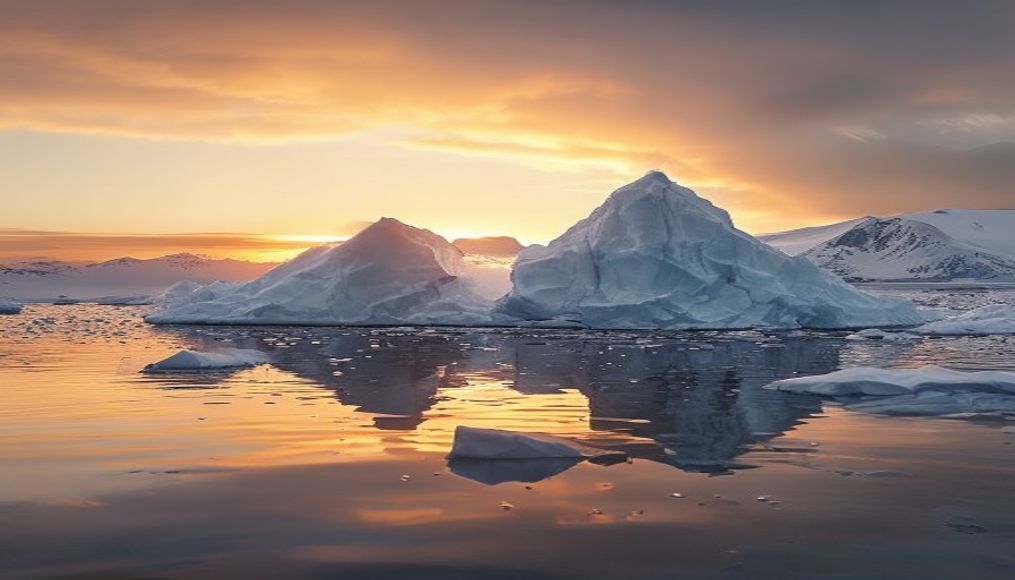
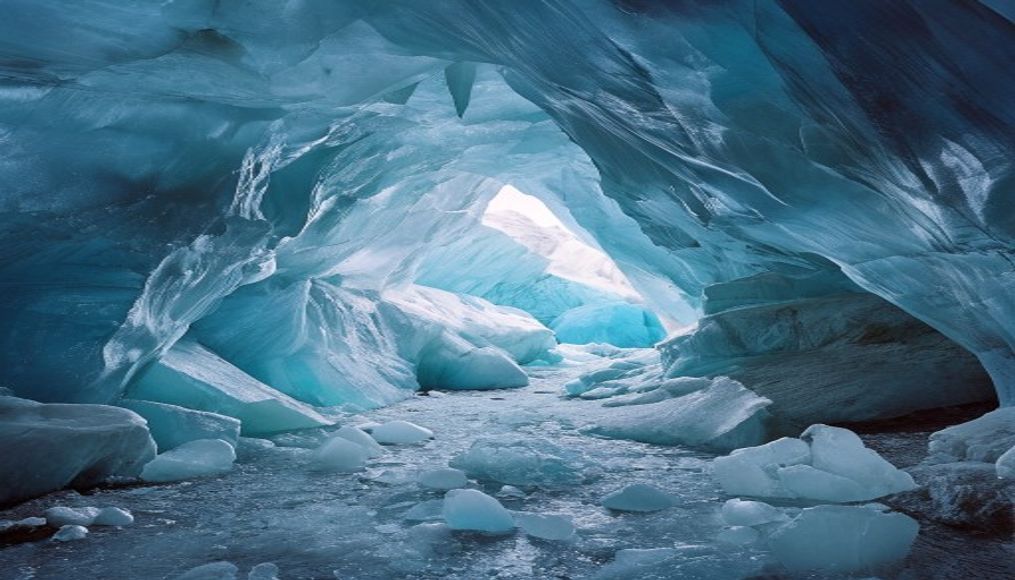
Iceberg breaking calving
1344×768 · AVIF · CC BY 4.0
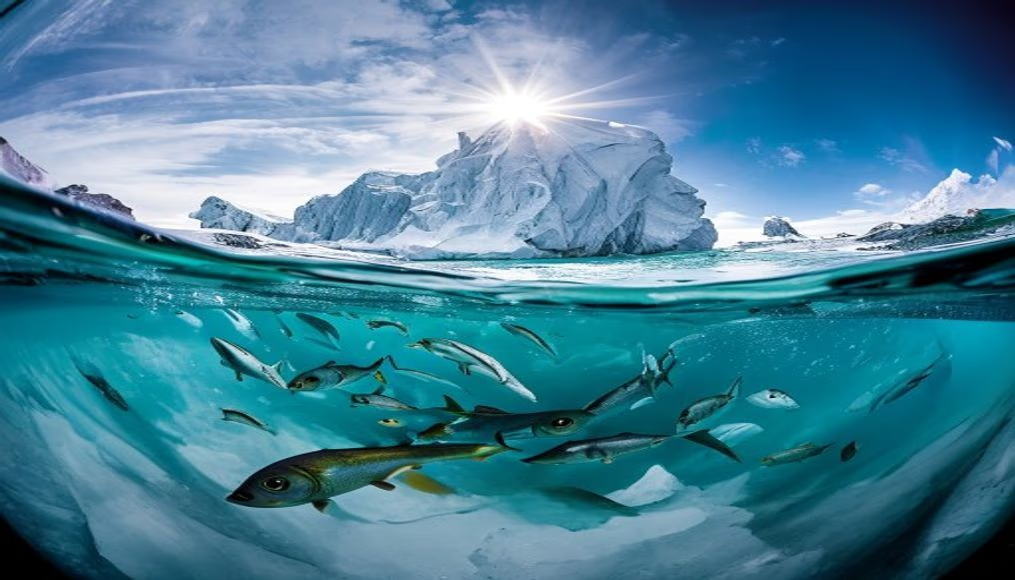
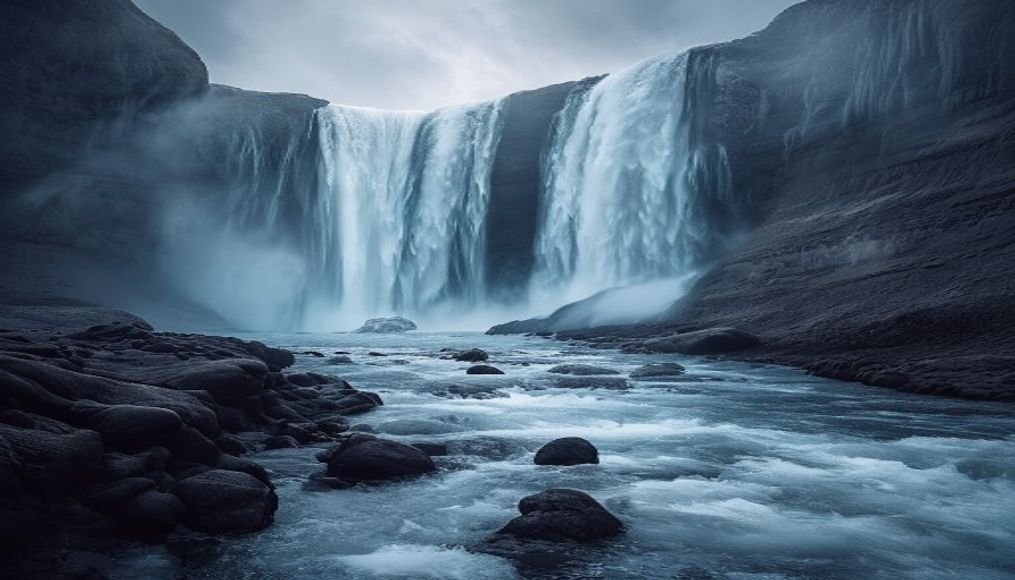
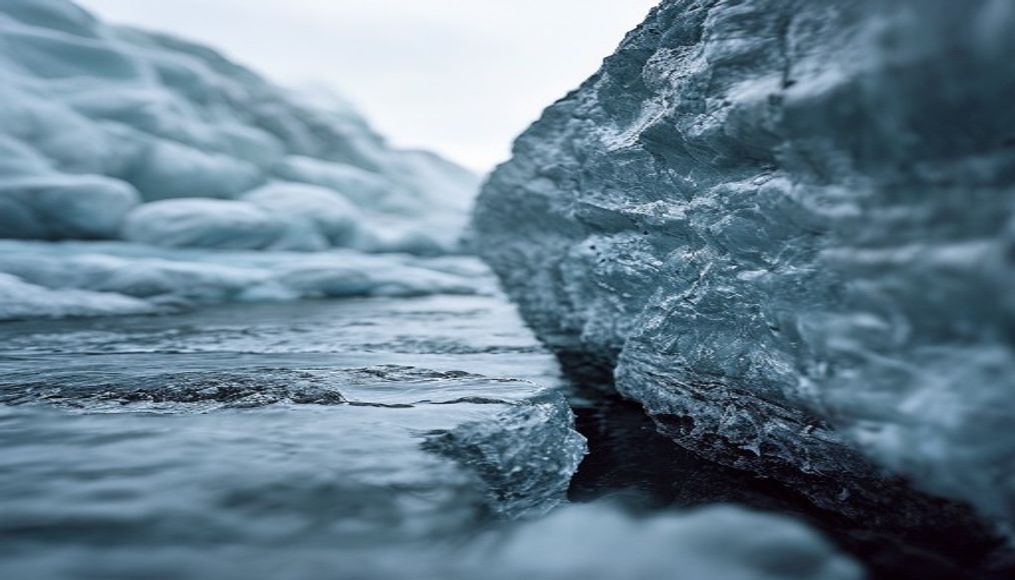
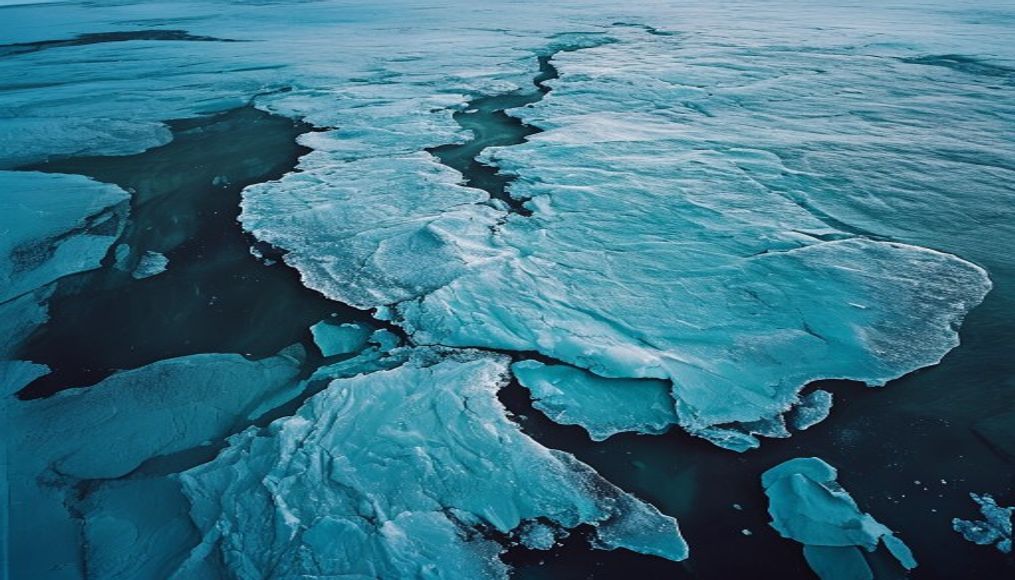
Iceberg calving, the breaking off of ice from glaciers, is a natural process that reshapes ice sheets and impacts global sea levels.
About this subject
Calving is the process by which chunks of ice break off from the edge of a glacier or ice shelf, forming icebergs. This phenomenon occurs when internal stresses in the ice, combined with melting at the base or waterline, exceed the ice's strength. The glaciers of Greenland and Antarctica are the world's largest sources of icebergs, contributing significantly to ice mass loss and sea level rise. It is estimated that Antarctic ice loss has tripled in recent decades, with calving being a primary mechanism for ice discharge into the ocean.
Calving can be influenced by factors such as ocean temperature, marine currents, and underwater topography. In regions like Baffin Bay and the Weddell Sea, giant icebergs periodically break off, some with areas comparable to cities. For example, in 2017, the A-68 iceberg calved from the Larsen C ice shelf in Antarctica, measuring about 5,800 km², nearly the size of the Brazilian Federal District. Calving events are monitored by satellites and ground sensors, helping scientists predict glacier changes and their climatic impact.
Although calving is a natural process, global warming accelerates the melting and thinning of glaciers, increasing the frequency and volume of breakoffs. Warmer ocean water erodes the base of ice shelves, making them more prone to cracks and collapse. The loss of land ice contributes to sea level rise, which has already risen about 20 cm since 1900, with projections of up to 1 meter by 2100. Calving also affects marine ecosystems by releasing freshwater and sediments, altering salinity and ocean circulation.
Interesting fact: The term "calving" comes from the English word for a cow giving birth, in analogy to the iceberg's birth. The sound of ice breaking can be heard for kilometers, and the fissures preceding calving create striking geometric patterns on the ice surface, such as star-shaped cracks, which are captured by fisheye lenses in photographs like this one.
Frequently Asked Questions
What causes iceberg calving?
Calving is caused by internal ice stresses, melting at the glacier base, and wave action. Factors like warmer ocean water and currents accelerate the process.
What is the difference between a glacier and an iceberg?
A glacier is a land-based ice mass that moves slowly. An iceberg is a block of ice that breaks off from a glacier and floats in the ocean.
How does calving affect sea level?
Ice from continental glaciers that calves and melts in the ocean directly contributes to sea level rise, as it was previously stored on land.
Direct URL
https://pub-c7d6a6ea828543ac903a74a341ccb2e1.r2.dev/imagens/iceberg-breaking-calving-fish-eye-wide-angle-p1.avifHow to credit
Include a visible link back to UtilizAí. Copy one of the snippets below:
<a href="https://xn--utiliza-eza.com/en/midia/imagens/iceberg-breaking-calving-fish-eye-wide-angle-p1">Iceberg breaking calving</a> by <a href="https://xn--utiliza-eza.com">UtilizAí</a>, licensed under <a href="https://creativecommons.org/licenses/by/4.0/">CC BY 4.0</a>.
[Iceberg breaking calving](https://xn--utiliza-eza.com/en/midia/imagens/iceberg-breaking-calving-fish-eye-wide-angle-p1) by [UtilizAí](https://xn--utiliza-eza.com), CC BY 4.0
License: CC-BY-4.0