Horsehead nebula dark
1344×768 · AVIF · CC BY 4.0
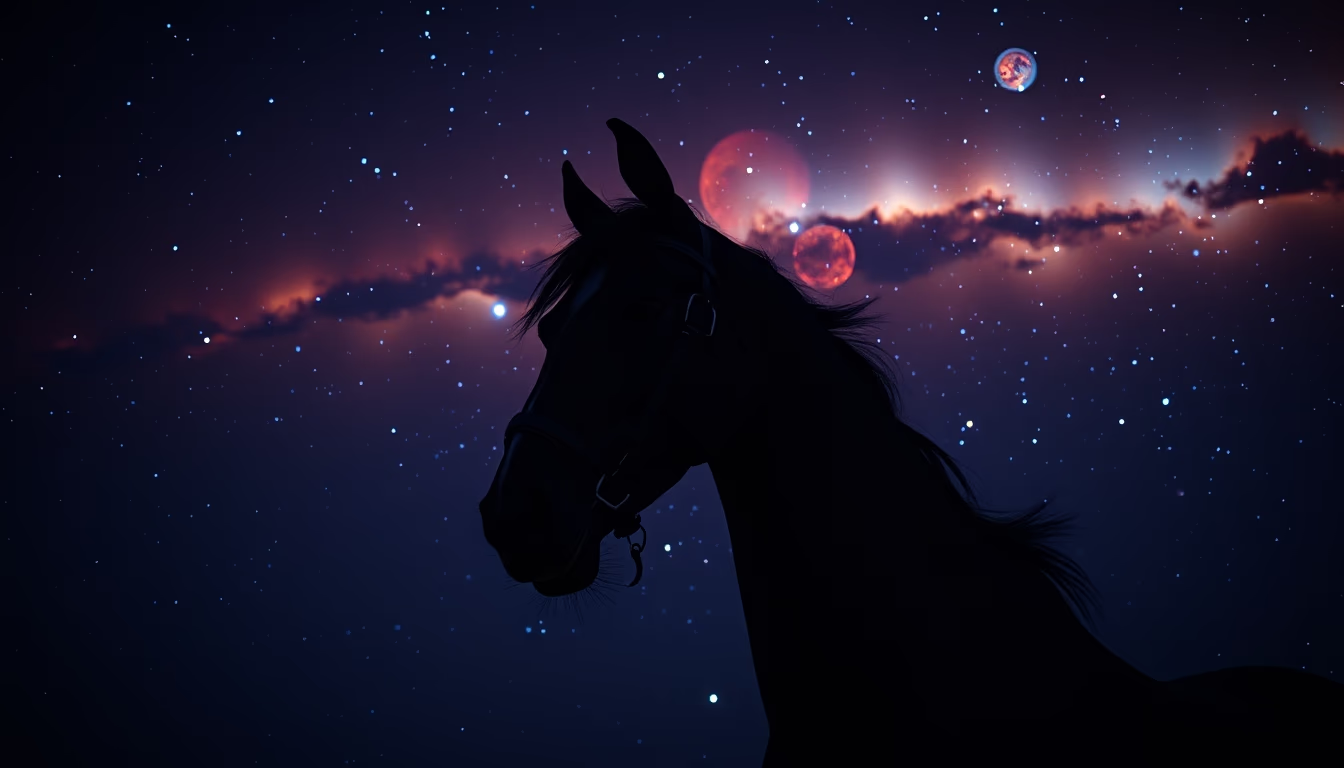
A Nebulosa Cabeça de Cavalo é uma nuvem escura de poeira e gás na constelação de Órion, um dos objetos mais fotografados do céu noturno.
Sobre o tema
A Nebulosa Cabeça de Cavalo (Barnard 33) é uma nebulosa escura localizada na constelação de Órion, a cerca de 1.375 anos-luz da Terra. Ela faz parte do Complexo de Nuvens Moleculares de Órion, uma vasta região de formação estelar que inclui também a Nebulosa de Órion (M42) e o Anel de Barnard. Sua forma icônica de cabeça de cavalo é resultado de uma nuvem densa de poeira interestelar que bloqueia a luz das estrelas e nebulosas brilhantes atrás dela. Essa silhueta foi descoberta em placas fotográficas no final do século XIX, mas só ganhou fama mundial após ser registrada em 2013 pelo Telescópio Espacial Hubble, que revelou detalhes sutis de sua estrutura.
A cor avermelhada característica ao redor da nebulosa vem da luz de estrelas próximas que ionizam o gás hidrogênio, especialmente a estrela Sigma Orionis, um sistema estelar múltiplo que ilumina a região. A própria cabeça de cavalo é composta por poeira fria e moléculas como monóxido de carbono, que se mantêm a temperaturas de apenas algumas dezenas de Kelvin. Por ser uma nebulosa escura, ela não emite luz visível própria; sua aparência deve-se ao contraste com a nebulosa de emissão IC 434 ao fundo. Astrônomos amadores costumam caçá-la com telescópios de médio porte, mas ela exige condições de céu muito escuro para ser vista visualmente.
Curiosamente, a Cabeça de Cavalo está se dissipando lentamente. Estudos indicam que, em cerca de 5 milhões de anos, o campo de radiação ultravioleta das estrelas próximas irá erodir completamente a nuvem de poeira, fazendo a silhueta desaparecer. Por enquanto, ela continua sendo um símbolo da beleza cósmica e um alvo favorito para astrofotógrafos ao redor do mundo. Diferentemente de muitas nebulosas, ela não está associada a estrelas em formação em seu interior, sendo basicamente uma sobra de material interestelar.
Perguntas frequentes
Por que a Nebulosa Cabeça de Cavalo é escura?
Ela é uma nebulosa escura: uma nuvem densa de poeira interestelar que bloqueia a luz de estrelas e nebulosas brilhantes atrás dela. A poeira absorve a luz visível, criando a silhueta escura em forma de cabeça de cavalo.
Qual a distância da Nebulosa Cabeça de Cavalo da Terra?
Ela está localizada a cerca de 1.375 anos-luz da Terra, na constelação de Órion.
É possível ver a Nebulosa Cabeça de Cavalo com telescópios amadores?
Sim, mas é um desafio. Ela é muito tênue e requer um céu extremamente escuro, longe da poluição luminosa, e um telescópio de médio porte com filtro H-alpha para ser observada visualmente.
URL direta
https://pub-c7d6a6ea828543ac903a74a341ccb2e1.r2.dev/imagens/horsehead-nebula-dark-lo-fi-disposable-camera-p3.avifComo creditar
Inclua um link visível de volta pro UtilizAí. Copie um dos snippets abaixo:
<a href="https://xn--utiliza-eza.com/midia/imagens/horsehead-nebula-dark-lo-fi-disposable-camera-p3">Horsehead nebula dark</a> by <a href="https://xn--utiliza-eza.com">UtilizAí</a>, licensed under <a href="https://creativecommons.org/licenses/by/4.0/">CC BY 4.0</a>.
[Horsehead nebula dark](https://xn--utiliza-eza.com/midia/imagens/horsehead-nebula-dark-lo-fi-disposable-camera-p3) by [UtilizAí](https://xn--utiliza-eza.com), CC BY 4.0
Licença: CC-BY-4.0