Horse saddle leather
1344×768 · AVIF · CC BY 4.0
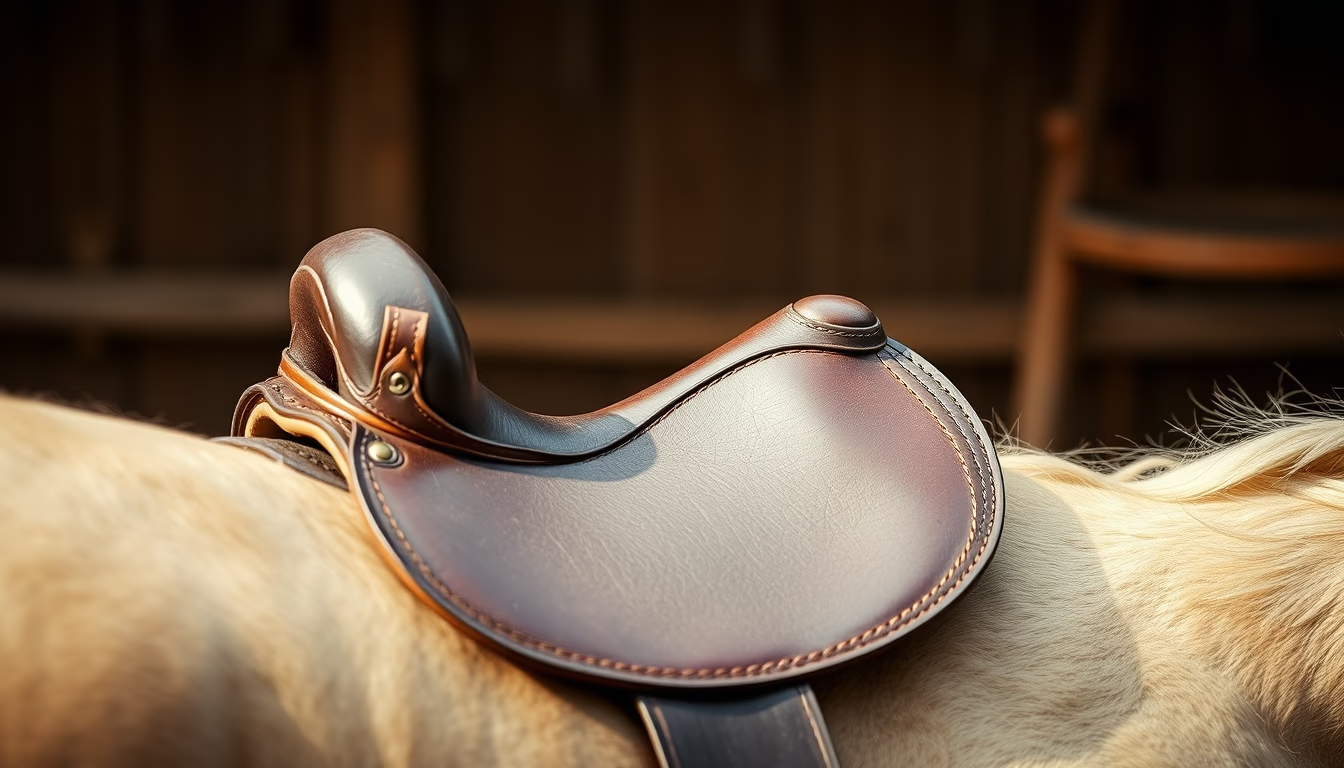
Horse saddle leather is a highly durable material essential for crafting equestrian equipment in Brazil and worldwide.
About this subject
Horse saddle leather is a noble and resistant material used for making saddles, harnesses, and other equestrian gear. In Brazil, the tradition of horseback riding, whether on farms, in rodeos, or in vaquejada competitions, demands high-quality saddles, often made from tanned cowhide. The tanning process transforms animal hide into a flexible and durable material capable of supporting the rider's weight and constant friction.
Different types of leather are used in saddles: vegetable-tanned leather, cured with natural tannins, is prized for its strength and molding ability; chrome-tanned leather, softer and more flexible, is common in modern saddles. The choice depends on the intended use, for roping events, a firmer leather is ideal; for trail riding, the softness of chrome-tanned leather may be more comfortable. High-quality leather can last decades if properly maintained with regular cleaning and conditioning.
Culturally, the leather saddle is more than equipment; it is a symbol of gaucho and sertanejo culture. In Rio Grande do Sul, the crioula saddle is a handcrafted piece, often adorned with silver and embossed work. In the Northeast, the vaquejada saddle has a specific design for safety and agility in competitions. Leather is not just raw material but an inheritance of a craft passed down through generations of saddlers (artisans who make saddles).
Sustainability is also relevant: leather is a byproduct of the meat industry, and its use avoids waste. Modern tanneries seek to reduce environmental impact with processes that save water and avoid harmful chemicals. For horse riding enthusiasts, investing in a quality leather saddle means uniting tradition, durability, and respect for the environment.
Frequently Asked Questions
What is the difference between vegetable-tanned and chrome-tanned saddle leather?
Vegetable-tanned leather uses natural tannins, resulting in a firm and durable material that holds its shape well. Chrome-tanned leather is softer and more flexible, requiring less breaking in, though it may be less durable in extreme conditions.
How to care for horse saddle leather?
Clean with mild soap and water, avoid harsh chemicals. Condition periodically with leather oil or specialized conditioners. Store in a ventilated area away from direct sunlight to prevent drying and cracking.
Is saddle leather sustainable?
Yes, leather is a byproduct of the meat industry, using material that would otherwise be waste. Modern tanneries adopt eco-friendly practices, such as treating wastewater and reducing chromium use, making the product more sustainable.
Direct URL
https://pub-c7d6a6ea828543ac903a74a341ccb2e1.r2.dev/imagens/horse-saddle-leather-documentary-photography-fresh6.avifHow to credit
Include a visible link back to UtilizAí. Copy one of the snippets below:
<a href="https://xn--utiliza-eza.com/en/midia/imagens/horse-saddle-leather-documentary-photography-fresh6">Horse saddle leather</a> by <a href="https://xn--utiliza-eza.com">UtilizAí</a>, licensed under <a href="https://creativecommons.org/licenses/by/4.0/">CC BY 4.0</a>.
[Horse saddle leather](https://xn--utiliza-eza.com/en/midia/imagens/horse-saddle-leather-documentary-photography-fresh6) by [UtilizAí](https://xn--utiliza-eza.com), CC BY 4.0
License: CC-BY-4.0