Horse mane braided
1344×768 · AVIF · CC BY 4.0
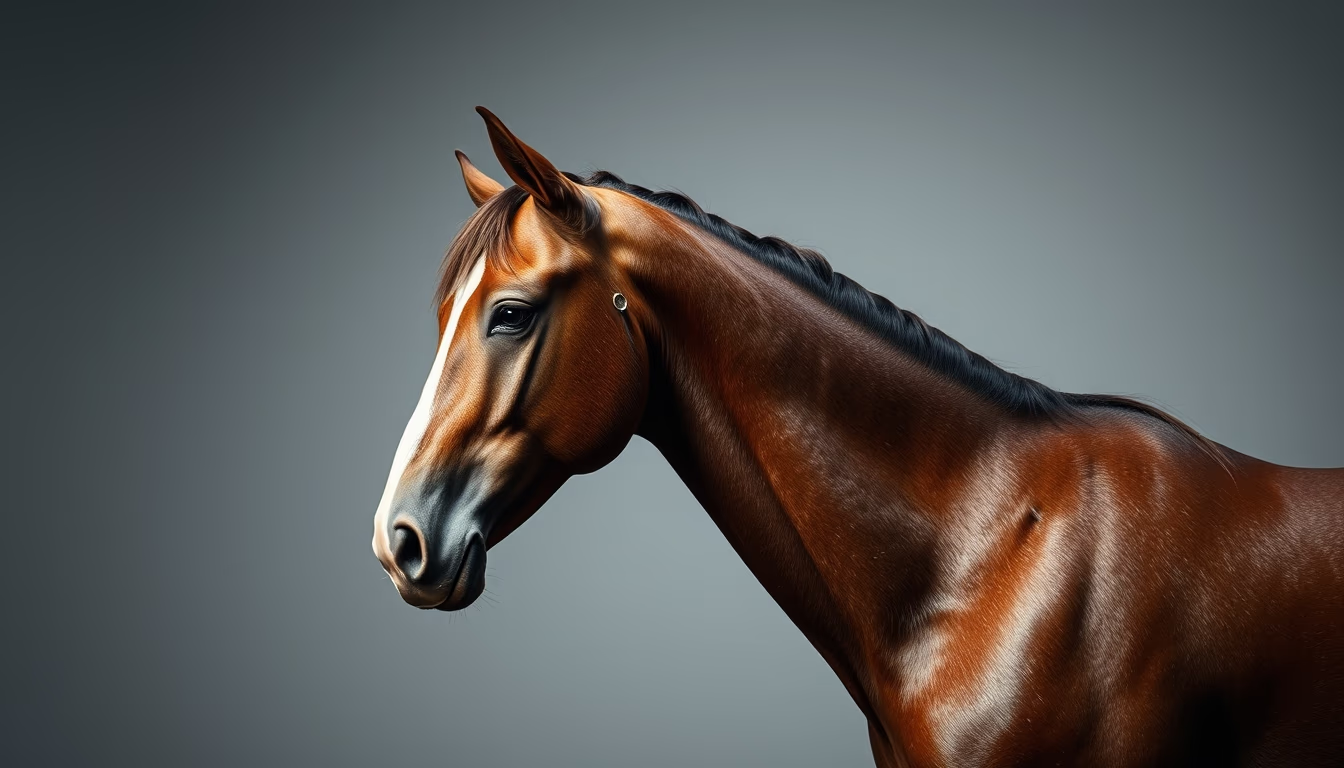
Braiding a horse's mane is a traditional practice that combines aesthetics, functionality, and equestrian culture across various sports and events.
About this subject
Braiding a horse's mane is far more than decoration: it carries centuries of tradition and serves practical purposes that vary by equestrian discipline. In classical riding competitions such as dressage and show jumping, braided manes are nearly mandatory to create a clean, elegant appearance and prevent hair from tangling in the reins or rider's gear. Each braid is hand-crafted, usually with elastic bands or thread, and can take 30 minutes to two hours to complete, depending on the mane type and pattern complexity.
In western disciplines, like reining and cutting, manes are often left loose or braided simply to preserve natural movement and mobility. For working horses on Brazilian ranches, braids help protect the mane from branches and fences during handling. Distinct styles exist: English button braids, French braids, and running braids, each with specific techniques and purposes.
Historically, mane braiding dates back to ancient Rome, where war horses had braided manes to prevent enemies from grabbing them in battle. In Celtic culture, braided manes signified status and spiritual protection. Today, beyond functionality, braids are part of the horse's aesthetic presentation at shows and auctions, even influencing sale value. In Brazilian Crioulo horse traditions, manes are braided for festivals and parades.
Caring for a braided mane requires patience and skill: detangling, moisturizing, and ensuring the braids are not too tight to cause discomfort. Many owners hire professional braiders for special events. The popularity of braiding has spawned online tutorials and courses, making the technique accessible to any rider aiming to enhance their horse's presentation.
Frequently Asked Questions
How long can a braided mane stay on a horse?
Ideally, keep braids for no more than 3 to 5 days to prevent breakage and discomfort. For competitions, braids are done the day before and removed right after the event.
Does braiding the mane hurt the horse?
When done correctly, braiding does not cause pain. The key is not to pull too tightly at the base and to use specific elastic bands that don't tug. Sensitive horses may show discomfort if the work is too forceful.
What is the difference between English button braids and French braids?
English button braids are small, separate rounded braids, common in English riding disciplines. French braids are continuous, starting near the ear and running along the crest to the withers, often used in dressage and gaited horses.
Direct URL
https://pub-c7d6a6ea828543ac903a74a341ccb2e1.r2.dev/imagens/horse-mane-braided-studio-still-life-fresh17.avifHow to credit
Include a visible link back to UtilizAí. Copy one of the snippets below:
<a href="https://xn--utiliza-eza.com/en/midia/imagens/horse-mane-braided-studio-still-life-fresh17">Horse mane braided</a> by <a href="https://xn--utiliza-eza.com">UtilizAí</a>, licensed under <a href="https://creativecommons.org/licenses/by/4.0/">CC BY 4.0</a>.
[Horse mane braided](https://xn--utiliza-eza.com/en/midia/imagens/horse-mane-braided-studio-still-life-fresh17) by [UtilizAí](https://xn--utiliza-eza.com), CC BY 4.0
License: CC-BY-4.0