Horse mane braided
1344×768 · AVIF · CC BY 4.0
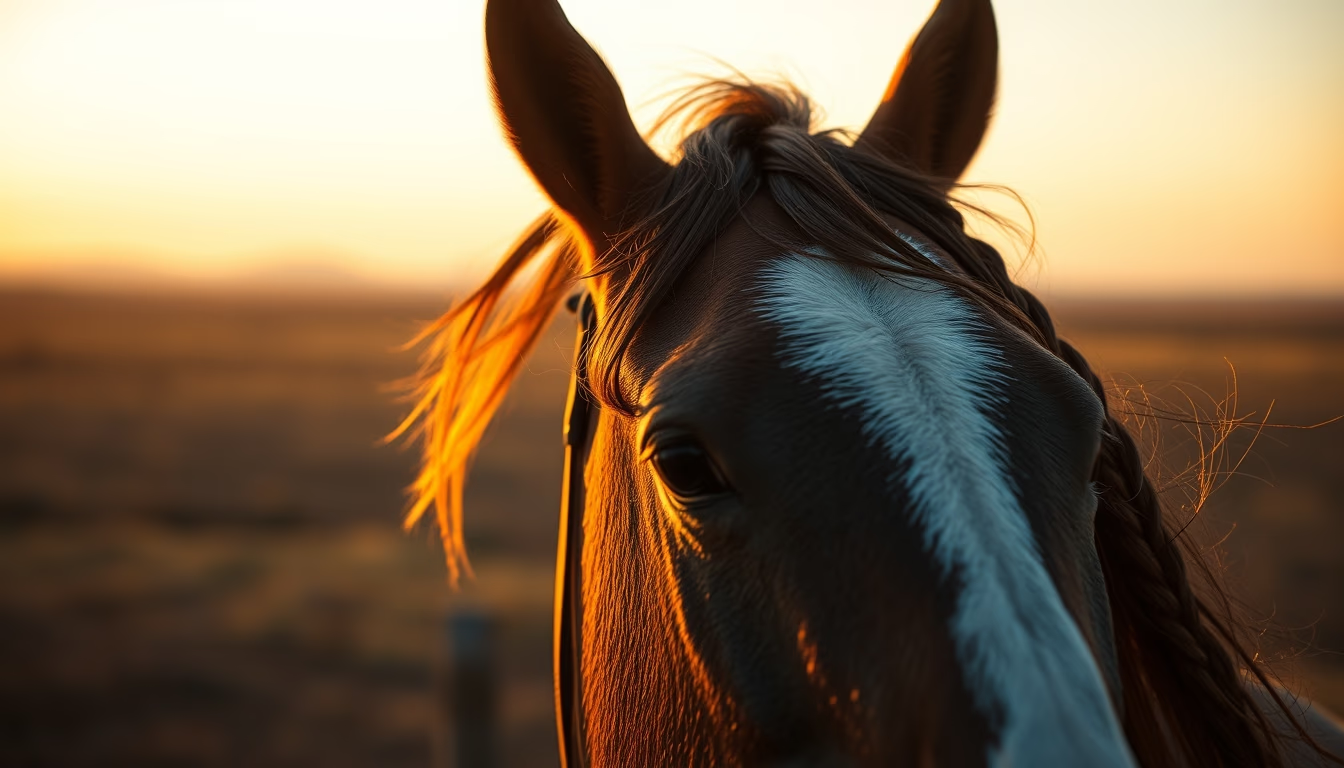
Braiding a horse's mane is an ancient equestrian practice that combines functionality and aesthetics, varying according to the discipline and cultural tradition.
About this subject
The practice of braiding a horse's mane dates back centuries, serving both practical and aesthetic purposes. In competitions, braids are essential to present the animal neatly, highlighting its conformation and musculature. Specific styles exist for each discipline: hunter braids are small and uniform with knots at the ends; dressage braids are wider and often folded under; in Western roping, manes are braided in a "running braid" style to prevent interference with the rope.
Historically, mane braiding has military and aristocratic origins. In medieval Europe, knights braided their war horses' manes to signify lineage or feudal lord. In the 20th century, the practice became standardized in equestrian competitions, especially in England, where fox hunting required well-groomed manes. Today, methods have evolved with the use of elastic bands and colored yarn, but the essence remains.
Beyond aesthetics, braids offer practical benefits. They keep the mane out of the eyes and hands of the rider during jumps or speed events, reducing accident risk. They also prevent tangles and matting, easing daily grooming. For horses with thick or curly manes, braids help distribute natural oils and prevent hair breakage. In hot climates, loose braids allow ventilation, preventing overheating of the neck.
In Brazil, mane braiding is strong in activities such as vaquejada and freio de ouro. Northeastern cowboys often braid their horses' manes simply and functionally, while in stud farms of breeds like the Mangalarga Marchador, braids are crafted carefully for exhibitions. Regardless of culture, braiding a mane is an art that requires patience and knowledge of the horse's hair, being a form of care and respect for the animal.
Frequently Asked Questions
Why braid a horse's mane?
Braiding the mane keeps hair tidy, prevents tangles, and protects against breakage. In competitions, it is an aesthetic requirement to present the horse cleanly and traditionally.
What are the most common braiding styles?
Common styles include hunter braids (small with a knot), dressage braids (wide and folded under), and running braids (continuous, common in Western roping). Each discipline has its variations.
Does braiding damage the mane?
No, if done correctly. Using very tight elastic bands or leaving braids too long can cause discomfort or breakage, but with proper technique and rest periods, the practice is safe.
Direct URL
https://pub-c7d6a6ea828543ac903a74a341ccb2e1.r2.dev/imagens/horse-mane-braided-cinematic-wide-shot-fresh4.avifHow to credit
Include a visible link back to UtilizAí. Copy one of the snippets below:
<a href="https://xn--utiliza-eza.com/en/midia/imagens/horse-mane-braided-cinematic-wide-shot-fresh4">Horse mane braided</a> by <a href="https://xn--utiliza-eza.com">UtilizAí</a>, licensed under <a href="https://creativecommons.org/licenses/by/4.0/">CC BY 4.0</a>.
[Horse mane braided](https://xn--utiliza-eza.com/en/midia/imagens/horse-mane-braided-cinematic-wide-shot-fresh4) by [UtilizAí](https://xn--utiliza-eza.com), CC BY 4.0
License: CC-BY-4.0