Horse mane braided
1344×768 · AVIF · CC BY 4.0
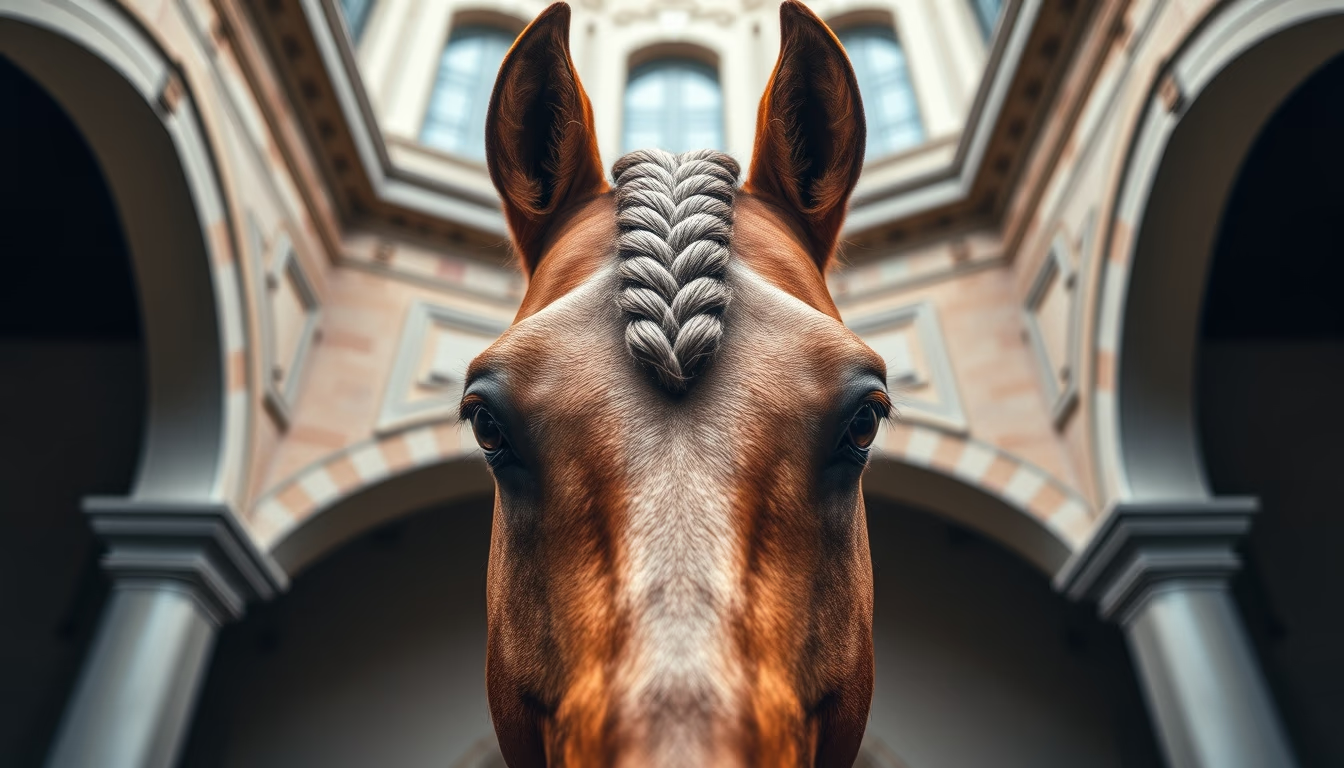
Braiding a horse's mane is a traditional practice combining aesthetics and functionality, common in equestrian competitions and daily care.
About this subject
Horse mane braiding, a long-standing equestrian tradition, serves both functional and decorative purposes. Historically, braiding prevented the mane from getting tangled in branches or harness during riding. It later evolved into a key aesthetic element in competitions such as show jumping, dressage, and reining. Each braiding style can signify the horse's discipline, the rider's experience level, or regional customs. For example, English-style braiding features small, uniform knots, while French braiding is looser and continuous. Rosette braiding creates flower-like shapes often seen in heavy horse breeds.
Different braid types suit different breeds and occasions. Warmbloods and Thoroughbreds commonly sport English braids in shows, whereas Icelandic horses may have simpler braids for trail riding. In addition to appearance, braiding protects the mane from breakage and helps identify horses in crowded stables. Some cultures, such as those in Belgium and France, use colored ribbons woven into the mane for festive events. The process requires careful sectioning and tension to ensure neatness and durability.
Proper mane braiding demands skill and time. Groomers typically start by washing and conditioning the mane to reduce tangles. They then divide the mane into even sections, often using a comb and water spray for control. Elastic bands or thread secure the ends, and some braiders incorporate yarn for extra hold or color. In high-level competitions, braiding can take over an hour per horse. Riders often learn the technique from mentors or specialized clinics. Beyond competitions, braiding remains popular in leisure riding and cultural festivals, preserving a craft passed down through generations.
Frequently Asked Questions
Why braid a horse's mane?
Braiding serves both practical and aesthetic purposes: it prevents tangling with tack, maintains mane health, enhances appearance in competitions, and aids identification in groups.
What are the main mane braiding styles?
Common styles include English braids (small, uniform knots), French braids (continuous and looser), and rosette braids (flower-shaped). The choice depends on breed and purpose.
How long does it take to braid a horse's mane?
Time varies by technique and mane length, but typically ranges from 30 minutes to 2 hours. In high-level competitions, it may take longer due to detailed finishing.
Direct URL
https://pub-c7d6a6ea828543ac903a74a341ccb2e1.r2.dev/imagens/horse-mane-braided-architectural-photography-fresh14.avifHow to credit
Include a visible link back to UtilizAí. Copy one of the snippets below:
<a href="https://xn--utiliza-eza.com/en/midia/imagens/horse-mane-braided-architectural-photography-fresh14">Horse mane braided</a> by <a href="https://xn--utiliza-eza.com">UtilizAí</a>, licensed under <a href="https://creativecommons.org/licenses/by/4.0/">CC BY 4.0</a>.
[Horse mane braided](https://xn--utiliza-eza.com/en/midia/imagens/horse-mane-braided-architectural-photography-fresh14) by [UtilizAí](https://xn--utiliza-eza.com), CC BY 4.0
License: CC-BY-4.0