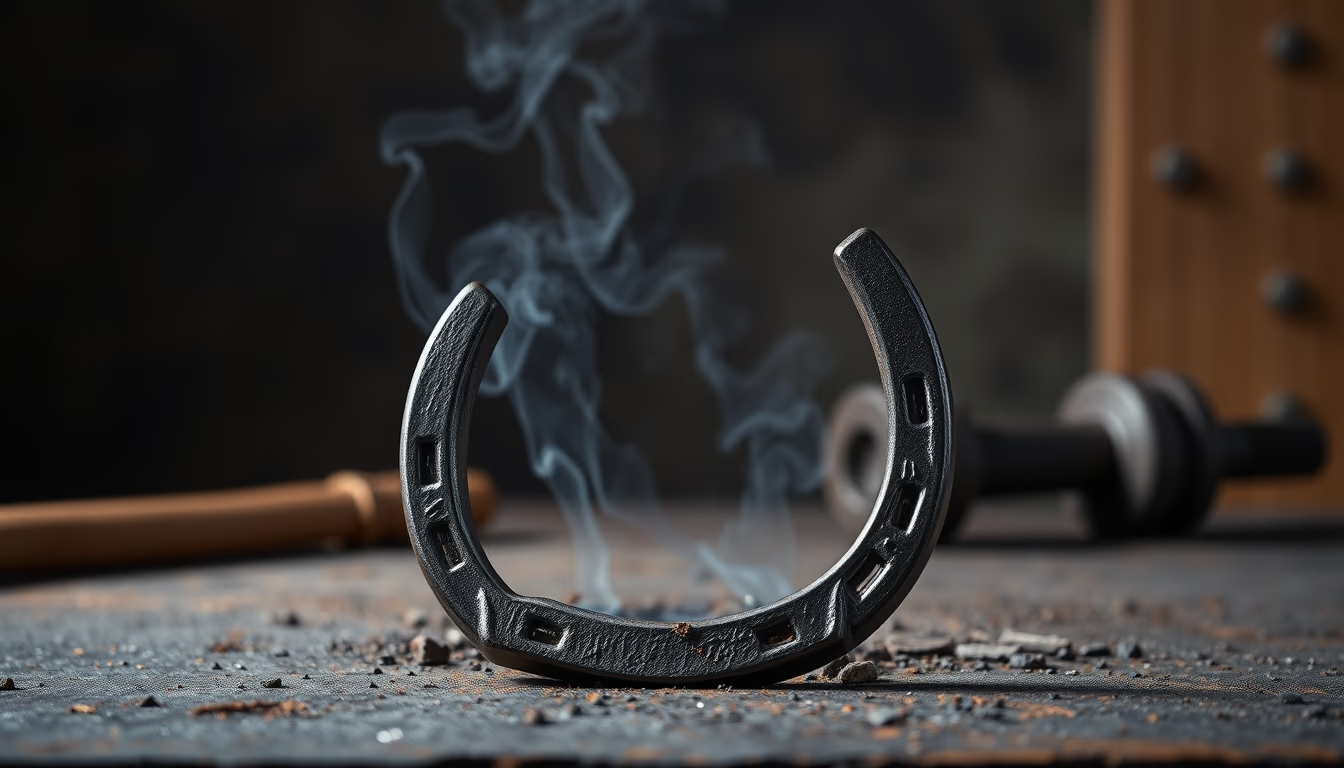
Horse bridle reins
1344×768 · AVIF · CC BY 4.0

Bridle reins are essential components of horseback riding, allowing the rider to communicate with the horse through contact with the animal's mouth.
About this subject
Bridle reins are straps made of leather, synthetic material, or rope that connect the rider's hands to the bit or bridle in the horse's mouth. They are fundamental for transmitting commands of direction, stop, and speed, acting as a subtle communication channel between horse and rider. There are several types of reins, such as single reins (used in most riding), double reins (common in classical dressage), and loop reins (used in roping and working events). The length and thickness vary according to the discipline and rider preference, with thinner reins offering greater sensitivity and thicker ones providing extra security.
The material of the reins directly influences grip and durability. Leather is traditional and offers good hold but requires frequent maintenance to prevent drying. Synthetics like nylon or biothane are more water-resistant and easy to clean, popular in endurance riding and ranch work. Rope reins, common in western and barefoot riding, provide a rustier touch and are used in horses trained to respond to lighter commands.
Culturally, reins vary among equestrian traditions. In English riding, reins are generally shorter and kept in constant contact, while in cattle work and roping, reins are long and used for quick maneuvers. In dressage competitions, double mouthpiece reins allow extreme refinement of movements, demonstrating the synergy between rider and animal. Historically, the design of reins evolved with riding practices, from simple medieval cavalry reins to modern systems with pressure adjustments.
Despite their apparent simplicity, reins require technical knowledge for correct use. A common mistake is pulling the reins with excessive force, which can cause pain to the horse and impair communication. Experienced riders learn to use their body weight and legs in conjunction with the reins, creating harmonious communication. In some disciplines, such as trail riding, reins are replaced by mane ropes or hackamores, adapting to local culture and horse training needs.
Frequently Asked Questions
What are bridle reins?
Bridle reins are straps attached to the bit or bridle in the horse's mouth, used by the rider to control direction, speed, and stopping of the animal.
What is the difference between single and double reins?
Single reins are one strap on each side, while double reins have two straps per side (curb rein and bridoon rein), used in dressage for more precise communication.
How to choose the material of reins?
The material depends on the discipline: leather for tradition and grip (requires maintenance), synthetics for durability and easy cleaning, and rope for a rustic feel and sensitivity.
Direct URL
https://pub-c7d6a6ea828543ac903a74a341ccb2e1.r2.dev/imagens/horse-bridle-reins-tilt-shift-miniature-fresh3.avifHow to credit
Include a visible link back to UtilizAí. Copy one of the snippets below:
<a href="https://xn--utiliza-eza.com/en/midia/imagens/horse-bridle-reins-tilt-shift-miniature-fresh3">Horse bridle reins</a> by <a href="https://xn--utiliza-eza.com">UtilizAí</a>, licensed under <a href="https://creativecommons.org/licenses/by/4.0/">CC BY 4.0</a>.
[Horse bridle reins](https://xn--utiliza-eza.com/en/midia/imagens/horse-bridle-reins-tilt-shift-miniature-fresh3) by [UtilizAí](https://xn--utiliza-eza.com), CC BY 4.0
License: CC-BY-4.0