Holi powder colors
1344×768 · AVIF · CC BY 4.0
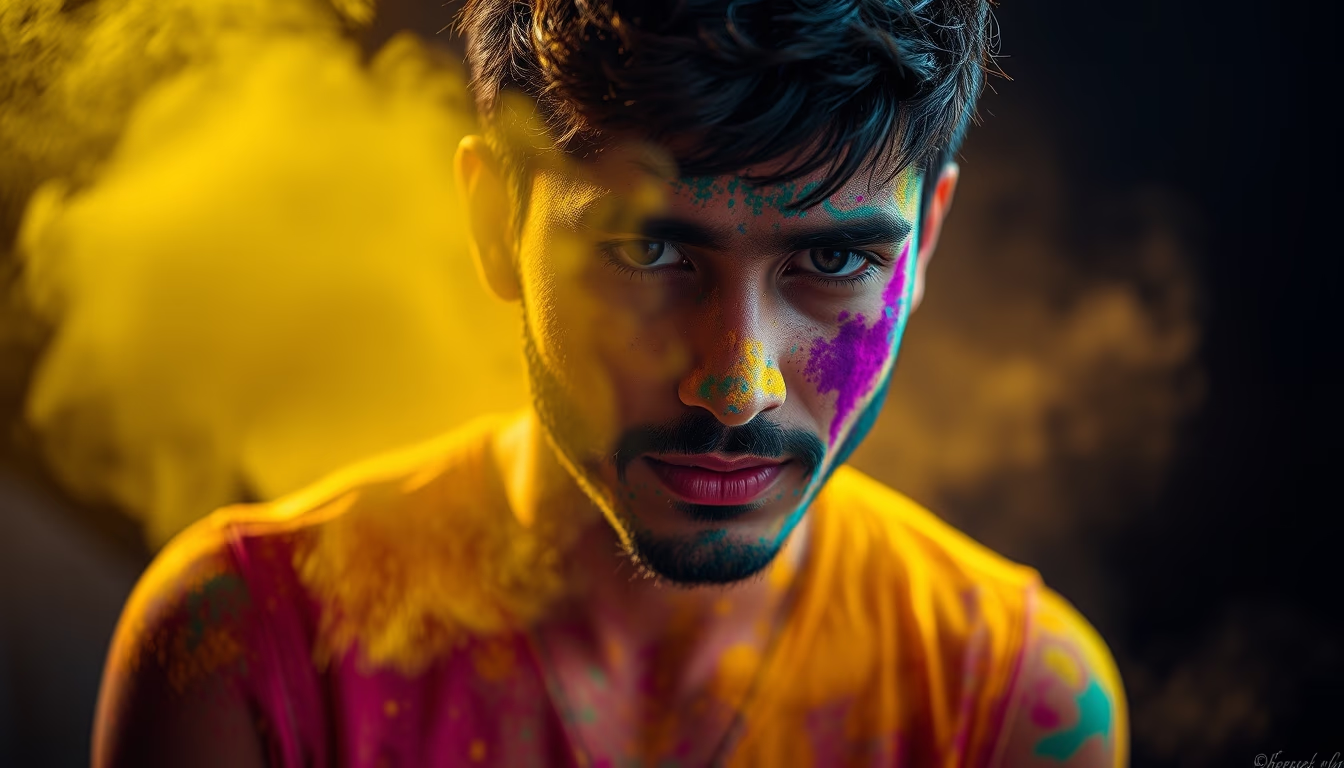
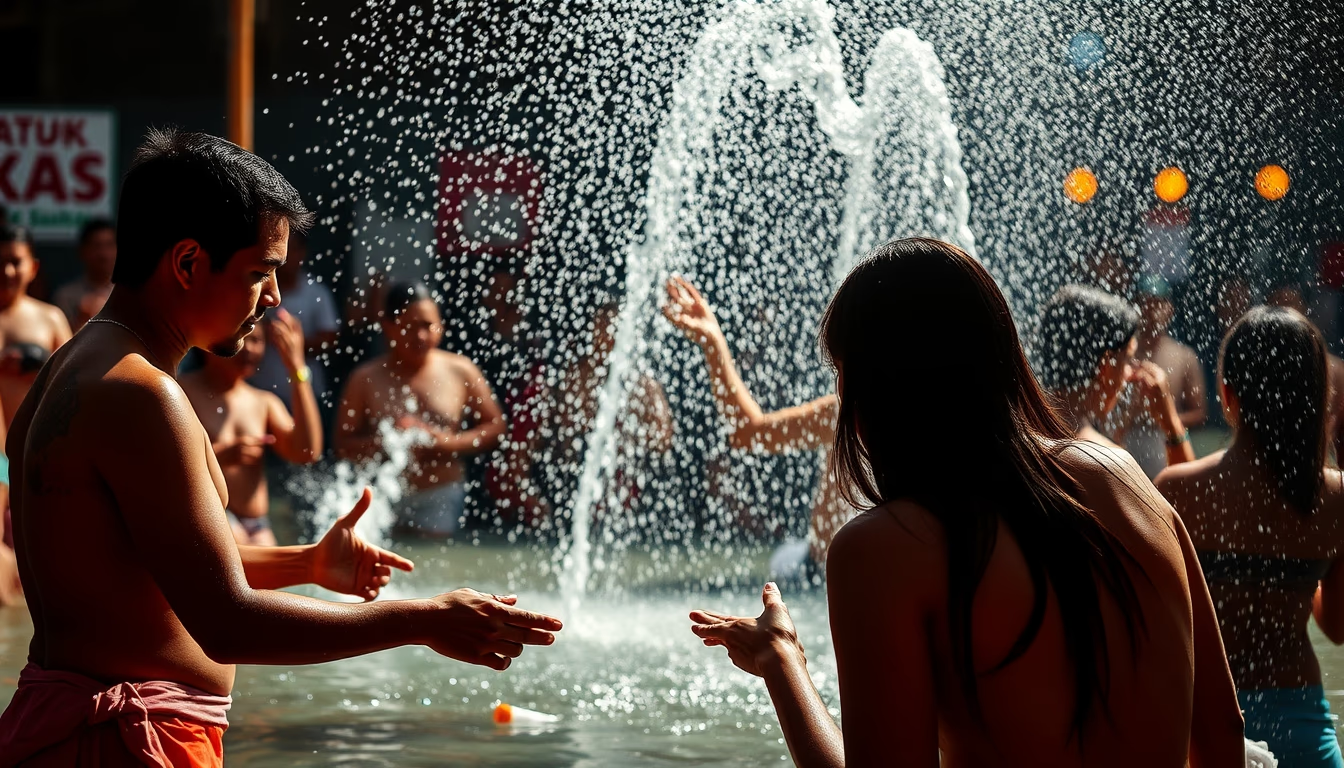
The colorful powders of Holi, the Hindu spring festival, symbolize joy, renewal, and the victory of good over evil.
About this subject
Holi is a Hindu festival celebrated primarily in India, Nepal, and other South Asian regions, marking the arrival of spring and the victory of good over evil. During the festivities, participants throw colored powders known as gulal at each other. Traditionally, these powders were made from natural sources such as tesu flowers (Butea monosperma), turmeric, and sandalwood paste. Today, many gulal are synthetic, but there is a growing return to organic dyes to avoid skin and environmental harm.
Each color carries significance: red symbolizes love and fertility; blue, the color of Krishna; green, renewal; and yellow, symbolizing turmeric used in rituals. The act of coloring others represents the breaking of social barriers, unity, and forgiveness. The festival spans two days: the first focuses on night rituals and bonfires (Holika Dahan), and the second is Rangwali Holi, when people take to the streets with powders and water guns.
Beyond India, Holi has spread to countries like the United States, the United Kingdom, and Brazil, where Indian communities and enthusiasts organize events featuring music, dance, and powder throwing. In Brazil, cities such as São Paulo and Rio de Janeiro host annual celebrations attracting thousands, adapting the tradition to the tropical climate. The popularity has also inspired color runs, which borrow the playful powder throwing but lack the religious context.
The powders are typically made from cornstarch or flour mixed with food-grade or natural dyes. For safety, it is recommended to use dermatologically tested products and avoid excessive inhalation. The festival reinforces values of community, joy, and non-attachment to material possessions, making it one of India's most significant cultural celebrations.
Frequently Asked Questions
What is the Holi festival?
Holi is a Hindu spring festival celebrated mainly in India and Nepal. It symbolizes the victory of good over evil and the arrival of the new season, with people throwing colored powders and water at each other.
Are Holi powders safe for the skin?
Natural and organic powders made from cornstarch and plant-based dyes are safe. Synthetic ones may contain irritants. It is recommended to choose tested brands and avoid contact with eyes and mucous membranes.
How is Holi celebrated in Brazil?
In Brazil, Indian communities and companies organize public events in cities like São Paulo and Rio de Janeiro, featuring music, dance, traditional foods, and powder throwing. Color runs are also a popular adaptation.
Direct URL
https://pub-c7d6a6ea828543ac903a74a341ccb2e1.r2.dev/imagens/holi-powder-colors-rembrandt-lighting-dramatic-shadows-fresh8.avifHow to credit
Include a visible link back to UtilizAí. Copy one of the snippets below:
<a href="https://xn--utiliza-eza.com/en/midia/imagens/holi-powder-colors-rembrandt-lighting-dramatic-shadows-fresh8">Holi powder colors</a> by <a href="https://xn--utiliza-eza.com">UtilizAí</a>, licensed under <a href="https://creativecommons.org/licenses/by/4.0/">CC BY 4.0</a>.
[Holi powder colors](https://xn--utiliza-eza.com/en/midia/imagens/holi-powder-colors-rembrandt-lighting-dramatic-shadows-fresh8) by [UtilizAí](https://xn--utiliza-eza.com), CC BY 4.0
License: CC-BY-4.0