High speed train station
1344×768 · AVIF · CC BY 4.0
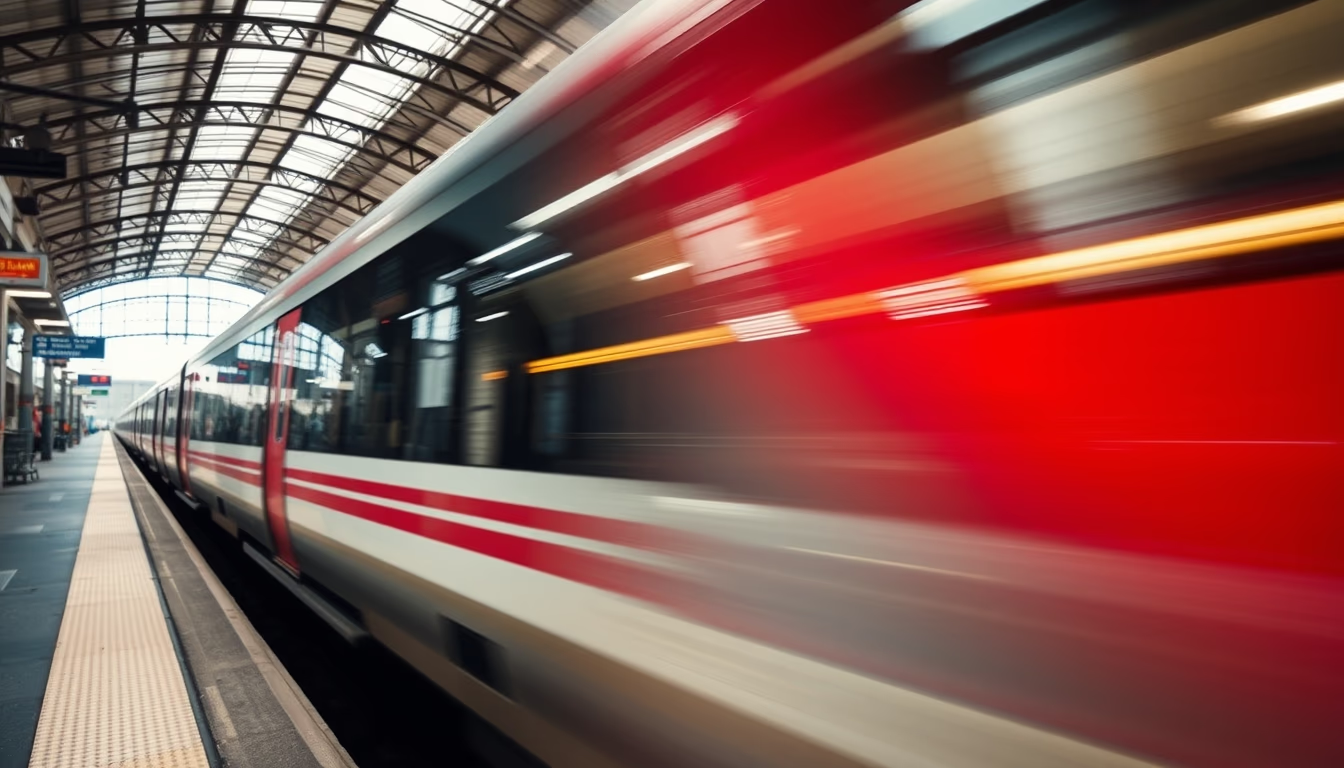
High-speed train stations combine advanced engineering, iconic design and efficiency to connect cities in minutes.
About this subject
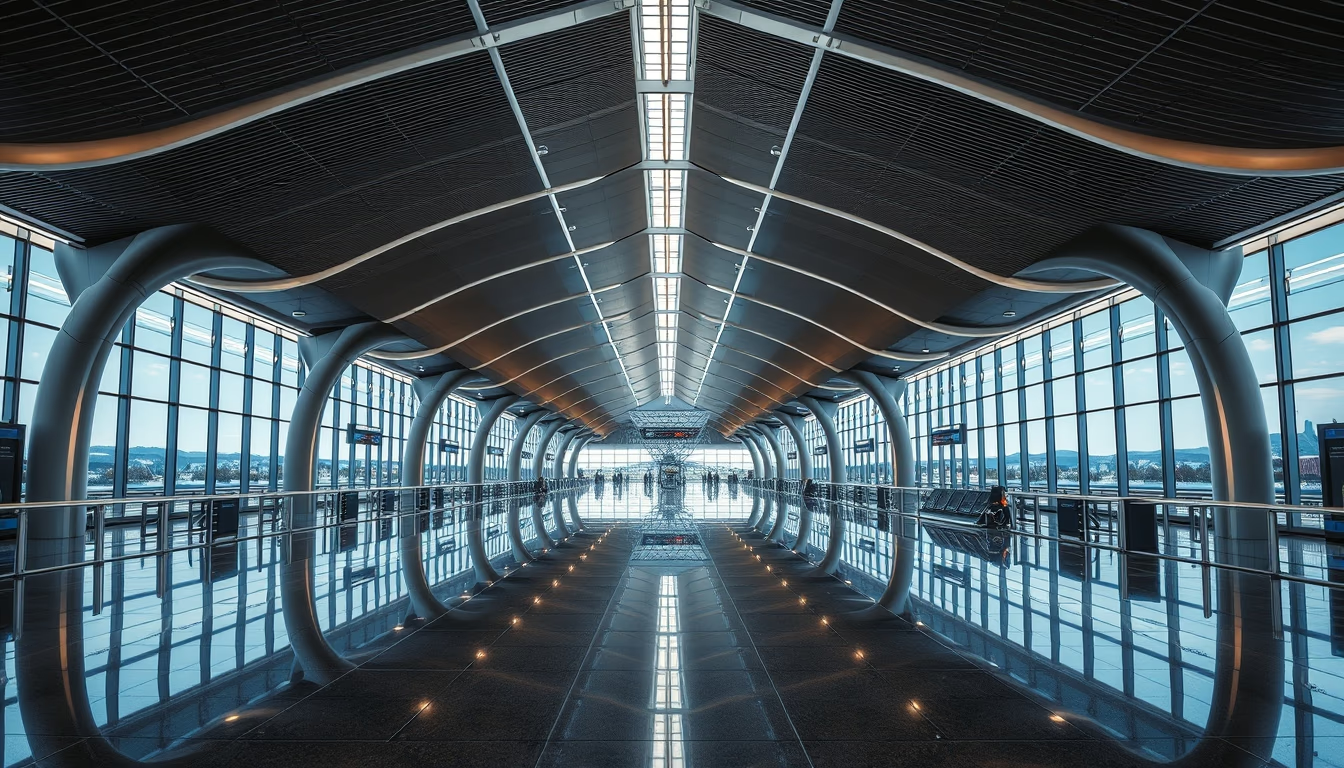
High-speed train stations are landmarks of modern infrastructure, designed to serve trains traveling at speeds above 250 km/h. Unlike conventional stations, they require straight, long platforms, digital signaling systems, and specially reinforced tracks. The layout prioritizes rapid passenger flow, with direct access to bus terminals, subways, and parking lots. Notable examples include Shanghai Hongqiao Station in China, the world's largest by floor area, and Gare de Lyon, Saint-Exupéry in France, which integrates the TGV with the airport.
The architecture of these stations often reflects innovation and sustainability. Steel-and-glass arch roofs allow natural lighting, while solar panels and rainwater harvesting systems reduce energy consumption. Designs aim to minimize visual and acoustic barriers, creating spacious, intuitive spaces. In Japan, Tokyo Station combines a historic façade with cutting-edge technology, housing the Shinkansen on underground levels to preserve the urban landscape.
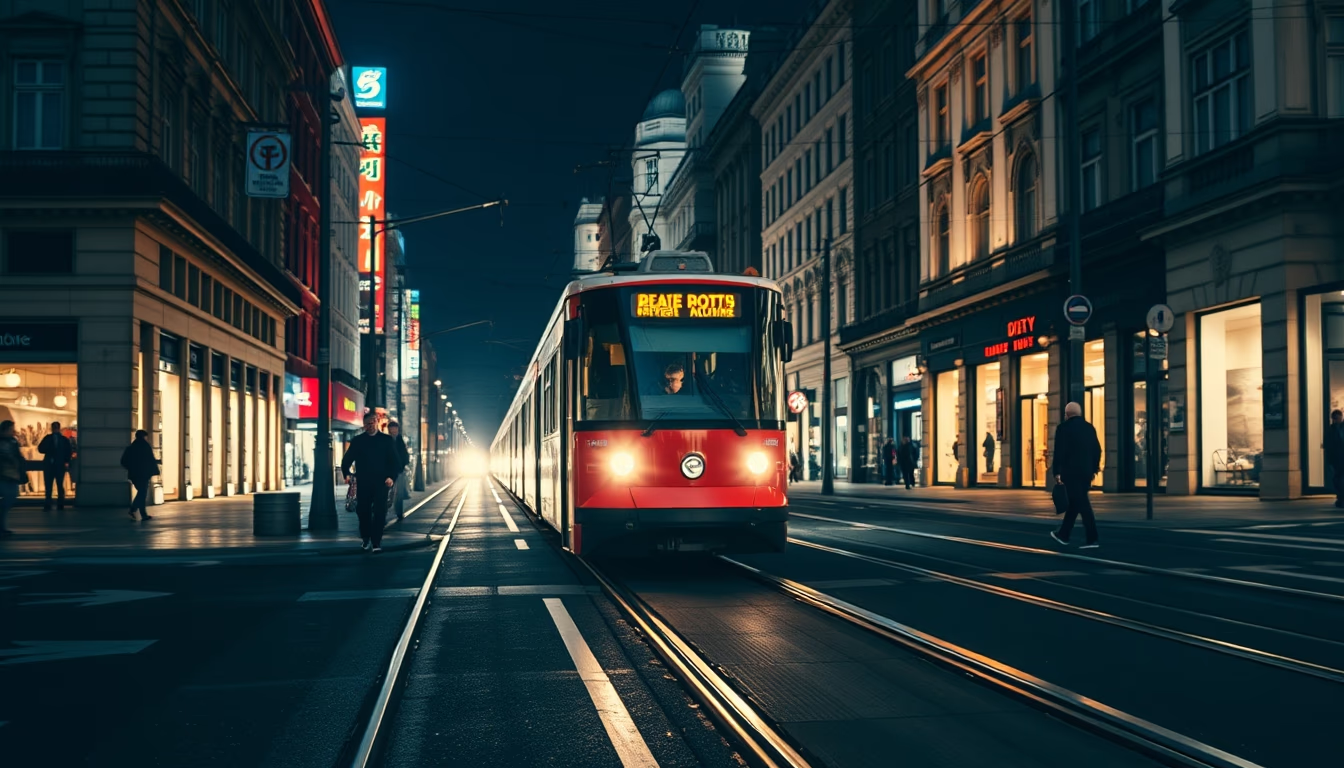
The socioeconomic impact of these stations is profound. Cities like Lyon, France, and Seoul, South Korea, experienced urban revitalization around their stations, with increased property values and tourism. Studies show that every minute saved on high-speed travel can generate regional productivity gains in the order of millions of dollars. Modal integration is key: stations such as Berlin Hauptbahnhof in Germany connect regional, national, and international trains in a single complex.
Interestingly, some stations incorporate local cultural elements. Marrakech Station in Morocco uses Islamic geometric patterns on its facade, while Rome Termini houses ancient Roman ruins discovered during its construction. In Brazil, the Rio, São Paulo High-Speed Rail project (canceled in 2015) envisioned stations with sustainable mobility concepts and bike lane integration, showing how these structures can adapt to different realities.
Frequently Asked Questions
What is the largest high-speed train station in the world?
Shanghai Hongqiao Station in China is the largest by floor area, covering 1.3 million square meters, serving high-speed trains, metro, and domestic flights.
Are high-speed stations sustainable?
Yes, many incorporate green roofs, solar panels, and water reuse systems. London's King's Cross station reduced emissions by 50% after modernization.
How do high-speed train stations affect urban development?
They often spur revitalization of surrounding areas, attracting real estate investment, commerce, and tourism, as seen in Lille, France, after the TGV arrived.
Direct URL
https://pub-c7d6a6ea828543ac903a74a341ccb2e1.r2.dev/imagens/high-speed-train-station-macro-closeup-p5.avifHow to credit
Include a visible link back to UtilizAí. Copy one of the snippets below:
<a href="https://xn--utiliza-eza.com/en/midia/imagens/high-speed-train-station-macro-closeup-p5">High speed train station</a> by <a href="https://xn--utiliza-eza.com">UtilizAí</a>, licensed under <a href="https://creativecommons.org/licenses/by/4.0/">CC BY 4.0</a>.
[High speed train station](https://xn--utiliza-eza.com/en/midia/imagens/high-speed-train-station-macro-closeup-p5) by [UtilizAí](https://xn--utiliza-eza.com), CC BY 4.0
License: CC-BY-4.0