Hdd platter exposed
1344×768 · AVIF · CC BY 4.0
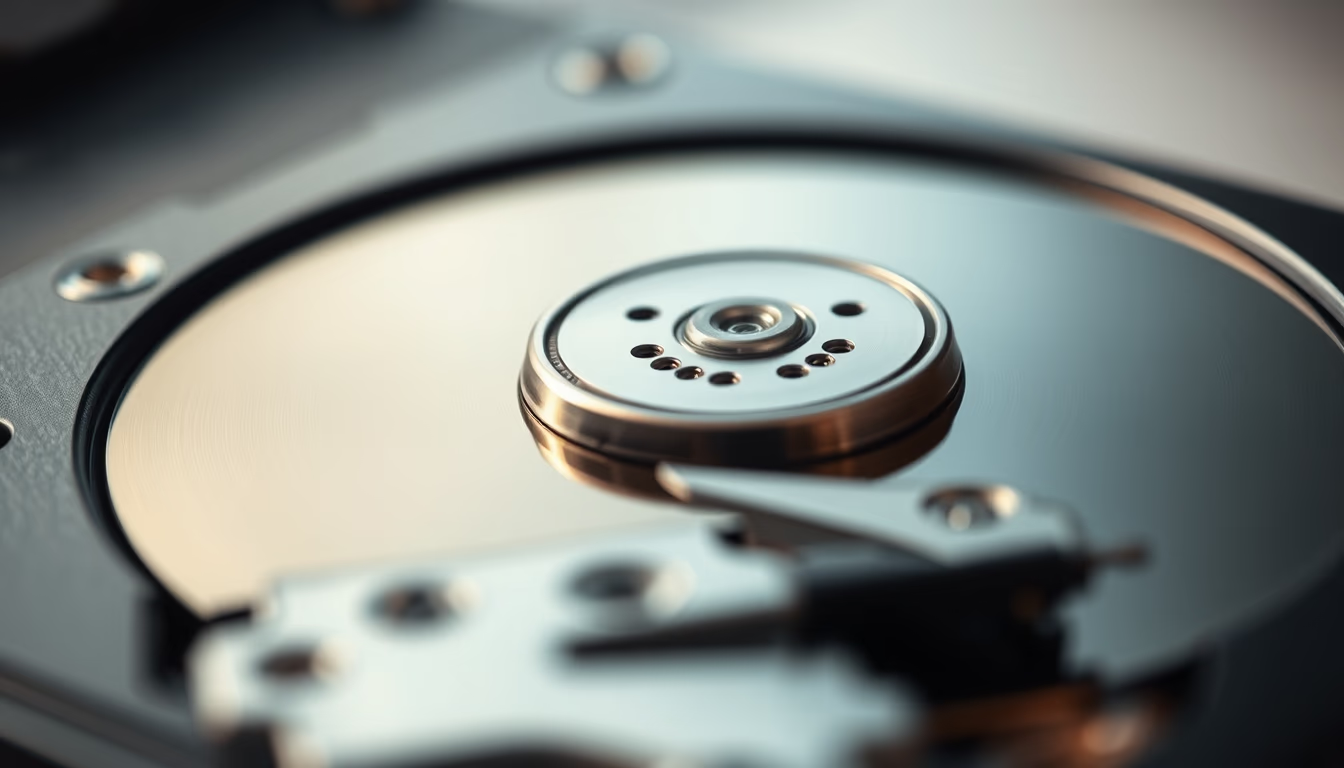
A hard disk drive (HDD) with its platter exposed reveals the magnetic surface where data is stored in concentric tracks.
About this subject
The platter of an HDD is a circular disk, usually made of aluminum or glass, coated with a thin magnetic layer. This layer is divided into concentric tracks and sectors, forming the basis of magnetic storage. During operation, the read/write head floats only a few nanometers above the surface, supported by a thin air bearing created by the spinning platter. Typical rotation speeds range from 5400 RPM in budget drives to 7200 RPM in high-performance models, with some enterprise drives reaching 15000 RPM.
The history of HDD platters dates back to the IBM 305 RAMAC in 1956, which used 50 platters of 24 inches in diameter to store just 5 MB. Today, platters have standardized diameters of 3.5 inches (desktops) and 2.5 inches (laptops), with capacities exceeding 2 TB per platter thanks to perpendicular recording and, more recently, heat-assisted magnetic recording (HAMR). Areal density, which measures the amount of data per square inch, has doubled every few years, allowing modern drives to reach 20 TB or more with multiple platters.
Technical curiosities include the use of heads based on the giant magnetoresistance (GMR) effect, which can read extremely weak magnetic fields. Additionally, platters are polished to a mirror-like finish to minimize roughness and prevent the head from touching the surface, as any contact can cause a head crash, damaging the platter and resulting in data loss. Newer drives use helium instead of air inside, reducing drag and allowing more platters per drive, thereby increasing total capacity.
Frequently Asked Questions
What is the difference between HDD and SSD?
HDDs use spinning magnetic platters to store data, while SSDs use NAND flash memory with no moving parts. SSDs are faster, quieter, and more shock-resistant, but HDDs offer higher capacity per dollar.
What happens if the platter is scratched?
A scratch on the platter surface can damage the magnetic layer and render data unreadable. Additionally, debris may be released, causing further damage to the heads and other platters. This usually results in permanent data loss.
How is data organized on the platter?
Data is recorded in concentric tracks, which are subdivided into sectors. The heads move radially to access different tracks, while the platter rotates to position the desired sector under the head. The drive firmware manages the translation between logical and physical addresses.
Direct URL
https://pub-c7d6a6ea828543ac903a74a341ccb2e1.r2.dev/imagens/hdd-platter-exposed-macro-closeup-p11.avifHow to credit
Include a visible link back to UtilizAí. Copy one of the snippets below:
<a href="https://xn--utiliza-eza.com/en/midia/imagens/hdd-platter-exposed-macro-closeup-p11">Hdd platter exposed</a> by <a href="https://xn--utiliza-eza.com">UtilizAí</a>, licensed under <a href="https://creativecommons.org/licenses/by/4.0/">CC BY 4.0</a>.
[Hdd platter exposed](https://xn--utiliza-eza.com/en/midia/imagens/hdd-platter-exposed-macro-closeup-p11) by [UtilizAí](https://xn--utiliza-eza.com), CC BY 4.0
License: CC-BY-4.0