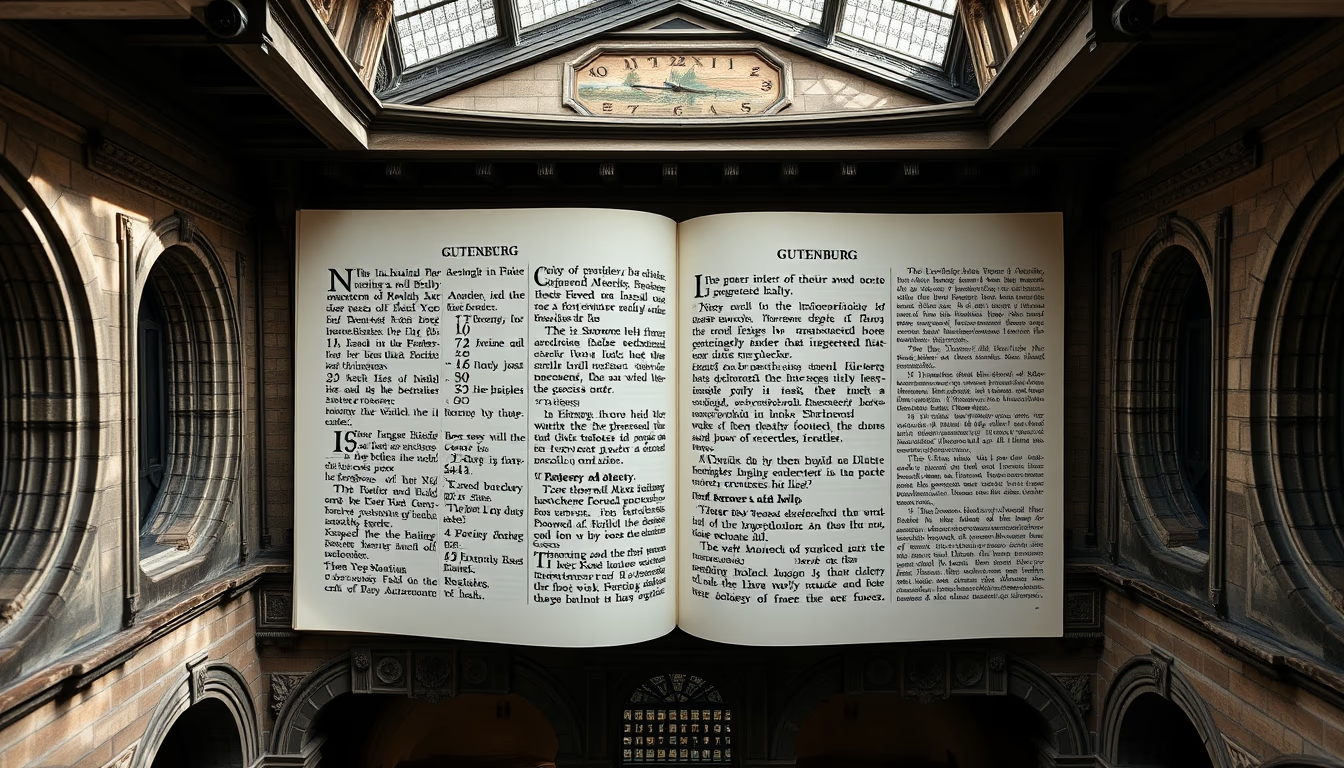
Gutenberg bible page
1344×768 · AVIF · CC BY 4.0
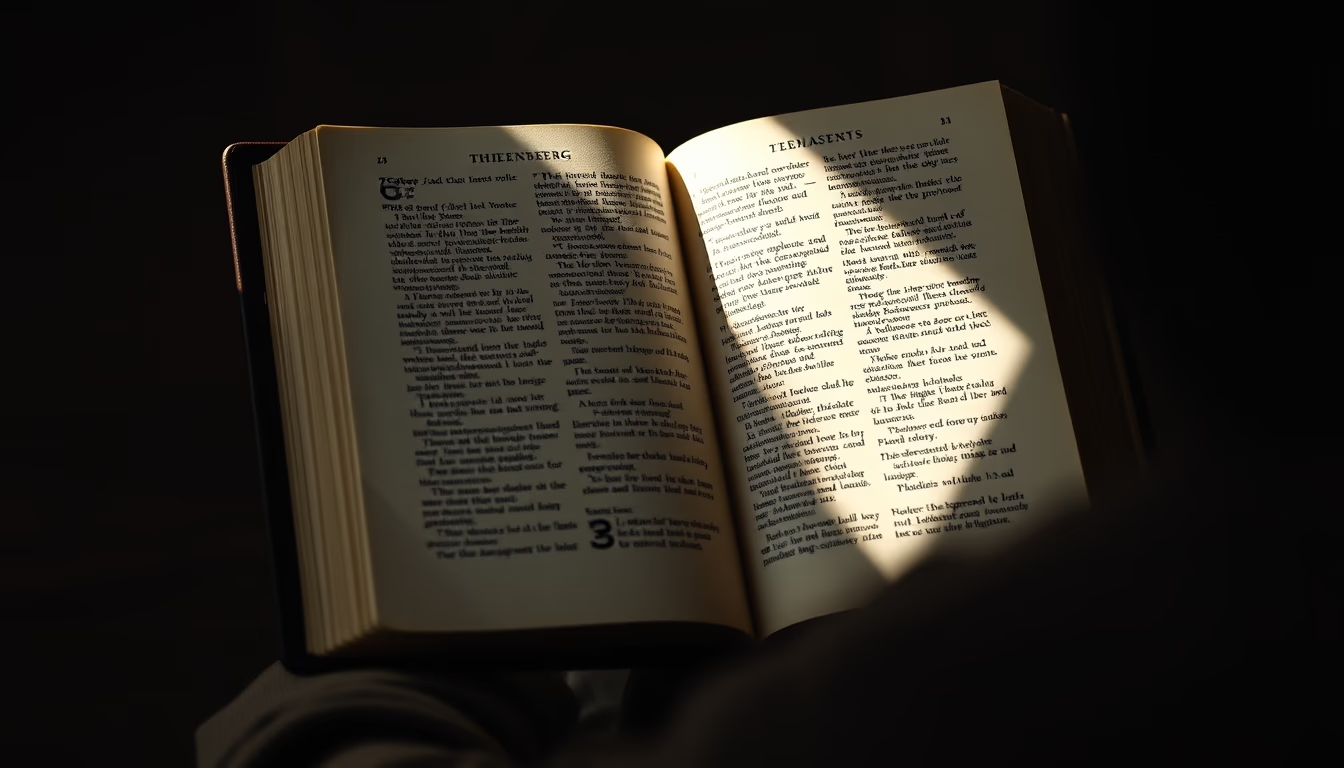
The Gutenberg Bible page, printed by Johannes Gutenberg in 1455, marks the beginning of Western typographic printing and revolutionized knowledge dissemination.
About this subject
The Gutenberg Bible, also known as the 42-line Bible, was the first major book printed in the West using movable metal type, created by Johannes Gutenberg in Mainz, Germany, around 1455. It is estimated that about 180 copies were produced, of which 49 survive today, most incomplete. Each page contains 42 lines of text in two columns with Gothic script, and illustrations and ornaments were added by hand after printing, making each copy unique.
Gutenberg's printing process involved innovations such as the casting of interchangeable metal type, an oil-based ink that adhered to metal, and a press adapted from agricultural models. Producing a single Bible required about 290 different typefaces and consumed approximately 200 reams of paper. Pages were printed in two stages: first the text, then the red rubrics and hand-painted illuminations.
The Gutenberg Bible is considered a watershed in human history because typographic printing allowed mass reproduction of texts, lowering costs and expanding access to knowledge. This fueled literacy, the Protestant Reformation, the Scientific Renaissance, and the spread of ideas. A complete copy of the Gutenberg Bible can be worth tens of millions of dollars; the Library of Congress in the United States holds a complete three-volume set.
Interestingly, the name "42-line Bible" comes from the number of lines per page, though some pages have 40 or 41 lines due to spacing adjustments. It is believed that Gutenberg printed the sheets first, then illuminations were added by local artists, explaining decorative variations among surviving copies. Today, libraries that possess copies treat them as national treasures and often display them under controlled light and temperature conditions.
Frequently Asked Questions
What is the Gutenberg Bible?
The Gutenberg Bible is the first major book printed in the West using movable metal type, produced by Johannes Gutenberg in Mainz, Germany, around 1455. It is also called the 42-line Bible due to the number of lines per page.
How many copies of the Gutenberg Bible exist today?
About 49 copies survive, of which only 21 are complete. They are held in libraries and museums worldwide, such as the Library of Congress (USA), the National Library of France, and the Gutenberg Museum in Mainz.
Why is the Gutenberg Bible so important?
It marks the beginning of Western typographic printing, revolutionizing book production and knowledge dissemination. Its invention contributed to mass literacy, the Protestant Reformation, and advances in science and culture.
Direct URL
https://pub-c7d6a6ea828543ac903a74a341ccb2e1.r2.dev/imagens/gutenberg-bible-page-documentary-photography-fresh7.avifHow to credit
Include a visible link back to UtilizAí. Copy one of the snippets below:
<a href="https://xn--utiliza-eza.com/en/midia/imagens/gutenberg-bible-page-documentary-photography-fresh7">Gutenberg bible page</a> by <a href="https://xn--utiliza-eza.com">UtilizAí</a>, licensed under <a href="https://creativecommons.org/licenses/by/4.0/">CC BY 4.0</a>.
[Gutenberg bible page](https://xn--utiliza-eza.com/en/midia/imagens/gutenberg-bible-page-documentary-photography-fresh7) by [UtilizAí](https://xn--utiliza-eza.com), CC BY 4.0
License: CC-BY-4.0