Greenhouse interior plants
1344×768 · AVIF · CC BY 4.0
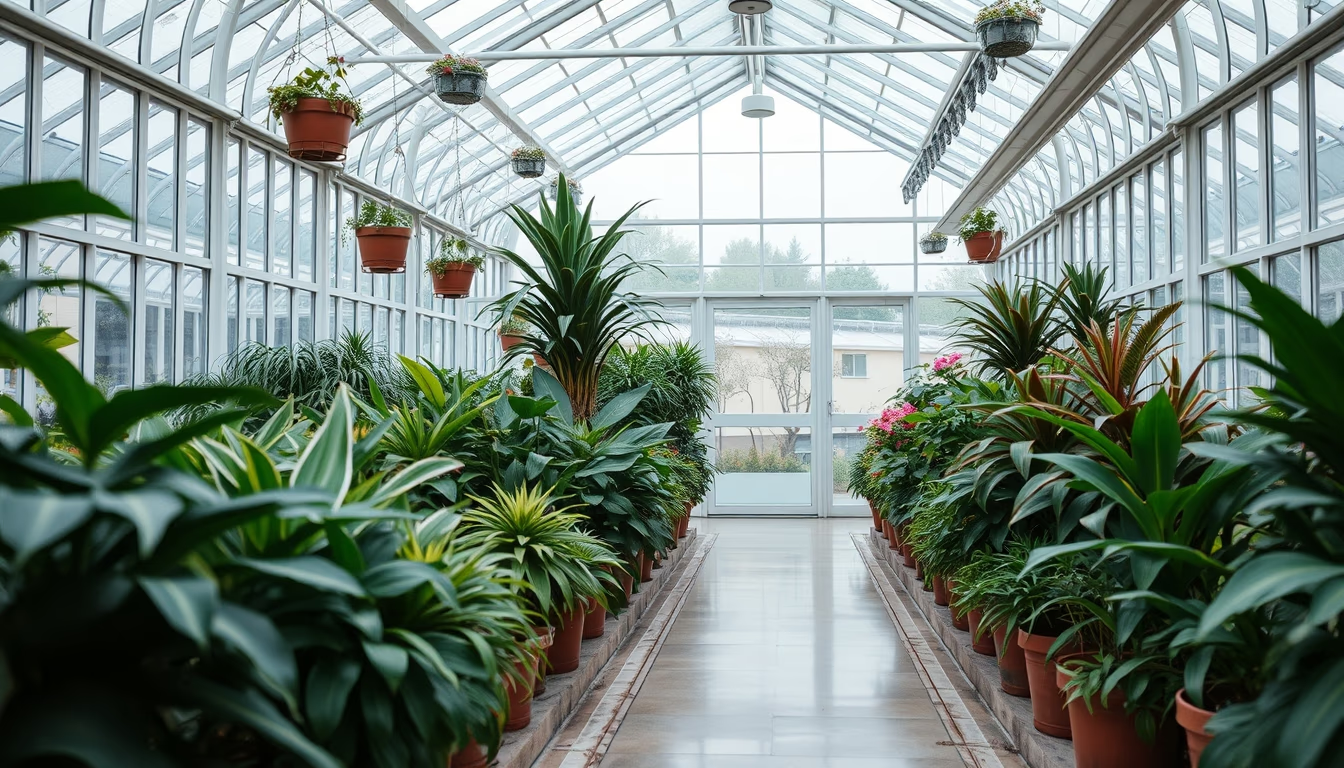
Agricultural greenhouses are structures that control climate and light for protected cultivation of vegetables, flowers and seedlings, ensuring off-season production.
About this subject
Modern agricultural greenhouses combine structural engineering and environmental controls to maximize productivity. The interior of a typical greenhouse features raised benches, drip or mist irrigation systems, and covers made of plastic film or tempered glass. Architecture prioritizes diffuse light entry, with north-south orientation to fully capture solar radiation. Temperature, humidity and ventilation are regulated by automated sensors and actuators, often integrated with precision agriculture software.
In Brazil, greenhouse use has grown exponentially in recent decades, especially for the cultivation of tomatoes, bell peppers, strawberries and hydroponic lettuce. Regions like Holambra (SP) and the Serra Gaúcha stand out for flower and vegetable production under protected environments. Greenhouses allow staggered harvesting, reduced pesticide use and water savings. In hot climates, shade nets and evaporative cooling systems (pad cooling) are common to prevent thermal stress.
From an architectural perspective, greenhouses range from the gable model (pitched roof) to the arch-tunnel, which is cheaper and simpler. Materials like alveolar polycarbonate and polyethylene film with UV additives extend lifespan. Natural ventilation through ridge and side openings is preferred to reduce energy costs. Integration of photovoltaic solar panels on roofs has become a sustainable trend, powering pumps and sensors.
Greenhouses are also essential for agronomic research, where improved varieties are tested under controlled conditions. Indoor cultivation of medicinal plants and microgreens follows similar standards. Supplemental lighting with specific spectrum LEDs allows extended photoperiods, accelerating growth in regions with low winter light. These innovations make the greenhouse a living laboratory for smart agriculture.
Frequently Asked Questions
Which crops benefit most from greenhouse cultivation?
Tomatoes, bell peppers, cucumbers, strawberries, lettuce and flowers like roses and chrysanthemums. The greenhouse protects against rain, pests and allows off-season production.
What is the difference between an agricultural greenhouse and a climate-controlled greenhouse?
Every climate-controlled greenhouse is an agricultural greenhouse, but not every agricultural greenhouse has full climate control. A basic greenhouse only manages ventilation and shading; a climate-controlled one adds heating, cooling and humidification systems.
Is it economically viable to set up a greenhouse in Brazil?
Yes, especially for high-value crops. Investment ranges from R50 to R200 per m², with payback in 2 to 4 years. The South and Southeast regions concentrate most commercial greenhouses.
Direct URL
https://pub-c7d6a6ea828543ac903a74a341ccb2e1.r2.dev/imagens/greenhouse-interior-plants-architectural-photography-p4.avifHow to credit
Include a visible link back to UtilizAí. Copy one of the snippets below:
<a href="https://xn--utiliza-eza.com/en/midia/imagens/greenhouse-interior-plants-architectural-photography-p4">Greenhouse interior plants</a> by <a href="https://xn--utiliza-eza.com">UtilizAí</a>, licensed under <a href="https://creativecommons.org/licenses/by/4.0/">CC BY 4.0</a>.
[Greenhouse interior plants](https://xn--utiliza-eza.com/en/midia/imagens/greenhouse-interior-plants-architectural-photography-p4) by [UtilizAí](https://xn--utiliza-eza.com), CC BY 4.0
License: CC-BY-4.0