Green screen production
1344×768 · AVIF · CC BY 4.0
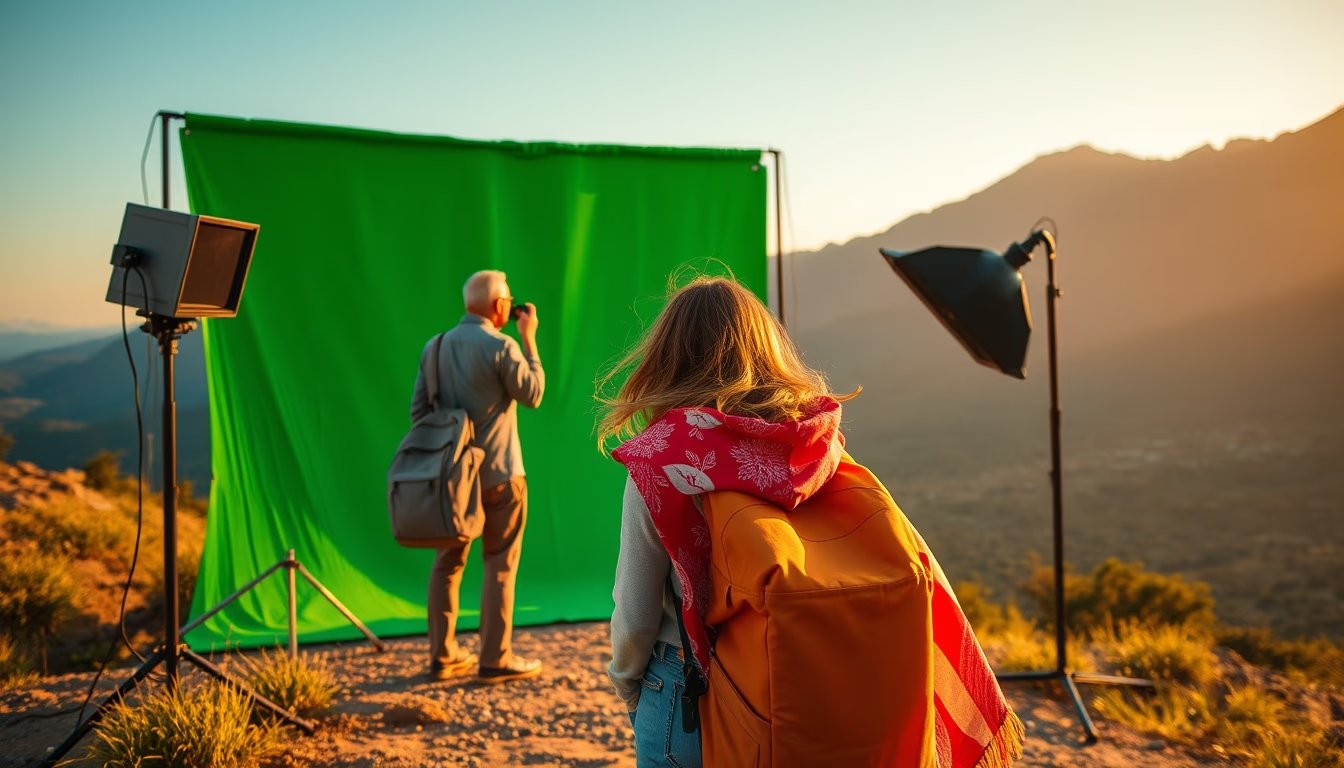
The chroma key technique, or green screen, revolutionized audiovisual production by allowing real-time or post-production background replacement.
About this subject
The green screen, or chroma key, is a visual effects technique that replaces a solid color (usually green or blue) with another image or video. Its origins date back to the 1930s, when filmmaker Larry Butler used a “cromaqueísmo” process in the film “The Thief of Bagdad” (1940), which won an Oscar for Best Special Effects. Green is preferred because it is less common in clothing and skin tones, and requires less light than blue. Modern production software like DaVinci Resolve and Adobe After Effects automate the process, enabling everything from simple background swaps in video calls to complex sets in blockbusters like “Avatar” and “The Lord of the Rings.”
In travel photography, the use of green screen is controversial. Influencers and photographers use the technique to simulate exotic destinations without traveling, saving time and money. However, this raises ethical questions about authenticity and transparency with the audience. Serious professionals often label composed images to maintain credibility. Interestingly, green screen is also used in product photography studios to create reflections and controlled lighting, without traveling.
Beyond entertainment, the technology is vital in weather forecasts and news broadcasts, where presenters interact with digitally generated maps and graphics. The gaming and virtual reality industries have also adopted chroma key to integrate live actors into virtual environments. Portable screens and automatic removal software have made the technique accessible to amateurs, popularizing the effect in tutorials and live streams. Despite advances in AI that allow background removal without a green screen, chroma key remains the standard due to its precision and control.
Frequently Asked Questions
Why is green the most used color in chroma key?
Green is used because it is the least present color in human skin and common clothing, making separation easier. Additionally, digital cameras are more sensitive to green, capturing more detail in that channel.
Is it possible to do chroma key without a green screen?
Yes, modern software uses AI to remove backgrounds without a green screen, but quality depends on lighting and contrast. A green screen still offers greater precision and control in professional productions.
Is using green screen in travel photos considered deceptive?
It depends on transparency. Many photographers use it to create creative images without traveling, but if not disclosed, it can mislead the audience. Ideally, composed images should be labeled as such.
Direct URL
https://pub-c7d6a6ea828543ac903a74a341ccb2e1.r2.dev/imagens/green-screen-production-travel-photography-p5.avifHow to credit
Include a visible link back to UtilizAí. Copy one of the snippets below:
<a href="https://xn--utiliza-eza.com/en/midia/imagens/green-screen-production-travel-photography-p5">Green screen production</a> by <a href="https://xn--utiliza-eza.com">UtilizAí</a>, licensed under <a href="https://creativecommons.org/licenses/by/4.0/">CC BY 4.0</a>.
[Green screen production](https://xn--utiliza-eza.com/en/midia/imagens/green-screen-production-travel-photography-p5) by [UtilizAí](https://xn--utiliza-eza.com), CC BY 4.0
License: CC-BY-4.0