Green screen production
1344×768 · AVIF · CC BY 4.0
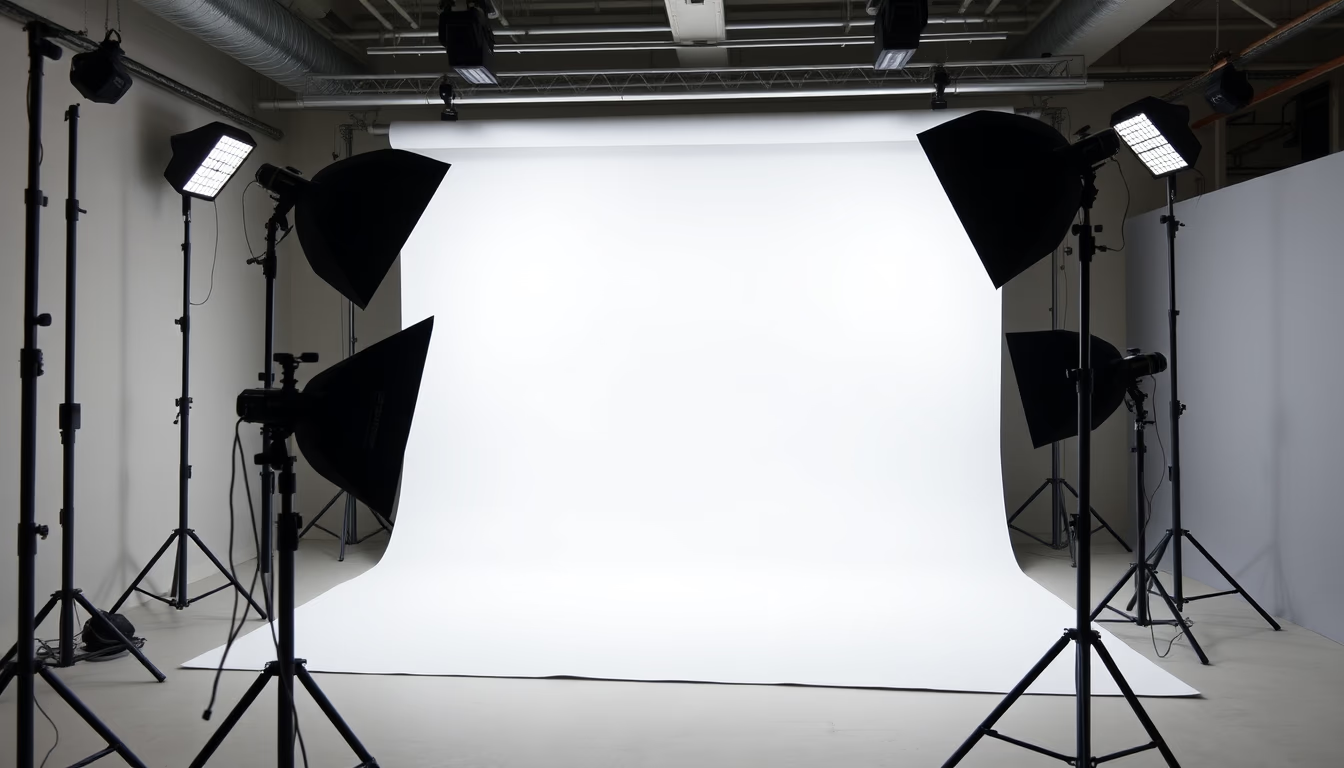
Chroma key usage in product photography studios streamlines post-production and cuts costs, enabling realistic virtual sets.
About this subject
The green screen technique, or chroma key, is widely used in commercial product photography to isolate objects from the background and replace it with any digital environment. Instead of building expensive physical sets, the photographer captures the product against a uniform green background. During post-production, software removes the green color and inserts the desired background image. This allows a single session to yield dozens of background variations, optimizing time and budget.
In e-commerce and catalog product photography, green screen is essential for visual consistency. Brands can test different seasonal or promotional contexts without reshooting. The trend for 2026 points to AI-assisted background removal, but traditional chroma key still offers greater precision for objects with complex contours, such as bottles or jewelry.
Lighting is critical: to avoid shadows on the green background and unwanted reflections on the product, studios use soft diffused lights. The green screen material must be smooth and wrinkle-free. High-resolution cameras facilitate later extraction, and software like Photoshop and DaVinci Resolve are standard in the workflow.
A technical curiosity: green was chosen because it is the least common color in human skin and everyday products, reducing removal errors. In film, blue is also used (especially with blonde hair), but in product photography green predominates due to its higher luminance and less interference with metallic reflections.
Frequently Asked Questions
Why is green the most common chroma key color?
Green is most common because it is the least present color in human skin and everyday objects, making removal easier without affecting the product. Also, the green channel in digital cameras carries more luminance information, improving extraction accuracy.
Do I need a professional studio to use green screen in product photography?
Not necessarily. With good uniform lighting and a smooth green backdrop, satisfactory results can be achieved even at home. However, for products with reflections or complex edges, a professional studio with controlled lighting and advanced software ensures higher quality.
Is the trend for 2026 to replace green screen with artificial intelligence?
AI is advancing in automatic background removal, but traditional chroma key is still preferred by commercial photographers for its predictability and precision on fine edges. In 2026, a combination of both techniques is expected: AI for quick adjustments and green screen as a reliable standard.
Direct URL
https://pub-c7d6a6ea828543ac903a74a341ccb2e1.r2.dev/imagens/green-screen-production-commercial-product-photography-p4.avifHow to credit
Include a visible link back to UtilizAí. Copy one of the snippets below:
<a href="https://xn--utiliza-eza.com/en/midia/imagens/green-screen-production-commercial-product-photography-p4">Green screen production</a> by <a href="https://xn--utiliza-eza.com">UtilizAí</a>, licensed under <a href="https://creativecommons.org/licenses/by/4.0/">CC BY 4.0</a>.
[Green screen production](https://xn--utiliza-eza.com/en/midia/imagens/green-screen-production-commercial-product-photography-p4) by [UtilizAí](https://xn--utiliza-eza.com), CC BY 4.0
License: CC-BY-4.0