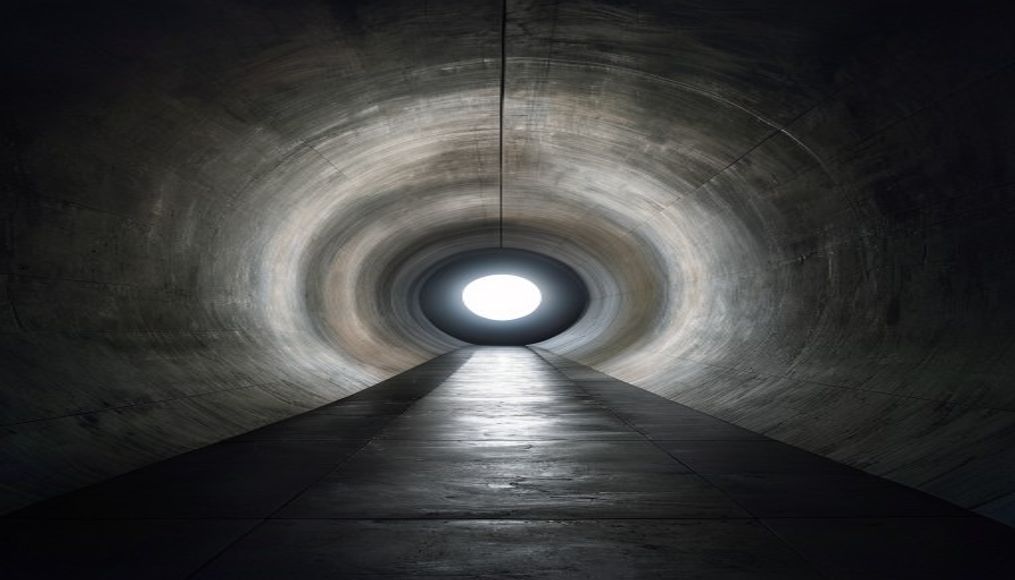
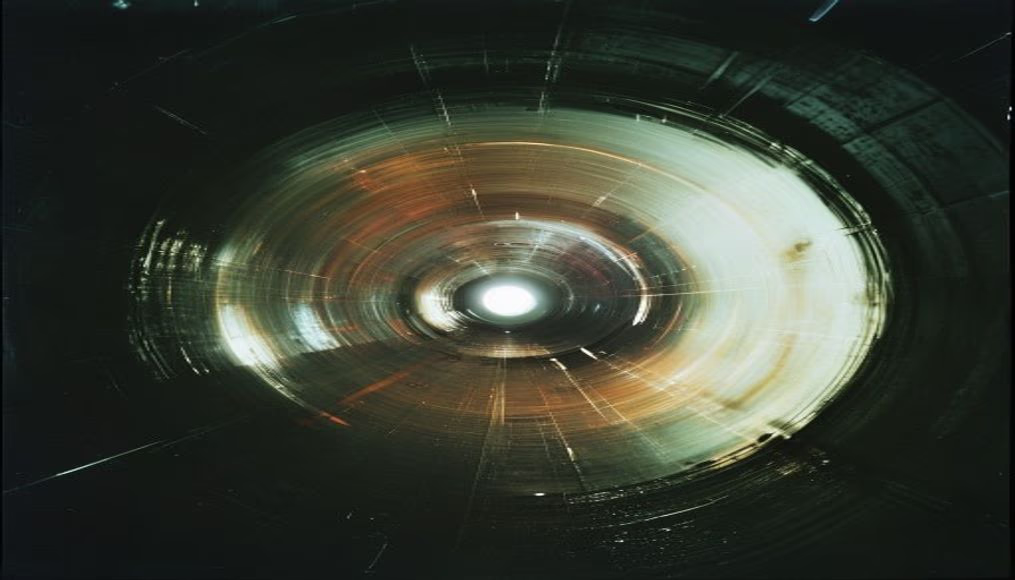
Gravitational lensing visualization
1344×768 · AVIF · CC BY 4.0
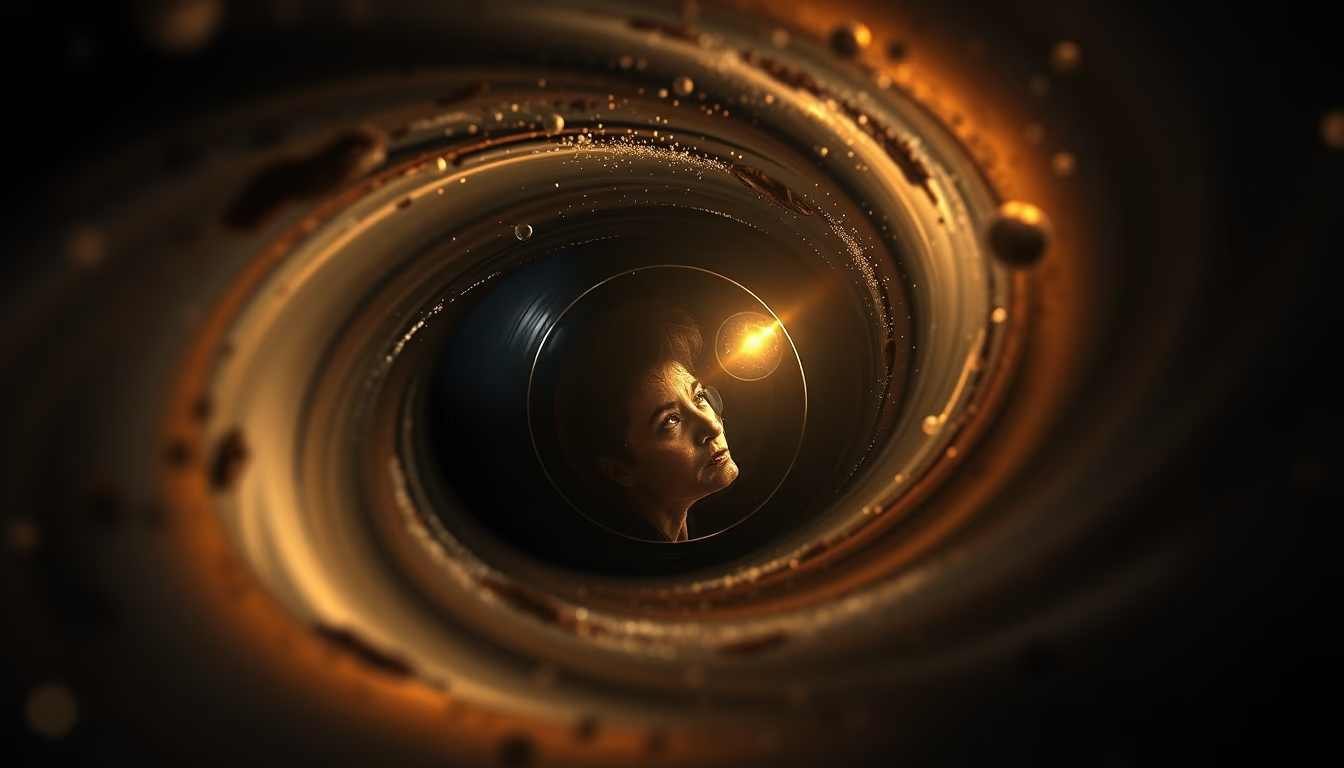
Gravitational lensing is a phenomenon predicted by general relativity, where spacetime curvature bends light from distant objects, creating distorted or multiple images.
About this subject
Gravitational lensing is one of the most fascinating consequences of Einstein's general theory of relativity. It occurs when light from a distant source, such as a galaxy or quasar, passes near a massive object like a galaxy cluster or black hole, and its path is bent due to the curvature of spacetime caused by gravity. This phenomenon can produce magnified, distorted, or even multiple images of the background object, effectively acting as a natural lens.
There are three main types of gravitational lensing: strong lensing, which creates clearly visible arcs and multiple images; weak lensing, which subtly distorts the shapes of background galaxies and is detected only through statistical analysis; and microlensing, which occurs when a compact object like a star passes in front of another star, causing a brief brightening. Each type provides valuable insights for astronomy.
The first observational evidence of light deflection by gravity came from the 1919 solar eclipse, but the first strong gravitational lens was discovered only in 1979, known as the Twin Quasar (Q0957+561), where two images of the same quasar appeared separated. Since then, telescopes like Hubble and the James Webb Space Telescope have used this effect to study extremely distant galaxies that would otherwise be invisible, helping to map the distribution of dark matter in the universe.
Interestingly, gravitational lensing is also a tool for detecting exoplanets via microlensing and testing alternative theories of gravity. It can also produce striking visual phenomena, such as an Einstein Ring, a perfect circular image formed when the source, lens, and observer are perfectly aligned.
Frequently Asked Questions
How does gravitational lensing help find exoplanets?
Gravitational microlensing occurs when a dim star passes in front of a more distant star, magnifying its brightness. If the foreground star hosts an exoplanet, the planet can cause a second brightness peak, revealing its presence.
What is the difference between strong and weak lensing?
Strong lensing produces easily visible distorted and multiple images, such as arcs and Einstein rings. Weak lensing causes subtle distortions in the shapes of background galaxies, detectable only through statistical analysis of large datasets.
What is an Einstein Ring?
It is a perfect circular image created by gravitational lensing when the light source, the massive lensing object, and the observer are perfectly aligned, forming a bright ring around the lens.
Direct URL
https://pub-c7d6a6ea828543ac903a74a341ccb2e1.r2.dev/imagens/gravitational-lensing-visualization-fine-art-photography-p5.avifHow to credit
Include a visible link back to UtilizAí. Copy one of the snippets below:
<a href="https://xn--utiliza-eza.com/en/midia/imagens/gravitational-lensing-visualization-fine-art-photography-p5">Gravitational lensing visualization</a> by <a href="https://xn--utiliza-eza.com">UtilizAí</a>, licensed under <a href="https://creativecommons.org/licenses/by/4.0/">CC BY 4.0</a>.
[Gravitational lensing visualization](https://xn--utiliza-eza.com/en/midia/imagens/gravitational-lensing-visualization-fine-art-photography-p5) by [UtilizAí](https://xn--utiliza-eza.com), CC BY 4.0
License: CC-BY-4.0