Gothic cathedral stained glass
1344×768 · AVIF · CC BY 4.0
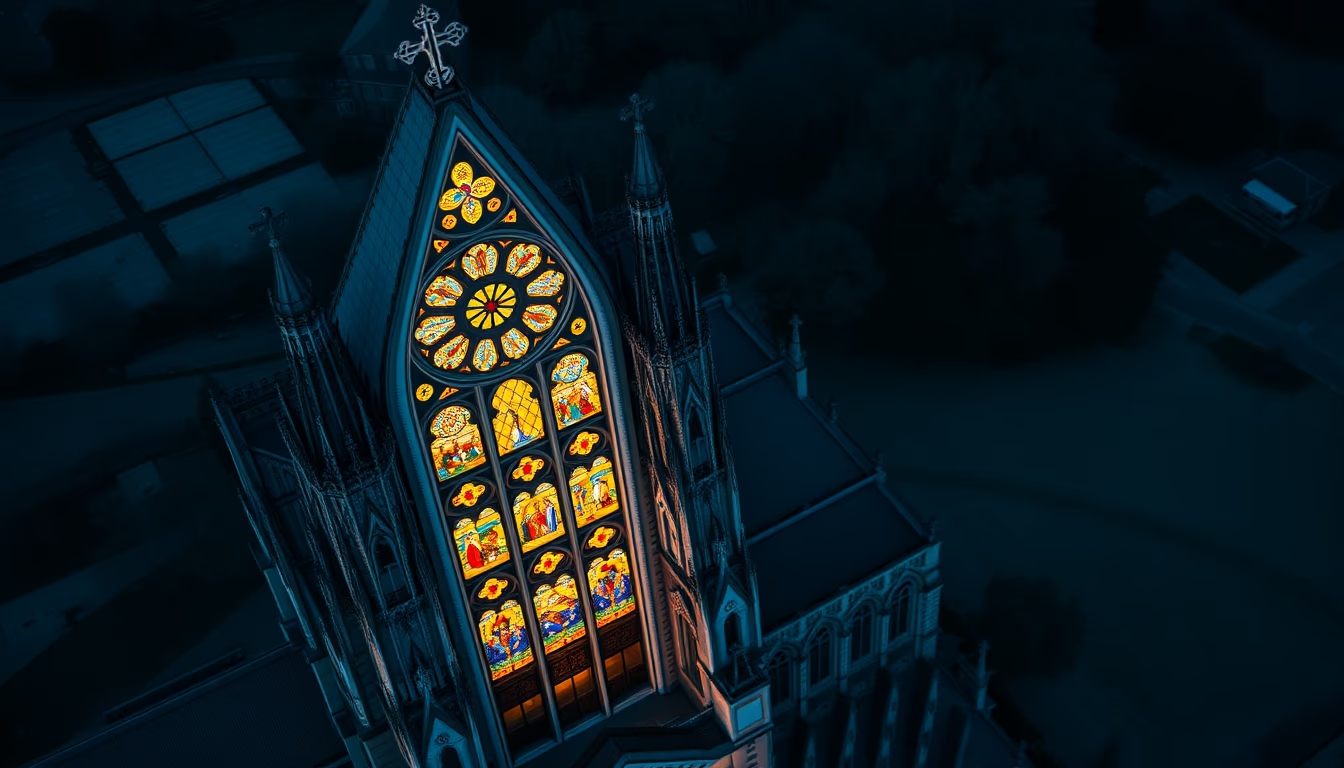
Gothic stained glass turns natural light into biblical narratives, creating celestial atmospheres in medieval European cathedrals.
About this subject
Gothic stained glass represents one of the highest achievements of medieval art, blending technique, faith, and architectural function. Originating in 12th-century France during the Gothic period, these colored glass panels replaced large sections of stone walls, allowing abundant light into cathedrals. Unlike mosaics or frescoes, stained glass uses light as its raw material: sunlight passes through the glass and projects a spectacle of colors inside the temple that changes throughout the day, evoking divine presence.
The manufacturing technique involved fusing sand, potash, and metallic oxides, cobalt for blues, copper for greens, manganese for purples, forming sheets that were cut and assembled with lead strips. Artisans called glassmakers designed biblical scenes, saints, and heraldic symbols following standardized iconography. Cathedrals like Notre-Dame de Paris, Chartres, Reims, and Sainte-Chapelle have complete stained glass cycles narrating from Creation to the Apocalypse, serving as a “Bible for the poor” in an age of widespread illiteracy.
Beyond religious value, Gothic stained glass is a milestone of medieval engineering. The use of flying buttresses and pointed arches allowed walls to become lighter and more open, creating large window openings. The most famous stained glass is the “Rose of Notre-Dame”, with its 15-meter diameter. In Chartres, the characteristic blue, known as “Chartres blue”, is so intense that it inspired modern artists like Matisse. Unfortunately, many originals were destroyed during wars and revolutions, but modern restorations preserve the legacy of these masterpieces that define the visual identity of Gothic architecture.
Frequently Asked Questions
What was the function of stained glass in Gothic cathedrals?
Stained glass had didactic and symbolic roles. It told biblical stories to an illiterate population and created an atmosphere of transcendence, as colored light was interpreted as a manifestation of the divine.
How were stained glass windows made in the Middle Ages?
They were made from glass melted with metallic oxides to achieve colors. Pieces were cut, assembled with lead profiles, and reinforced with iron bars. Details (faces, folds) were painted with enamel and then fired in a kiln.
Why do Gothic cathedrals have so many stained glass windows?
Gothic architecture allowed thinner walls thanks to flying buttresses and pointed arches, creating large window openings. Stained glass replaced solid Romanesque walls, allowing more light and a visual connection between the interior and the divine.
Direct URL
https://pub-c7d6a6ea828543ac903a74a341ccb2e1.r2.dev/imagens/gothic-cathedral-stained-glass-aerial-drone-shot-p2.avifHow to credit
Include a visible link back to UtilizAí. Copy one of the snippets below:
<a href="https://xn--utiliza-eza.com/en/midia/imagens/gothic-cathedral-stained-glass-aerial-drone-shot-p2">Gothic cathedral stained glass</a> by <a href="https://xn--utiliza-eza.com">UtilizAí</a>, licensed under <a href="https://creativecommons.org/licenses/by/4.0/">CC BY 4.0</a>.
[Gothic cathedral stained glass](https://xn--utiliza-eza.com/en/midia/imagens/gothic-cathedral-stained-glass-aerial-drone-shot-p2) by [UtilizAí](https://xn--utiliza-eza.com), CC BY 4.0
License: CC-BY-4.0