Glider sailplane sky
1344×768 · AVIF · CC BY 4.0
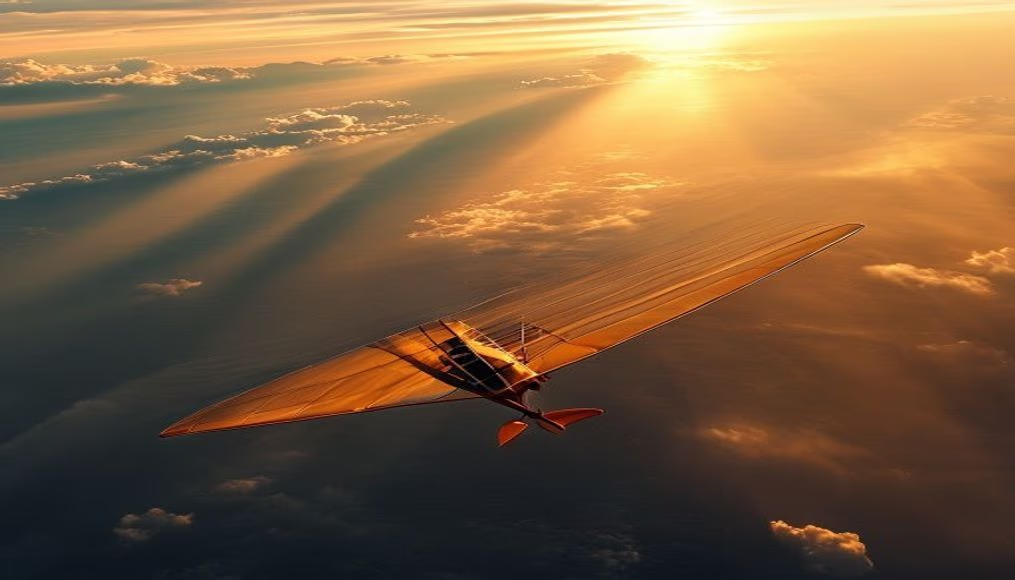
Planadores são aeronaves sem motor que usam correntes de ar ascendentes para voar, combinando engenharia e habilidade.
Sobre o tema
Os planadores, também conhecidos como velejadores, são aeronaves que voam sem motor, sustentando-se através de correntes de ar ascendentes como térmicas, ondas de montanha e ascendência orográfica. Diferentemente de aviões convencionais, eles dependem exclusivamente da energia natural do ar para ganhar altitude e percorrer longas distâncias. Essa modalidade de voo exige grande conhecimento meteorológico e habilidade do piloto, que busca constantemente áreas de ar subindo.
A história do voo planado remonta ao século XIX com os experimentos de Otto Lilienthal na Alemanha, considerado o primeiro a realizar voos controlados com planadores. No Brasil, Santos Dumont também contribuiu com projetos iniciais. Durante a Segunda Guerra Mundial, planadores foram usados para transporte de tropas e suprimentos. Após a guerra, o voo livre evoluiu para o esporte, com avanços em materiais compósitos e aerodinâmica que permitiram planadores ultraleves e eficientes.
As principais técnicas de voo incluem a exploração de térmicas (bolhas de ar quente que sobem), a ascensão orográfica (quando o vento encontra uma elevação do terreno) e as ondas de montanha (correntes estacionárias geradas por ventos fortes sobre cadeias montanhosas). Competições de cross-country testam a capacidade dos pilotos de percorrer trajetos pré-definidos, com recordes mundiais ultrapassando 3.000 km de distância. O planador moderno possui relação de planeio superior a 60:1, significando que pode avançar 60 metros perdendo apenas 1 metro de altitude.
Além do esporte, planadores são usados para treinamento de pilotos, pesquisa atmosférica e voo recreativo. Por serem silenciosos e não poluentes, representam uma forma ecológica de voar. A construção atual utiliza fibra de carbono e vidro, garantindo leveza e resistência. Instrumentos como variômetros e GPS auxiliam na navegação e localização de áreas de sustentação. O voo de planador é uma atividade que une tecnologia, natureza e paixão pela aviação.
Perguntas frequentes
Como um planador consegue voar sem motor?
Um planador usa correntes de ar ascendentes, como térmicas (bolhas de ar quente), ondas de montanha ou ascendência orográfica, para ganhar altitude e continuar voando.
Qual é a distância máxima que um planador pode percorrer?
O recorde mundial de distância para um planador é superior a 3.000 km, voando em linha reta sem pousar.
Planadores são seguros?
Sim, planadores são aeronaves seguras quando operados por pilotos treinados, seguindo procedimentos adequados e respeitando as condições meteorológicas.
URL direta
https://pub-c7d6a6ea828543ac903a74a341ccb2e1.r2.dev/imagens/glider-sailplane-sky-cinematic-wide-shot-p3.avifComo creditar
Inclua um link visível de volta pro UtilizAí. Copie um dos snippets abaixo:
<a href="https://xn--utiliza-eza.com/midia/imagens/glider-sailplane-sky-cinematic-wide-shot-p3">Glider sailplane sky</a> by <a href="https://xn--utiliza-eza.com">UtilizAí</a>, licensed under <a href="https://creativecommons.org/licenses/by/4.0/">CC BY 4.0</a>.
[Glider sailplane sky](https://xn--utiliza-eza.com/midia/imagens/glider-sailplane-sky-cinematic-wide-shot-p3) by [UtilizAí](https://xn--utiliza-eza.com), CC BY 4.0
Licença: CC-BY-4.0