Glass blowing furnace
1344×768 · AVIF · CC BY 4.0
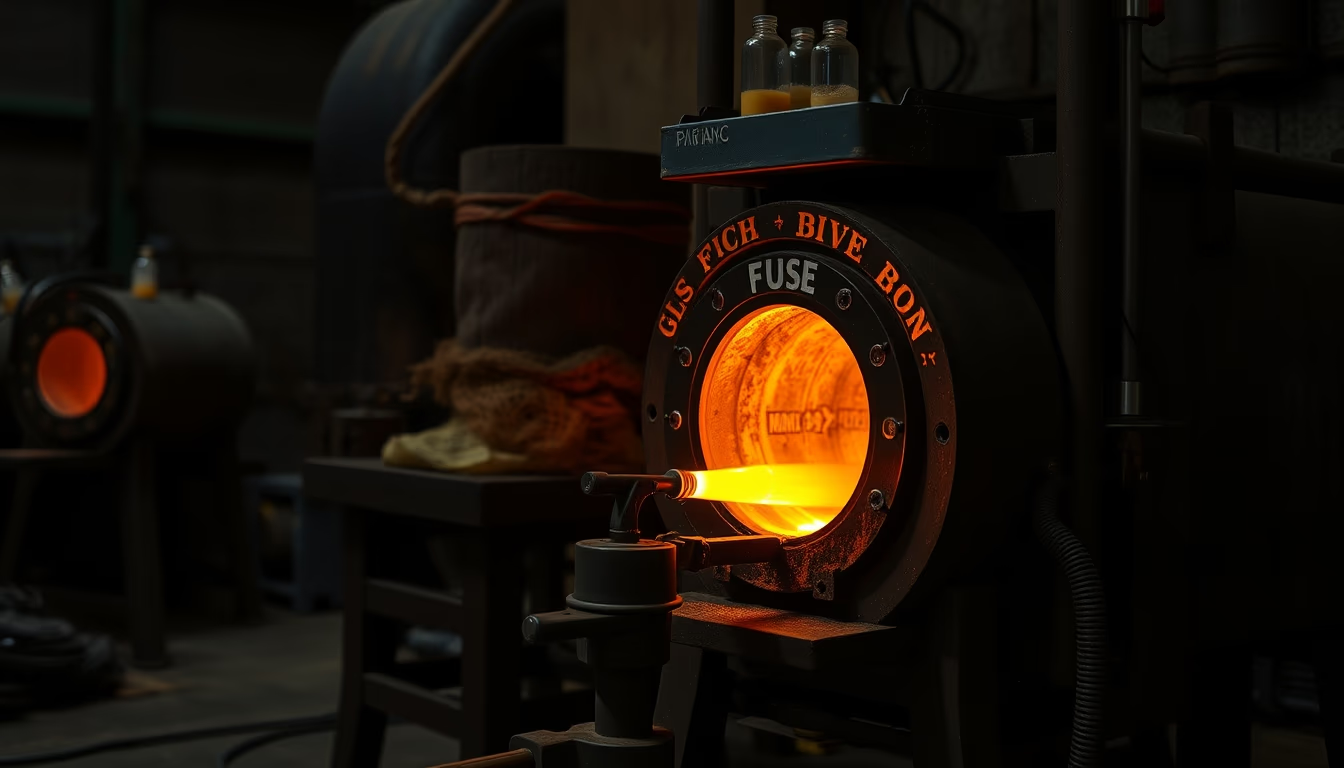
Glass blowing furnace: essential equipment for the ancient art of shaping glass at high temperatures, used by artisans in Brazil and worldwide.
About this subject
The glass blowing furnace is the heart of a glassblowing workshop. It is designed to reach temperatures between 1,000°C and 1,500°C, enough to melt silica from sand or recycled glass. The technique of glassblowing was invented in Syria around the 1st century BC, revolutionizing glass production by allowing artisans to create hollow and delicate pieces quickly. Today, traditional glassblowing thrives in places like Murano, Italy, and in Brazil, where communities in Minas Gerais and São Paulo preserve European immigrant heritage.
Two main furnace types exist: the melting furnace, where raw materials are melted, and the annealing furnace, which slowly cools pieces to prevent cracking. Glassblowing furnaces run on gas, electricity, or oil, and are lined with refractory materials to withstand extreme heat. Artisans feed the furnace with glass cullet or a batch of silica, soda ash, and limestone. Precise temperature control is vital, as fluctuations affect the glass's workability.
Culturally, the glass blowing furnace represents the fusion of fire, air, and human skill. In Murano, centuries-old furnaces produce masterpieces sold in museums. The “trending 2026” movement highlights a resurgence of handmade crafts, with consumers seeking unique, sustainable items. The furnace is thus a gateway for creativity and tradition. In Brazil, workshops like Vidraria São Luiz (São Paulo) offer hands-on courses that teach the ancient technique from scratch.
Fun fact: colored glass is achieved by adding metal oxides, cobalt for blue, gold for ruby. Intentional air bubbles are often incorporated as part of the aesthetic. Daily furnace maintenance includes removing slag and inspecting refractory walls. The energy needed to keep a furnace running 24/7 is substantial, making glassblowing a costly but culturally invaluable craft.
Frequently Asked Questions
What is the ideal temperature for a glass blowing furnace?
The ideal temperature ranges from 1,000°C to 1,500°C, depending on the glass type and technique. Harder glasses like borosilicate require higher temperatures, around 1,200°C.
How does the glassblowing process work?
The artisan gathers a blob of molten glass on the end of a blowpipe and blows air to create a bubble. They then shape the piece using tools like jacks and shears, constantly rotating to maintain symmetry.
Is blown glass recyclable?
Yes, blown glass is 100% recyclable. Many artisans use recycled glass cullet as raw material, reducing waste and energy consumption.
Direct URL
https://pub-c7d6a6ea828543ac903a74a341ccb2e1.r2.dev/imagens/glass-blowing-furnace-magazine-editorial-p2.avifHow to credit
Include a visible link back to UtilizAí. Copy one of the snippets below:
<a href="https://xn--utiliza-eza.com/en/midia/imagens/glass-blowing-furnace-magazine-editorial-p2">Glass blowing furnace</a> by <a href="https://xn--utiliza-eza.com">UtilizAí</a>, licensed under <a href="https://creativecommons.org/licenses/by/4.0/">CC BY 4.0</a>.
[Glass blowing furnace](https://xn--utiliza-eza.com/en/midia/imagens/glass-blowing-furnace-magazine-editorial-p2) by [UtilizAí](https://xn--utiliza-eza.com), CC BY 4.0
License: CC-BY-4.0