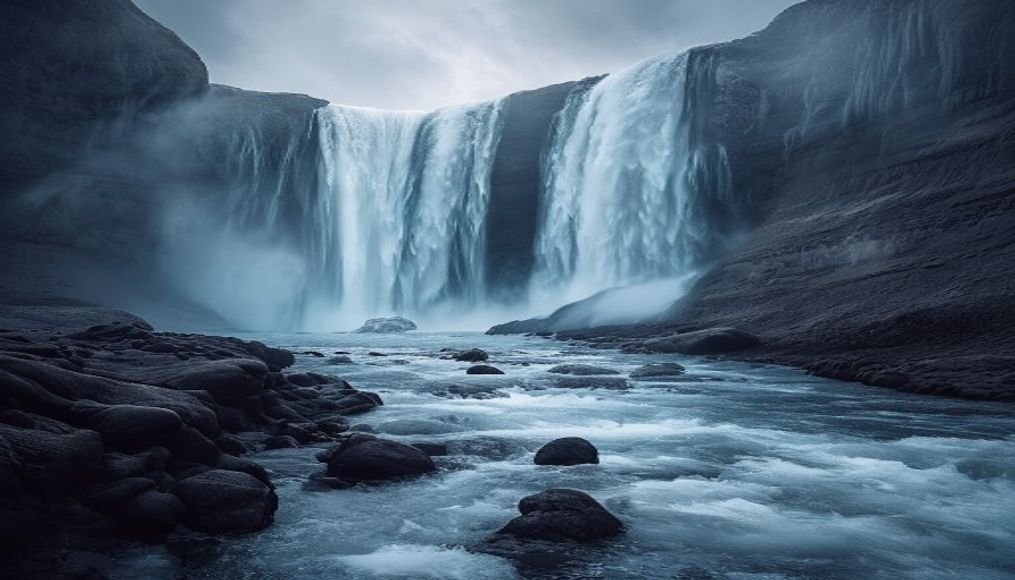
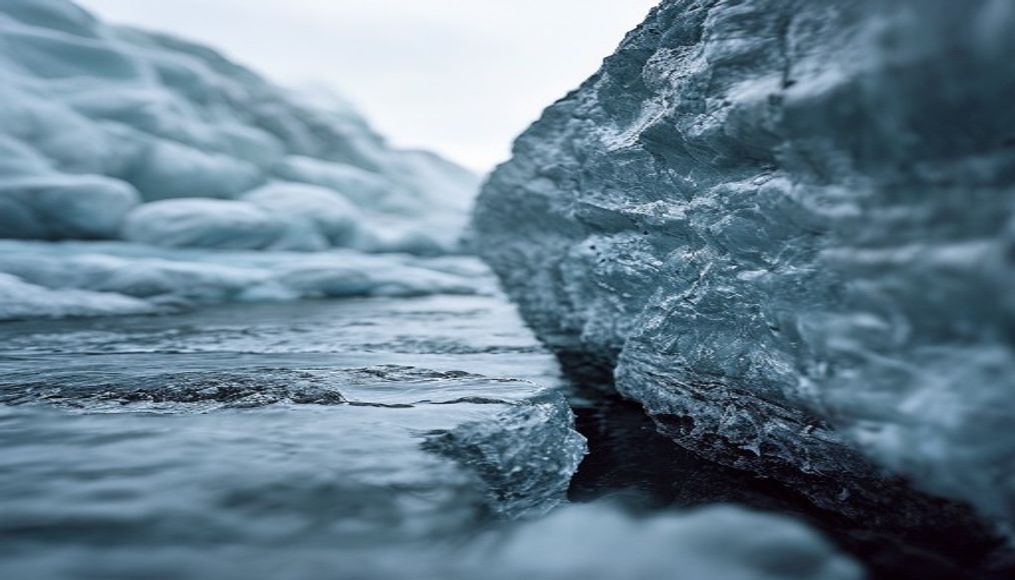
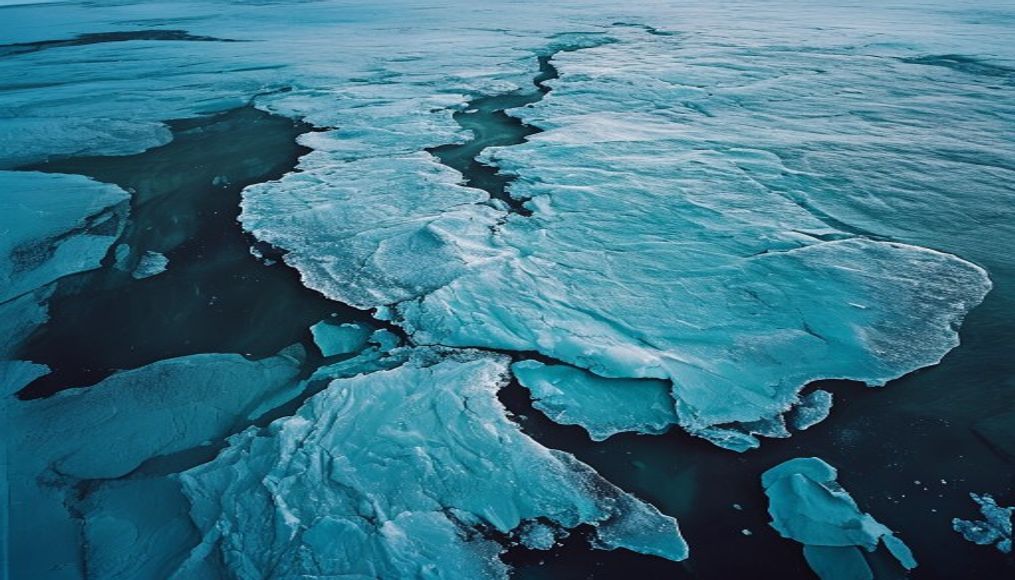
Glacier blue ice cave
1344×768 · JPG · CC BY 4.0
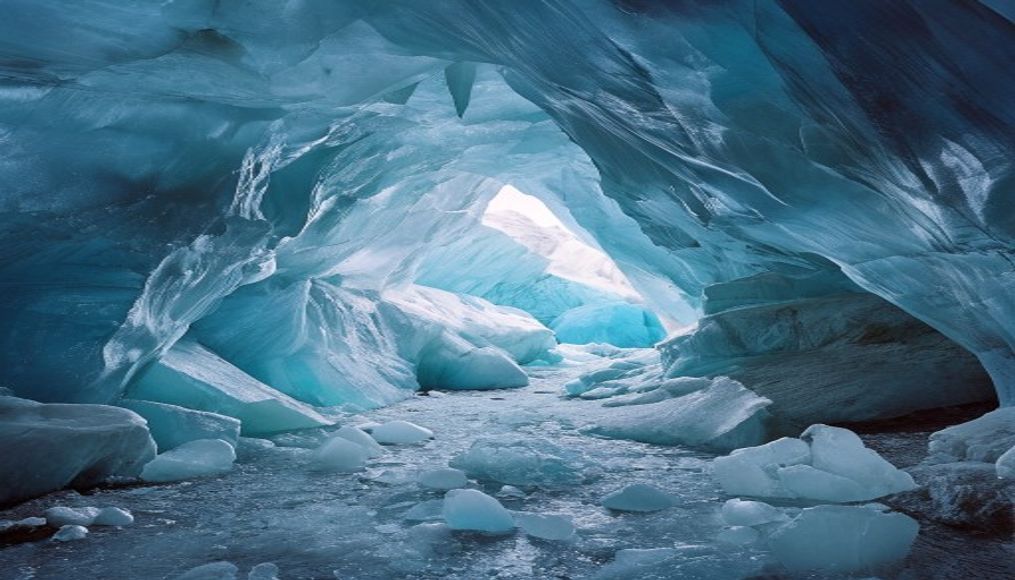
Blue ice caves are spectacular natural formations found inside glaciers, where sunlight interacts with dense ice to create vivid blue hues.
About this subject
Blue ice caves form inside glaciers when accumulated snow is compressed into glacial ice over centuries. This ancient, dense ice absorbs red light from the solar spectrum, reflecting only blue light, which gives the caves their characteristic color. The creation process involves internal melting of the glacier, often fed by subglacial rivers that carve tunnels and chambers. Over time, these channels expand and stabilize, forming the grottos that fascinate scientists and adventurers alike.
Located in glacial regions worldwide, blue ice caves are most accessible in glaciers such as Vatnajökull in Iceland and Perito Moreno in Argentina. In Iceland, Vatnajökull is Europe's largest glacier and hosts a complex system of caves that change shape every season. Perito Moreno Glacier in Argentine Patagonia offers impressive caves that can be visited with specialized guides. Other notable occurrences include glaciers in Alaska, Norway, and New Zealand, each with unique features.
These formations hold great scientific importance, as the ice preserves climate records spanning thousands of years. Studying ice layers and trapped air bubbles helps researchers reconstruct past atmospheric conditions. Moreover, blue ice caves are sensitive indicators of climate change: rising global temperatures accelerate melting and can drastically alter the caves' structure, threatening their existence.
Interestingly, the intensity of the blue color is directly related to the density and age of the ice. More compact, older ice with fewer air bubbles produces a deeper blue. However, visiting requires caution: the caves are unstable, prone to collapse, and require experienced guides. Safety equipment such as helmets and crampons is essential. Despite the risks, entering a blue ice cave is considered one of nature's most awe-inspiring experiences.
Frequently Asked Questions
What causes the intense blue color of the ice in glacial caves?
The blue color results from the absorption of red light by dense, ancient ice, while blue light is reflected back. The more compact and bubble-free the ice, the deeper the blue hue.
Is it safe to visit blue ice caves?
Visiting involves risks such as collapses and sudden structural changes. Therefore, it is essential to hire experienced guides and use safety equipment like helmets and crampons. Cave stability varies with season and weather conditions.
Where are the most famous blue ice caves in the world located?
The most famous are found in Vatnajökull Glacier in Iceland and Perito Moreno Glacier in Argentina. Others are in Alaska, Norway, and New Zealand, each with unique color and shape characteristics.
Direct URL
https://pub-c7d6a6ea828543ac903a74a341ccb2e1.r2.dev/imagens/glacier-blue-ice-cave-documentary-photography-p4.jpgHow to credit
Include a visible link back to UtilizAí. Copy one of the snippets below:
<a href="https://xn--utiliza-eza.com/en/midia/imagens/glacier-blue-ice-cave-documentary-photography-p4">Glacier blue ice cave</a> by <a href="https://xn--utiliza-eza.com">UtilizAí</a>, licensed under <a href="https://creativecommons.org/licenses/by/4.0/">CC BY 4.0</a>.
[Glacier blue ice cave](https://xn--utiliza-eza.com/en/midia/imagens/glacier-blue-ice-cave-documentary-photography-p4) by [UtilizAí](https://xn--utiliza-eza.com), CC BY 4.0
License: CC-BY-4.0