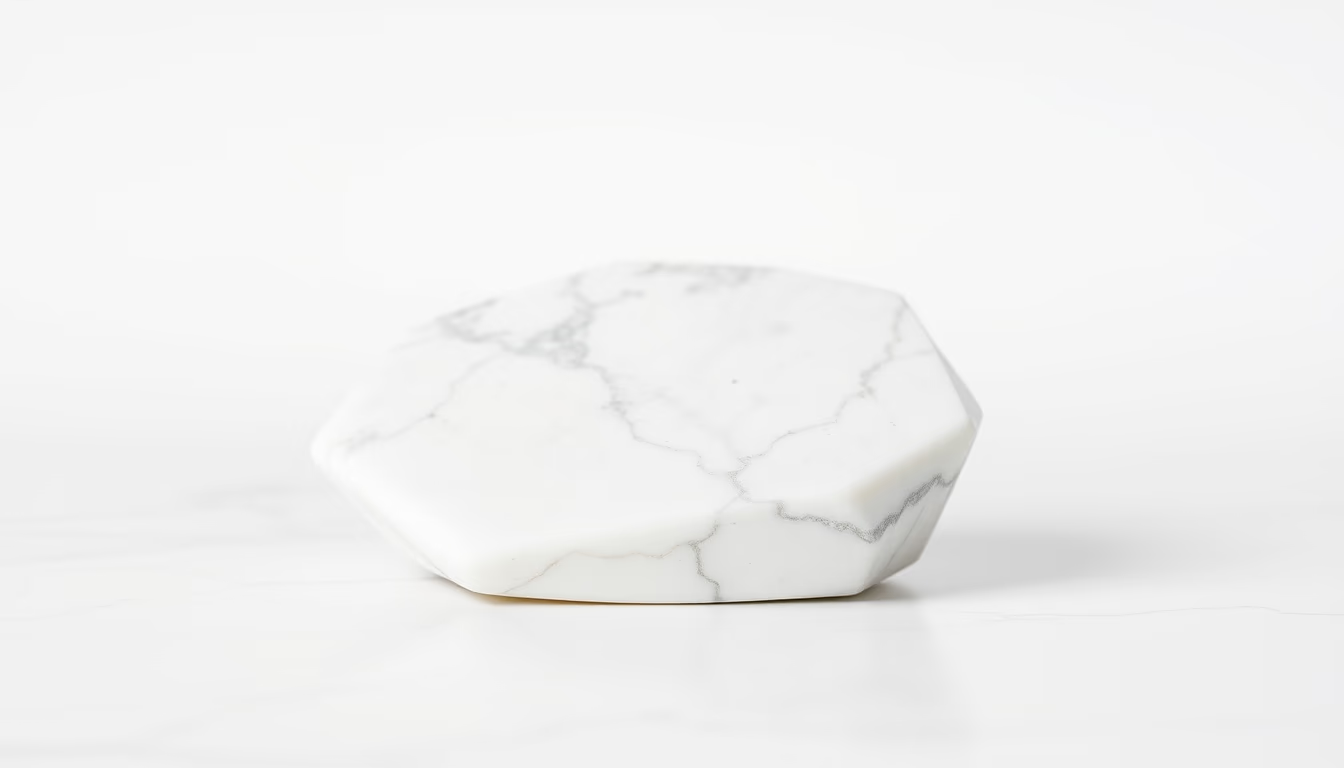
Geometric pattern minimal
1344×768 · AVIF · CC BY 4.0
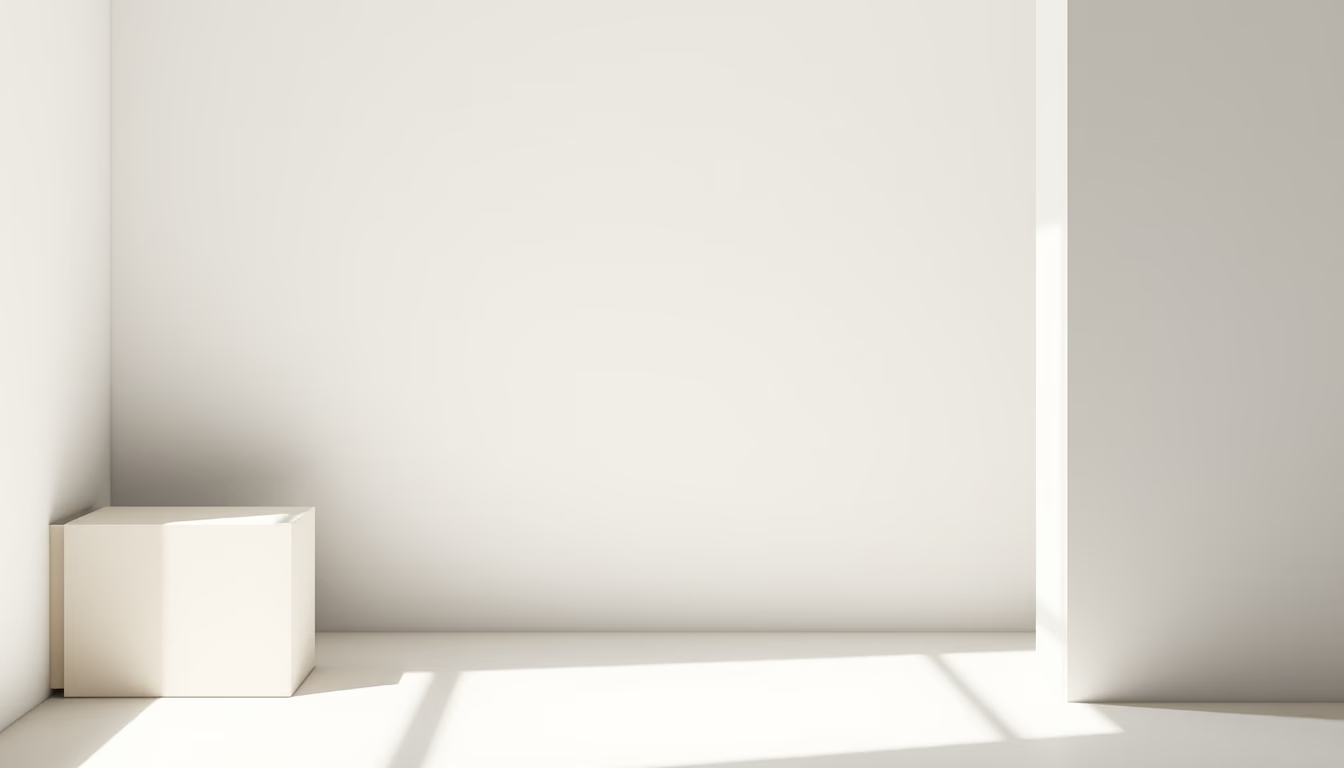
The minimalist geometric pattern combines visual simplicity and mathematical precision, used in contemporary design and abstract art since the early 20th century.
About this subject
The aesthetic of minimalist geometric patterns dates back to European avant-garde movements of the early 20th century, such as Dutch De Stijl and the German Bauhaus. Artists like Piet Mondrian and Kazimir Malevich sought a universal visual language based on pure forms: straight lines, right angles, and primary colors. This abstract approach eliminated figurative representation to focus on the essence of composition.
After World War II, American minimalism in the 1960s, with figures like Donald Judd and Agnes Martin, further radicalized simplicity, exploring modular repetition and monochromatic surfaces. In architecture and design, icons such as Mies van der Rohe and Dieter Rams applied principles of formal reduction and functionality.
Today, minimalist geometric patterns permeate digital design, fashion, corporate identity, and interior decoration. Their popularity stems from their ability to visually organize space without clutter, evoking clarity and order. Trends like flat design and modular grids in interfaces directly derive from these artistic roots.
Interestingly, many such patterns follow historical mathematical proportions, such as the golden ratio or Fibonacci sequences, albeit implicitly. Moreover, the concept of 'fractals', geometric figures repeating at different scales, echoes the minimalist logic of repetition as a visual structure.
Frequently Asked Questions
What defines a minimalist geometric pattern?
It is a visual composition using basic geometric shapes (e.g., squares, triangles, circles) with emphasis on simplicity, repetition, and balance, avoiding ornamentation or complexity.
What is the difference between minimalism and geometric abstraction?
Geometric abstraction is an art movement focused on pure geometric forms, while minimalism is a broader philosophy of reduction to essentials in art, design, and architecture.
How to use minimalist geometric patterns in interior design?
They can be applied in wallpapers, cushions, artwork, or rugs with neutral colors or subtle contrasts. The key is to keep it simple: avoid mixing too many different patterns in one space.
Direct URL
https://pub-c7d6a6ea828543ac903a74a341ccb2e1.r2.dev/imagens/geometric-pattern-minimal-minimalist-composition-p4.avifHow to credit
Include a visible link back to UtilizAí. Copy one of the snippets below:
<a href="https://xn--utiliza-eza.com/en/midia/imagens/geometric-pattern-minimal-minimalist-composition-p4">Geometric pattern minimal</a> by <a href="https://xn--utiliza-eza.com">UtilizAí</a>, licensed under <a href="https://creativecommons.org/licenses/by/4.0/">CC BY 4.0</a>.
[Geometric pattern minimal](https://xn--utiliza-eza.com/en/midia/imagens/geometric-pattern-minimal-minimalist-composition-p4) by [UtilizAí](https://xn--utiliza-eza.com), CC BY 4.0
License: CC-BY-4.0