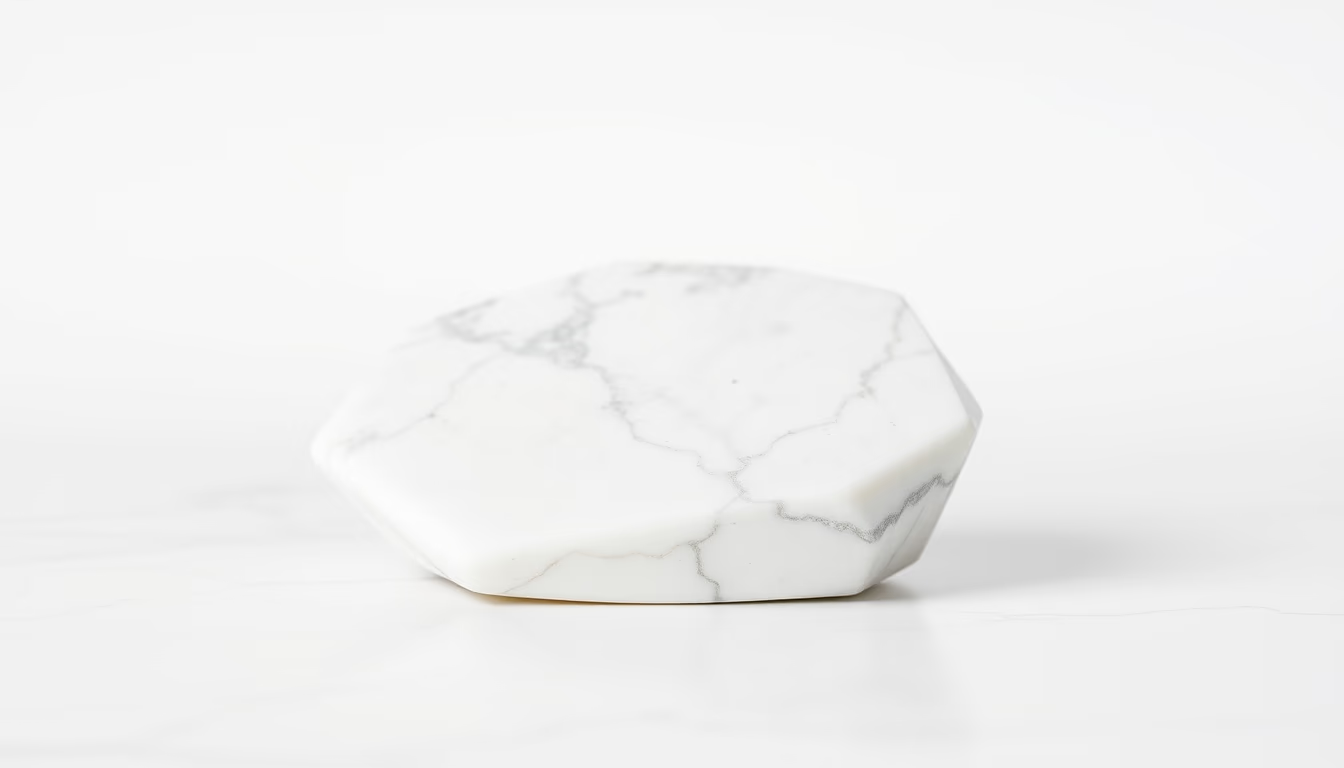
Geometric pattern minimal
1344×768 · AVIF · CC BY 4.0

Minimalist geometric patterns combine simplicity and precision, essential elements in contemporary design and abstract art.
About this subject
Minimalist geometric patterns are a visual expression based on basic shapes such as circles, squares, triangles, and straight lines. Their origin traces back to the modernist movement of the early 20th century, with artists like Piet Mondrian and Kazimir Malevich who sought to reduce art to its geometric essence. In contemporary design, these patterns are widely used in visual identities, architecture, and fashion, conveying order, balance, and sophistication. Macro photography of these patterns reveals details unnoticed by the naked eye: the texture of the material, the sharpness of edges, and the interplay of light and shadow. This type of capture highlights the purity of forms and rhythmic repetition, common in modernist building facades, hydraulic tiles, and geometric fabrics. In Brazil, artists like Lygia Pape and Hélio Oiticica explored geometry as a language, influencing national design. The minimalist aesthetic, popularized in the 1960s, remains relevant in the 21st century, appearing in packaging, digital interfaces, and interior decoration. The 'quiet luxury' trend reinforces the use of sober, elegant patterns where less is more. The mathematical precision behind these compositions also connects art with science, evoking fractals and crystalline structures.
Frequently Asked Questions
What defines a minimalist geometric pattern?
A minimalist geometric pattern is characterized by the use of simple shapes, orderly repetition, and absence of unnecessary ornamentation. It prioritizes visual harmony based on mathematical proportions and neutral or primary colors.
Where are minimalist geometric patterns applied in design?
They are common in logos, wallpapers, fabric prints, architectural facades, floors, and app interfaces. Fashion and decoration brands often adopt this aesthetic for its timeless elegance.
What is the relationship between macro photography and geometric patterns?
Macro photography brings details invisible to the naked eye closer, highlighting textures, symmetries, and minimal imperfections. This allows appreciation of the precision of lines and material quality, enriching the perception of minimalist design.
Direct URL
https://pub-c7d6a6ea828543ac903a74a341ccb2e1.r2.dev/imagens/geometric-pattern-minimal-macro-closeup-p3.avifHow to credit
Include a visible link back to UtilizAí. Copy one of the snippets below:
<a href="https://xn--utiliza-eza.com/en/midia/imagens/geometric-pattern-minimal-macro-closeup-p3">Geometric pattern minimal</a> by <a href="https://xn--utiliza-eza.com">UtilizAí</a>, licensed under <a href="https://creativecommons.org/licenses/by/4.0/">CC BY 4.0</a>.
[Geometric pattern minimal](https://xn--utiliza-eza.com/en/midia/imagens/geometric-pattern-minimal-macro-closeup-p3) by [UtilizAí](https://xn--utiliza-eza.com), CC BY 4.0
License: CC-BY-4.0