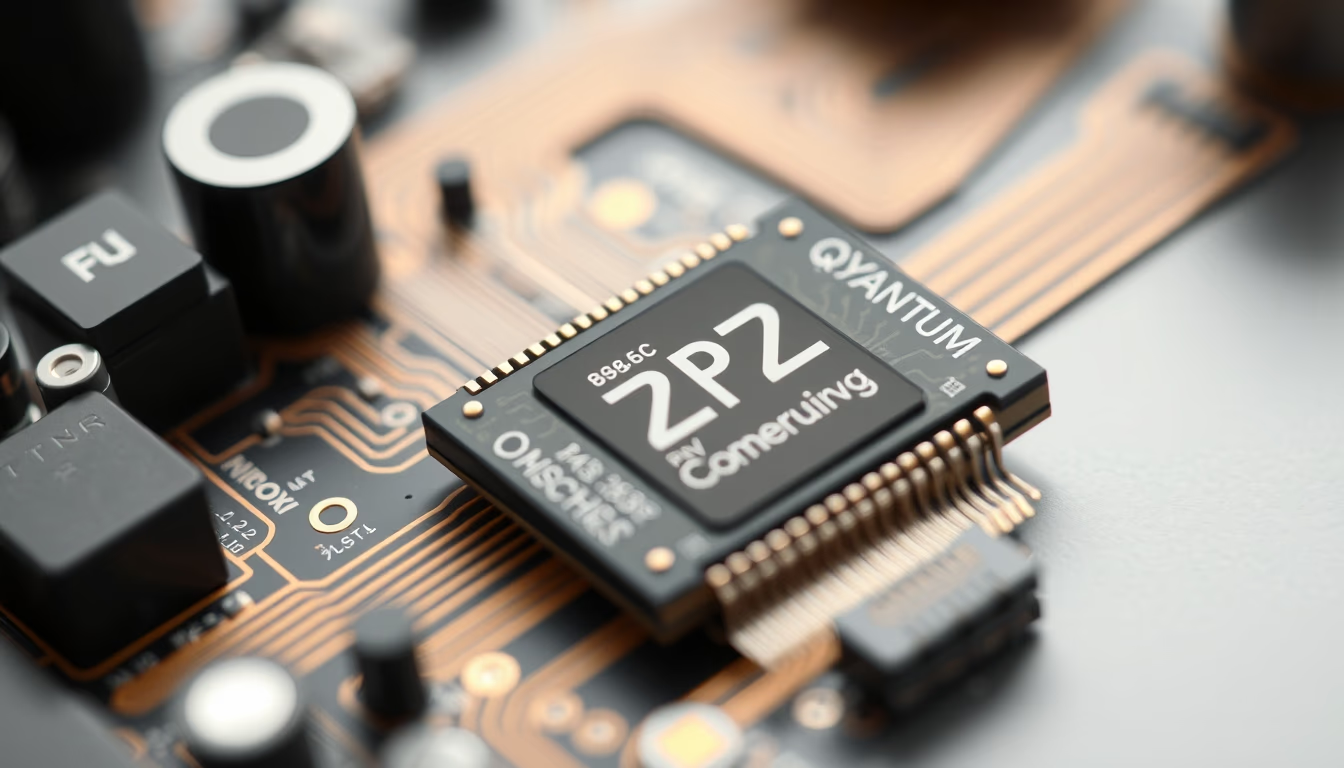
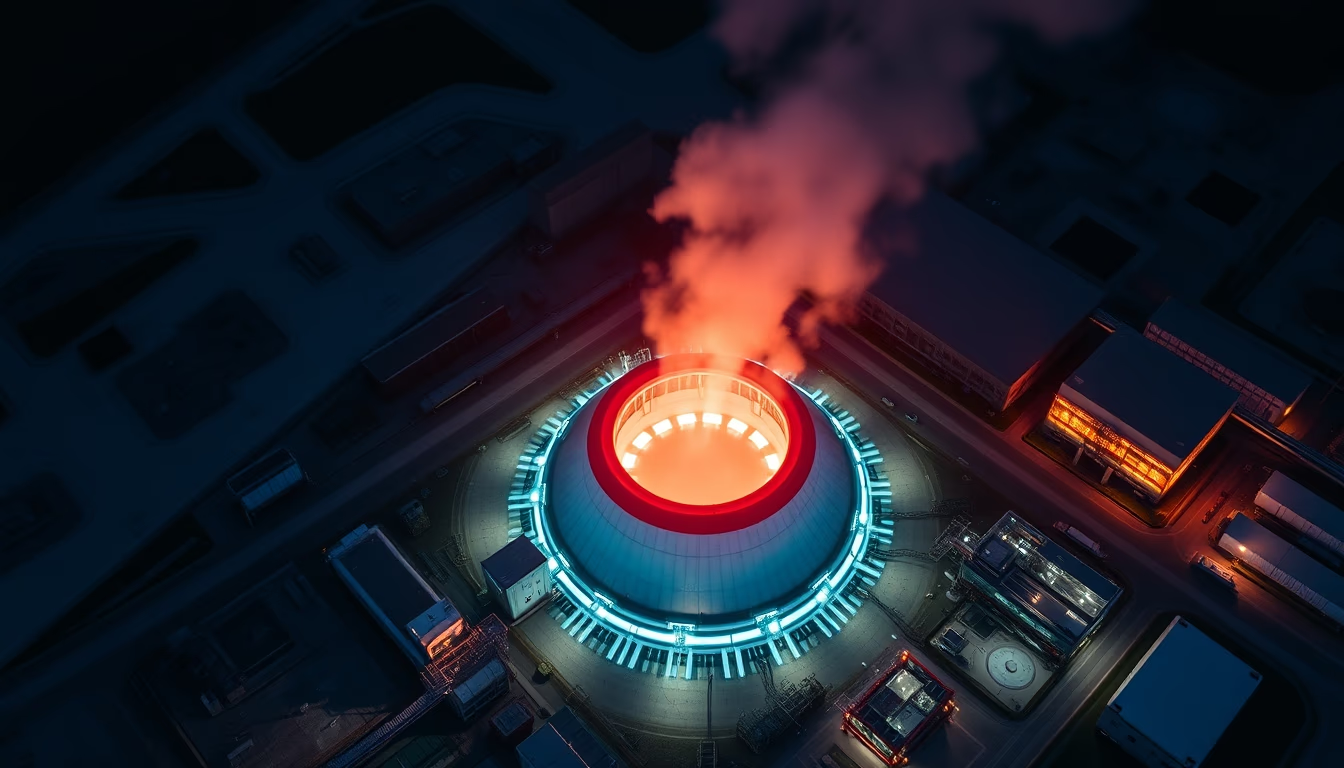
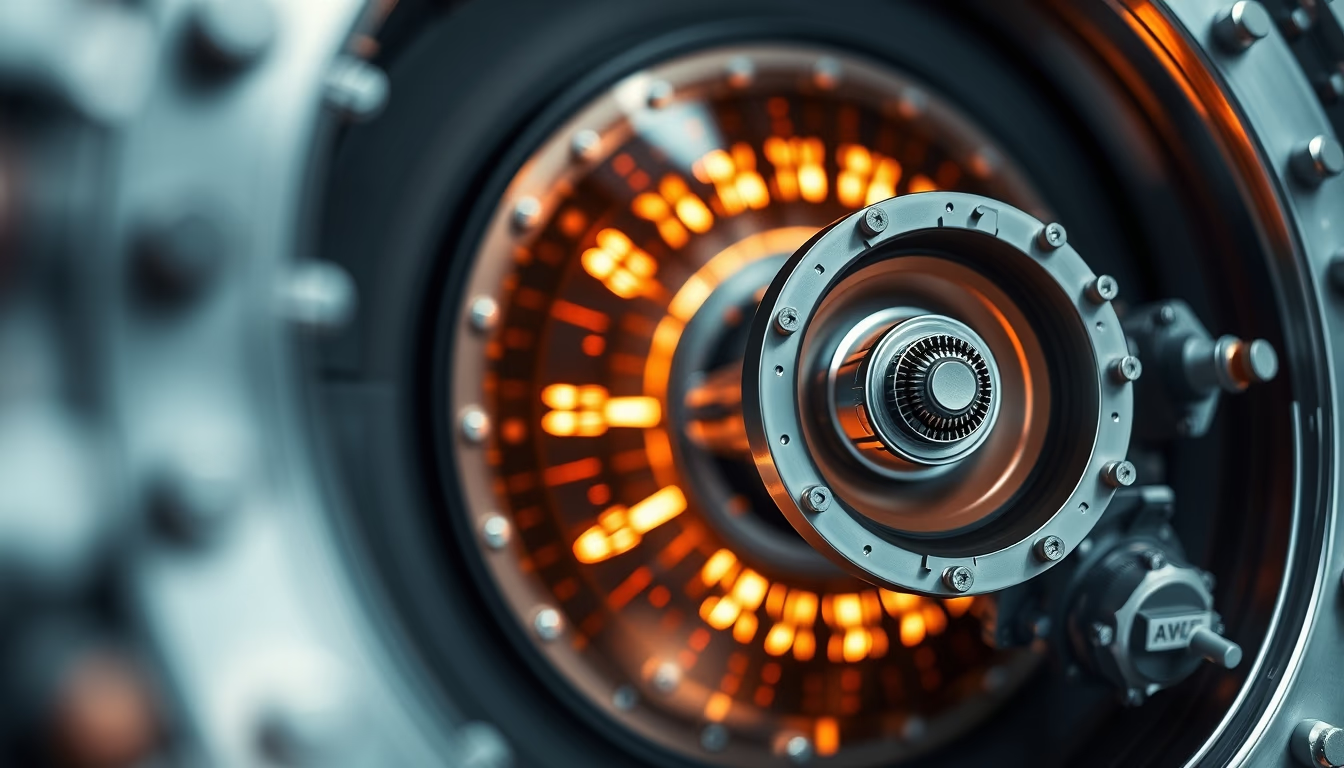
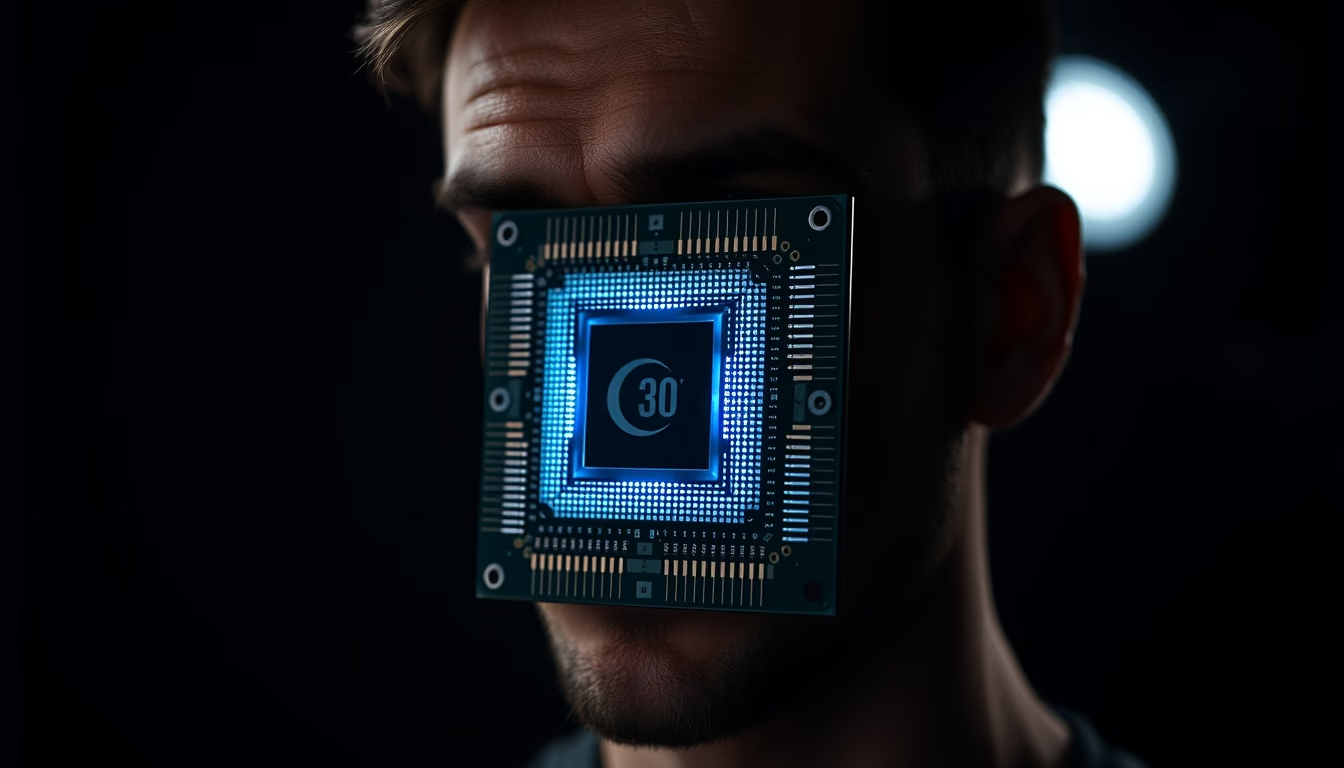
Fusion reactor tokamak
1344×768 · AVIF · CC BY 4.0
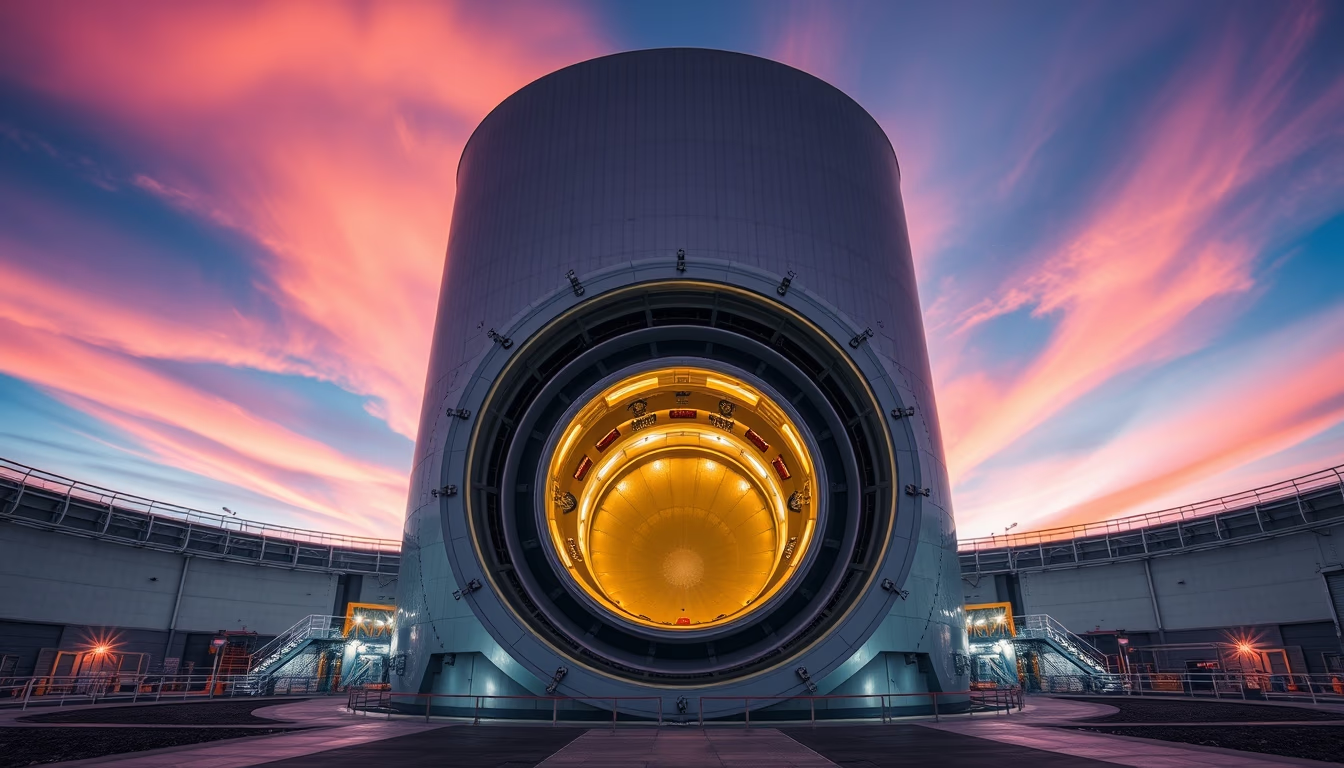
The tokamak is a device designed to confine plasma at high temperatures and enable controlled nuclear fusion, a potential source of clean and virtually limitless energy.
About this subject
The tokamak, a concept proposed in the 1950s by Soviet physicists Igor Tamm and Andrei Sakharov, remains the most promising configuration for controlled nuclear fusion. Its name is a Russian acronym for 'toroidal chamber with magnetic coils'. The basic principle involves confining a plasma of deuterium and tritium (hydrogen isotopes) at temperatures exceeding 150 million degrees Celsius, using intense magnetic fields generated by coils surrounding a donut-shaped (toroidal) chamber. Under these conditions, atomic nuclei overcome electrostatic repulsion and fuse, releasing enormous energy.
The largest ongoing tokamak project is ITER (International Thermonuclear Experimental Reactor), currently under construction in France with 35 participating countries. ITER aims to demonstrate the scientific and technological feasibility of fusion, producing 500 MW of power from 50 MW input (gain Q = 10). Other relevant tokamaks include JET (Joint European Torus) in the UK, which holds the fusion power record (16 MW in 1997), and KSTAR in South Korea, which achieved 100-million-degree plasmas for 30 seconds.
Nuclear fusion offers advantages over fission: abundant fuel (deuterium from water, tritium bred from lithium), low short-lived radioactive waste, and no risk of uncontrolled chain reaction. Despite progress, enormous challenges remain, primarily plasma stability and development of materials that can withstand intense neutron flux. If ITER succeeds, the next step will be DEMO, a demonstration reactor that will feed electricity into the grid.
Interestingly, the tokamak has also inspired more compact designs like 'spherical tokamaks' (e.g., NSTX-U in the US), which reduce plasma volume and may offer higher efficiency. Private companies such as Commonwealth Fusion Systems and TAE Technologies are investing in tokamak variants with high-temperature superconducting magnets, promising commercial reactors by 2030. Fusion research moves slowly, but each advance brings us closer to an energy revolution.
Frequently Asked Questions
How does a tokamak differ from a nuclear fission reactor?
Fission splits heavy nuclei (uranium, plutonium) to release energy, while fusion combines light nuclei (hydrogen) at high temperatures. Fusion produces less long-lived radioactive waste and has no risk of meltdown or uncontrolled chain reaction.
What temperature is required for fusion in a tokamak?
Deuterium and tritium need temperatures above 150 million °C to overcome Coulomb repulsion. For comparison, the Sun's core is about 15 million °C. On Earth, temperatures must be higher due to lower pressures.
Will ITER produce commercial energy?
Not directly. ITER is a scientific experiment to demonstrate that fusion can produce more energy than it consumes (Q≥10). A commercial reactor (DEMO) would follow, projected for the mid-21st century.
Direct URL
https://pub-c7d6a6ea828543ac903a74a341ccb2e1.r2.dev/imagens/fusion-reactor-tokamak-long-exposure-p4.avifHow to credit
Include a visible link back to UtilizAí. Copy one of the snippets below:
<a href="https://xn--utiliza-eza.com/en/midia/imagens/fusion-reactor-tokamak-long-exposure-p4">Fusion reactor tokamak</a> by <a href="https://xn--utiliza-eza.com">UtilizAí</a>, licensed under <a href="https://creativecommons.org/licenses/by/4.0/">CC BY 4.0</a>.
[Fusion reactor tokamak](https://xn--utiliza-eza.com/en/midia/imagens/fusion-reactor-tokamak-long-exposure-p4) by [UtilizAí](https://xn--utiliza-eza.com), CC BY 4.0
License: CC-BY-4.0