Fusion reactor tokamak
1344×768 · AVIF · CC BY 4.0
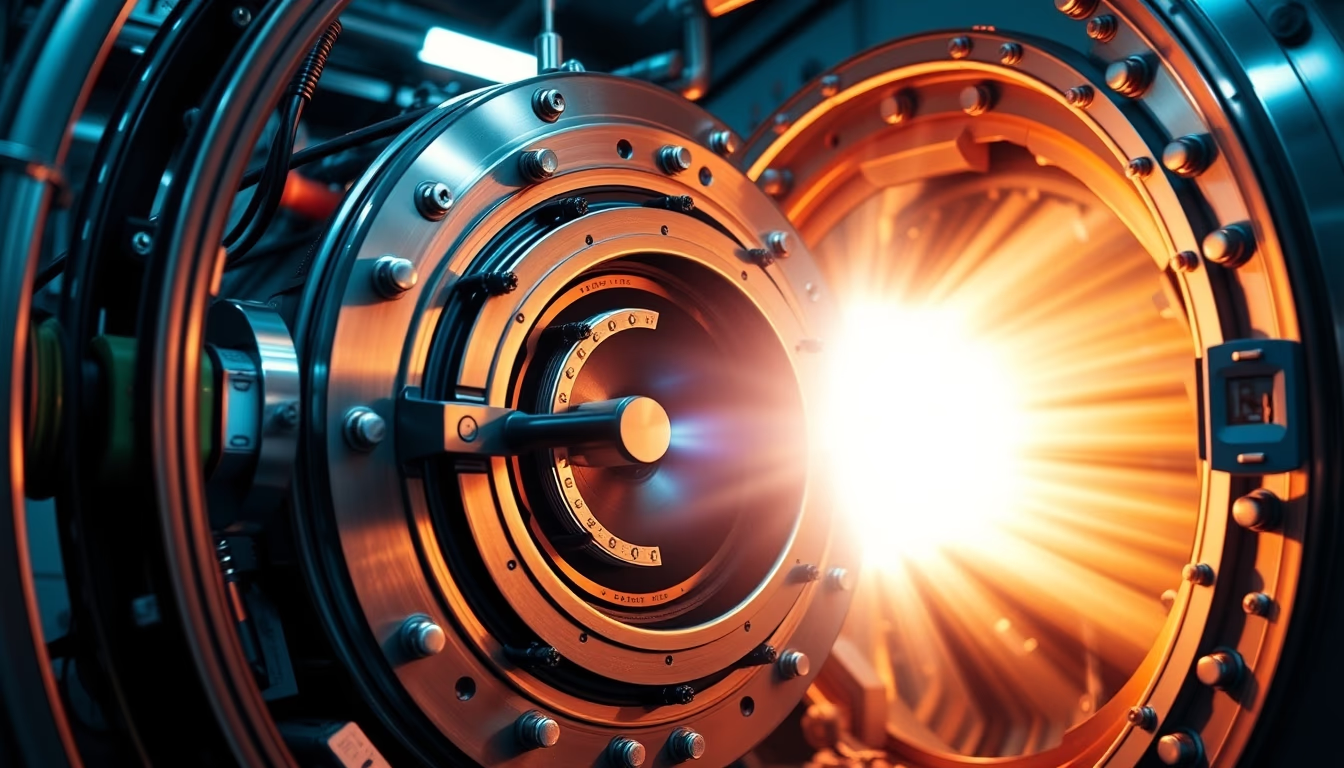
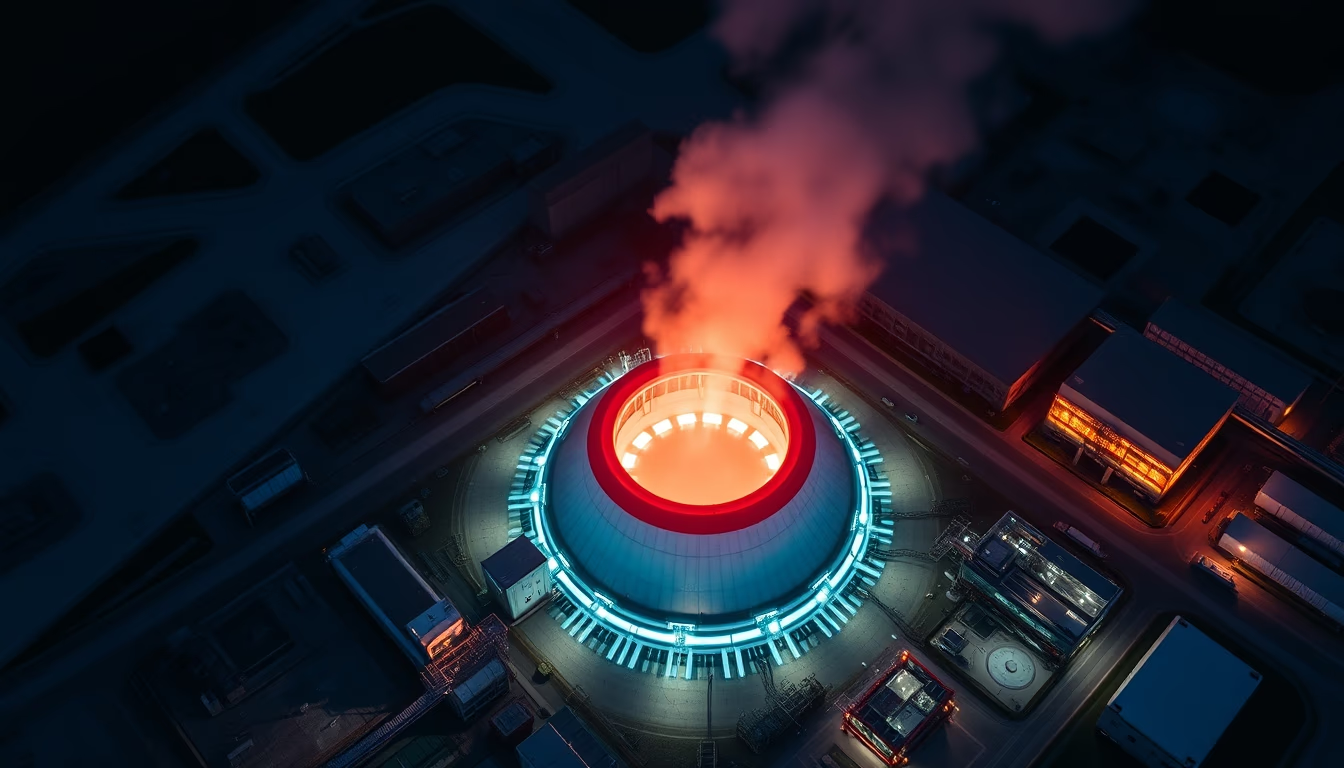
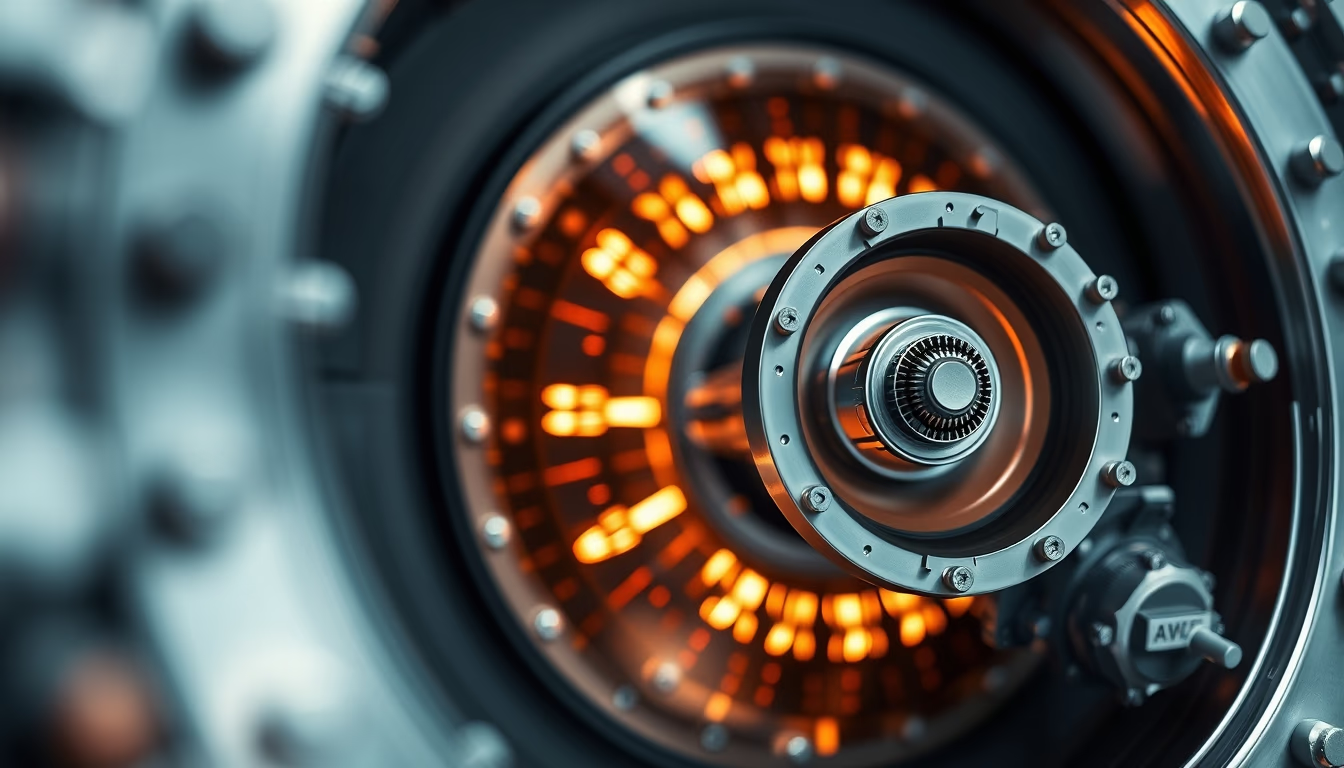
The tokamak is a magnetic confinement device used in nuclear fusion research, aiming to replicate solar reactions on Earth.
About this subject
The tokamak is one of the most promising designs for controlled nuclear fusion. Developed in the 1950s by Soviet physicists Igor Tamm and Andrei Sakharov, the device uses strong magnetic fields to confine plasma at temperatures exceeding 150 million degrees Celsius, necessary to fuse hydrogen isotopes like deuterium and tritium. This process releases enormous amounts of energy with no carbon emissions or long-lived waste.
The largest experimental tokamak is ITER, under construction in France with 35 participating countries. ITER aims to produce 500 MW of fusion power, proving energy viability. Smaller tokamaks, such as JET in the UK and KSTAR in South Korea, have achieved records in confinement time and temperature. In Brazil, the ETE tokamak at INPE conducts plasma physics research.
The main technical challenge is maintaining stable plasma for extended periods, avoiding instabilities that touch the reactor walls. Materials resistant to energetic neutrons and heat extraction systems are intense research areas. Beyond energy, fusion could provide a neutron source for medical and materials applications.
Interestingly, the name "tokamak" comes from Russian: toroidalnaya kamera s magnitnymi katushkami (toroidal chamber with magnetic coils). Although commercial fusion is still distant, recent advances in high-temperature superconducting magnets, such as in the SPARC reactor at MIT, are accelerating timelines.
Frequently Asked Questions
What does the word tokamak mean?
Tokamak is a Russian acronym for "toroidal chamber with magnetic coils" (toroidalnaya kamera s magnitnymi katushkami), describing its donut shape and magnetic confinement.
How hot is the plasma inside a tokamak?
The plasma inside a tokamak reaches temperatures over 150 million degrees Celsius, about 10 times hotter than the Sun's core, necessary to overcome electrostatic repulsion between atomic nuclei.
When will commercial nuclear fusion become a reality?
Optimistic estimates point to the 2040s or 2050s, depending on the success of projects like ITER and private ventures. Still, significant engineering, materials, and scalability challenges remain.
Direct URL
https://pub-c7d6a6ea828543ac903a74a341ccb2e1.r2.dev/imagens/fusion-reactor-tokamak-lo-fi-disposable-camera-p2.avifHow to credit
Include a visible link back to UtilizAí. Copy one of the snippets below:
<a href="https://xn--utiliza-eza.com/en/midia/imagens/fusion-reactor-tokamak-lo-fi-disposable-camera-p2">Fusion reactor tokamak</a> by <a href="https://xn--utiliza-eza.com">UtilizAí</a>, licensed under <a href="https://creativecommons.org/licenses/by/4.0/">CC BY 4.0</a>.
[Fusion reactor tokamak](https://xn--utiliza-eza.com/en/midia/imagens/fusion-reactor-tokamak-lo-fi-disposable-camera-p2) by [UtilizAí](https://xn--utiliza-eza.com), CC BY 4.0
License: CC-BY-4.0