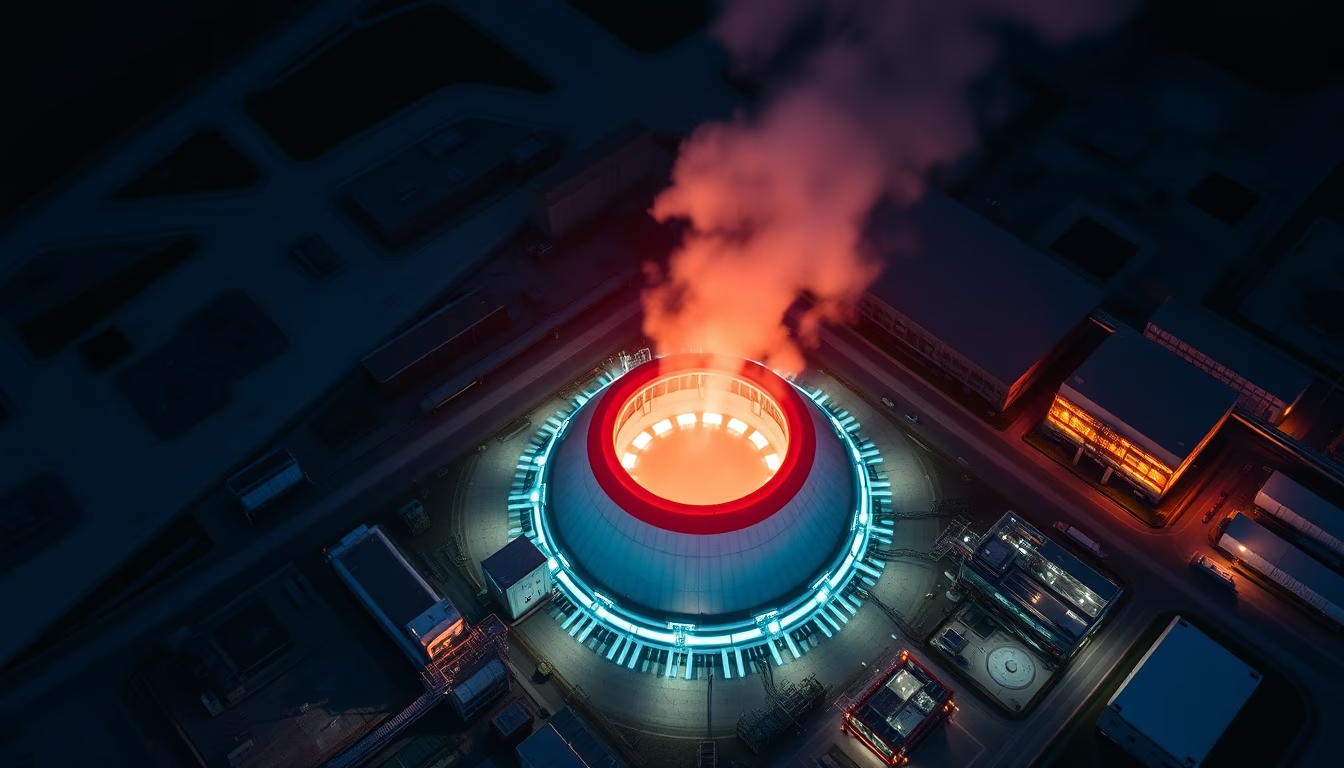
Fusion reactor tokamak
1344×768 · AVIF · CC BY 4.0
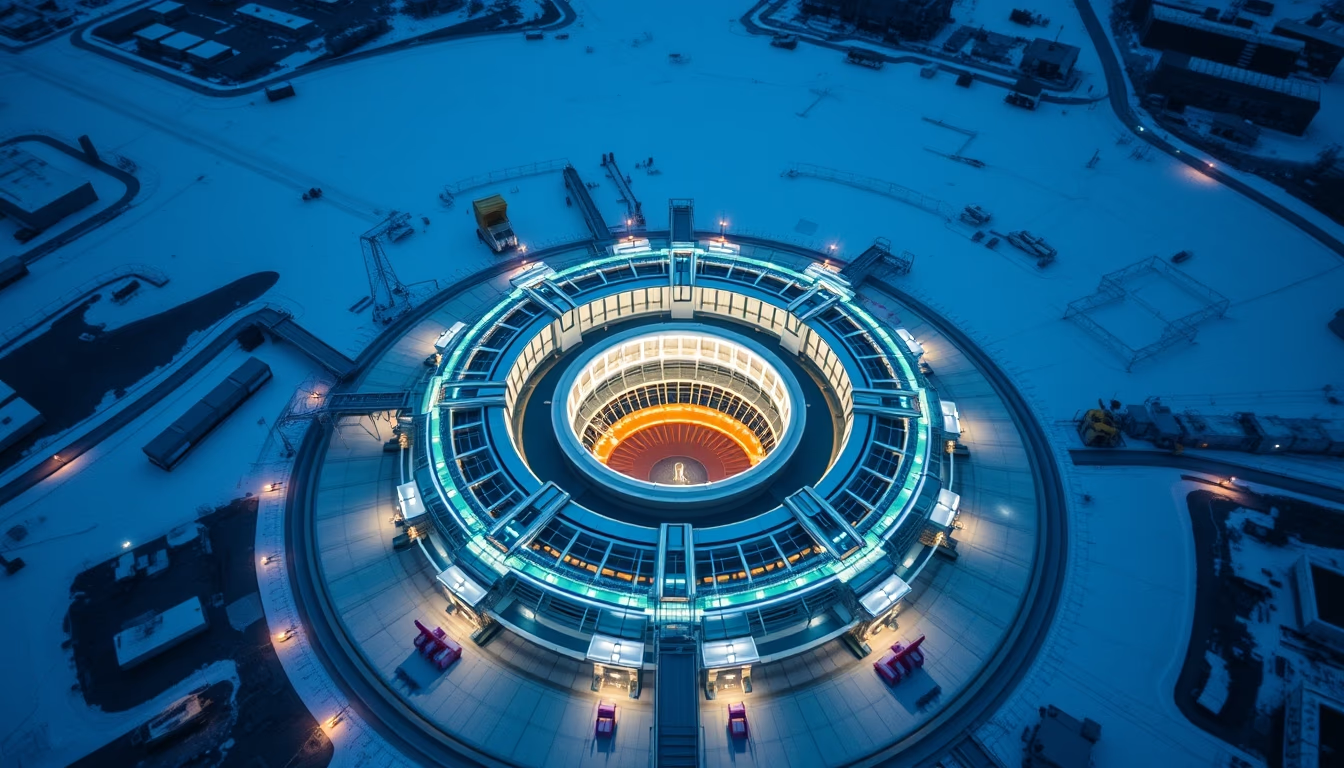
Tokamak é um dispositivo de fusão nuclear em forma de anel que confina plasma a milhões de graus Celsius, visando replicar a energia das estrelas na Terra.
Sobre o tema
O tokamak é o principal tipo de reator de fusão nuclear experimental, desenvolvido desde os anos 1950 na União Soviética. Seu nome é um acrônimo russo para "câmara toroidal com bobinas magnéticas". O dispositivo utiliza campos magnéticos intensos para confinar o plasma em forma de rosca, impedindo que toque as paredes do reator. O plasma, composto por isótopos de hidrogênio como deutério e trítio, é aquecido a temperaturas acima de 150 milhões de graus Celsius para que ocorra a fusão nuclear, liberando enormes quantidades de energia.
Atualmente, o maior projeto internacional de tokamak é o ITER, em construção na França, que envolve 35 países. O ITER será o primeiro reator a produzir mais energia (500 MW) do que a necessária para aquecer o plasma, um marco conhecido como ganho de fusão. Outros tokamaks importantes incluem o JET no Reino Unido, que detém o recorde de energia de fusão, e o KSTAR na Coreia do Sul. No Brasil, o tokamak ETE (Experimento Tokamak Esférico) opera no INPE desde os anos 1990, contribuindo para pesquisas em confinamento magnético.
A fusão nuclear oferece uma fonte de energia praticamente inesgotável, segura e sem emissão de carbono. Diferente da fissão, não produz resíduos radioativos de longa duração e o risco de acidentes é mínimo. No entanto, ainda há desafios técnicos, como a estabilidade do plasma e a seleção de materiais resistentes ao intenso fluxo de nêutrons. Avanços recentes, como o uso de inteligência artificial para controle de plasma e novos ímãs supercondutores de alta temperatura, aceleram o desenvolvimento de reatores comerciais.
Curiosidade: o conceito de tokamak foi inicialmente secreto na URSS, mas foi revelado ao Ocidente em 1968 pela cientista soviética L. Artemovich. Desde então, tornou-se o design dominante na pesquisa de fusão. Se bem-sucedido, o ITER abrirá caminho para o DEMO, o primeiro reator de fusão a gerar eletricidade na rede.
Perguntas frequentes
Como funciona um tokamak?
Um tokamak confina plasma em forma de anel usando campos magnéticos helicoidais. O plasma é aquecido até temperaturas extremas para que ocorra a fusão de núcleos de hidrogênio, liberando energia na forma de nêutrons rápidos.
Qual a diferença entre tokamak e stellarator?
Ambos confinam plasma magneticamente, mas o tokamak usa corrente elétrica induzida no plasma para gerar parte do campo, enquanto o stellarator usa apenas bobinas externas, tornando-o mais estável mas mais complexo de construir.
Quando teremos energia de fusão comercial?
Especialistas estimam que a primeira usina de fusão comercial (DEMO) possa operar por volta de 2050, após os resultados do ITER na década de 2030. Ainda há desafios de engenharia e economia.
URL direta
https://pub-c7d6a6ea828543ac903a74a341ccb2e1.r2.dev/imagens/fusion-reactor-tokamak-aerial-drone-shot-p11.avifComo creditar
Inclua um link visível de volta pro UtilizAí. Copie um dos snippets abaixo:
<a href="https://xn--utiliza-eza.com/midia/imagens/fusion-reactor-tokamak-aerial-drone-shot-p11">Fusion reactor tokamak</a> by <a href="https://xn--utiliza-eza.com">UtilizAí</a>, licensed under <a href="https://creativecommons.org/licenses/by/4.0/">CC BY 4.0</a>.
[Fusion reactor tokamak](https://xn--utiliza-eza.com/midia/imagens/fusion-reactor-tokamak-aerial-drone-shot-p11) by [UtilizAí](https://xn--utiliza-eza.com), CC BY 4.0
Licença: CC-BY-4.0