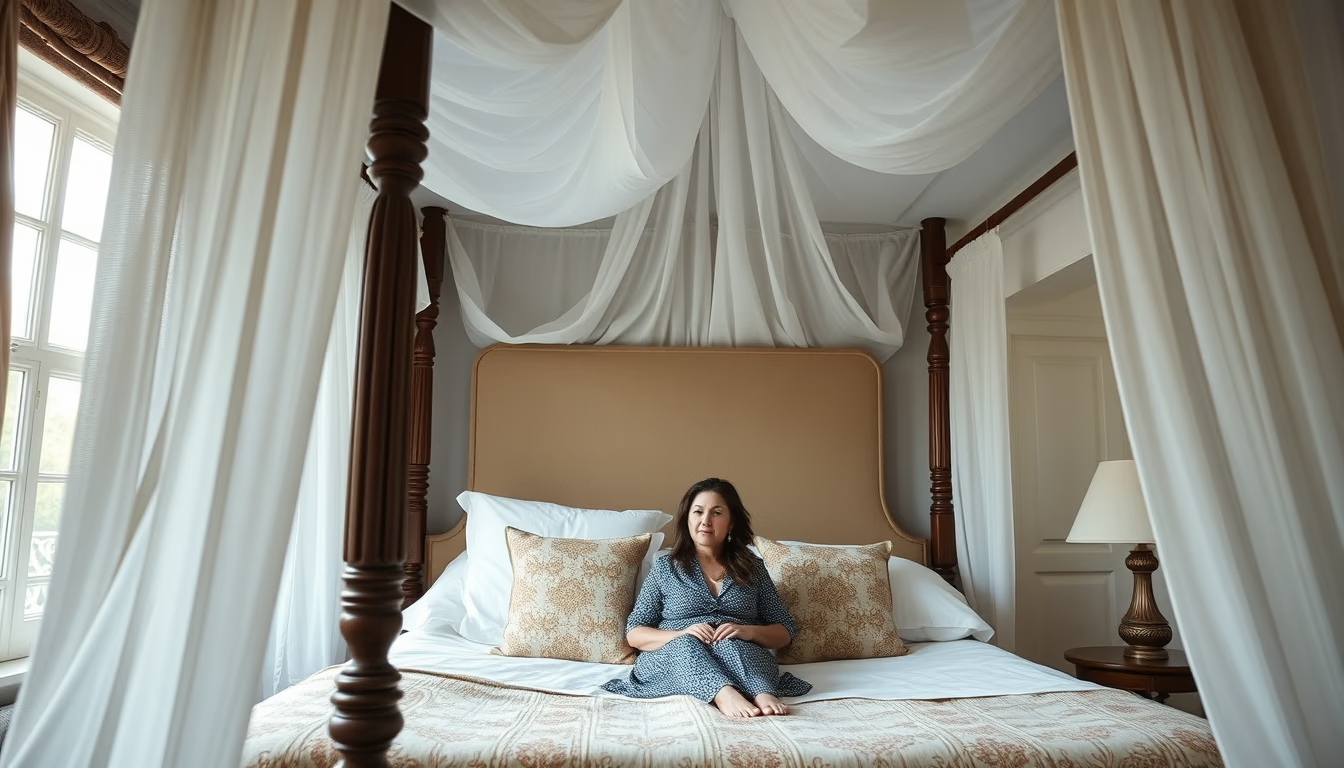
Four poster bed canopy
1344×768 · AVIF · CC BY 4.0

The canopy of a four-poster bed, a decorative and functional element that transforms the room into a refuge of privacy and elegance, has been an icon of furniture design since the Renaissance.
About this subject
Four-poster beds originated in medieval Europe as a solution for privacy and protection against insects and drafts in shared great halls. Initially, the canopy was made from heavy fabrics like velvet or brocade, often accompanied by curtains that could be fully closed. During the Renaissance and Victorian era, these beds became status symbols, featuring frames crafted from noble woods such as oak, mahogany, and walnut, with elaborate carvings and gilded details. The canopy itself gained fringes, tassels, and embroidery, reflecting the opulence of the period.
Functionally, the canopy provided thermal insulation: in cold climates, heavy fabrics retained body heat, while in warmer regions, lighter materials like linen and cotton allowed air circulation. The four-post structure (hence the name) supported curtains that ensured complete privacy. This design influenced distinct regional styles, such as the French canopy bed (lit à la française) with its rounded baldachin, and the Italian version (letto a baldacchino), more ornate and sumptuous.
Culturally, the four-poster bed is associated with royalty and nobility, frequently depicted in films and literature as a symbol of romance, mystery, or power. In contemporary decor, the canopy can be adapted with modern textiles like synthetic silk or lace, maintaining its aesthetic and cozy function. Many current models combine solid wood with metal hardware, offering versatility for various interior styles, from classical to rustic.
Frequently Asked Questions
What is a four-poster bed?
It is a bed with four vertical posts at the corners, usually made of wood or metal, that support a canopy or decorative fabric. Originally, the canopy and curtains provided privacy and protection against insects and drafts.
What is the historical origin of the four-poster bed?
It originated in medieval Europe, evolving from curtained beds. It became popular among the nobility in the 16th and 17th centuries, especially in England and France, as a status symbol and for comfort.
What materials were traditionally used for the canopy?
Canopies were made from noble fabrics such as velvet, silk, brocade, and linen, often adorned with embroidery, fringes, and tassels. Today cotton, polyester, and lace are also used for different decorative styles.
Direct URL
https://pub-c7d6a6ea828543ac903a74a341ccb2e1.r2.dev/imagens/four-poster-bed-canopy-long-exposure-fresh11.avifHow to credit
Include a visible link back to UtilizAí. Copy one of the snippets below:
<a href="https://xn--utiliza-eza.com/en/midia/imagens/four-poster-bed-canopy-long-exposure-fresh11">Four poster bed canopy</a> by <a href="https://xn--utiliza-eza.com">UtilizAí</a>, licensed under <a href="https://creativecommons.org/licenses/by/4.0/">CC BY 4.0</a>.
[Four poster bed canopy](https://xn--utiliza-eza.com/en/midia/imagens/four-poster-bed-canopy-long-exposure-fresh11) by [UtilizAí](https://xn--utiliza-eza.com), CC BY 4.0
License: CC-BY-4.0