Forest bathing path
1344×768 · AVIF · CC BY 4.0
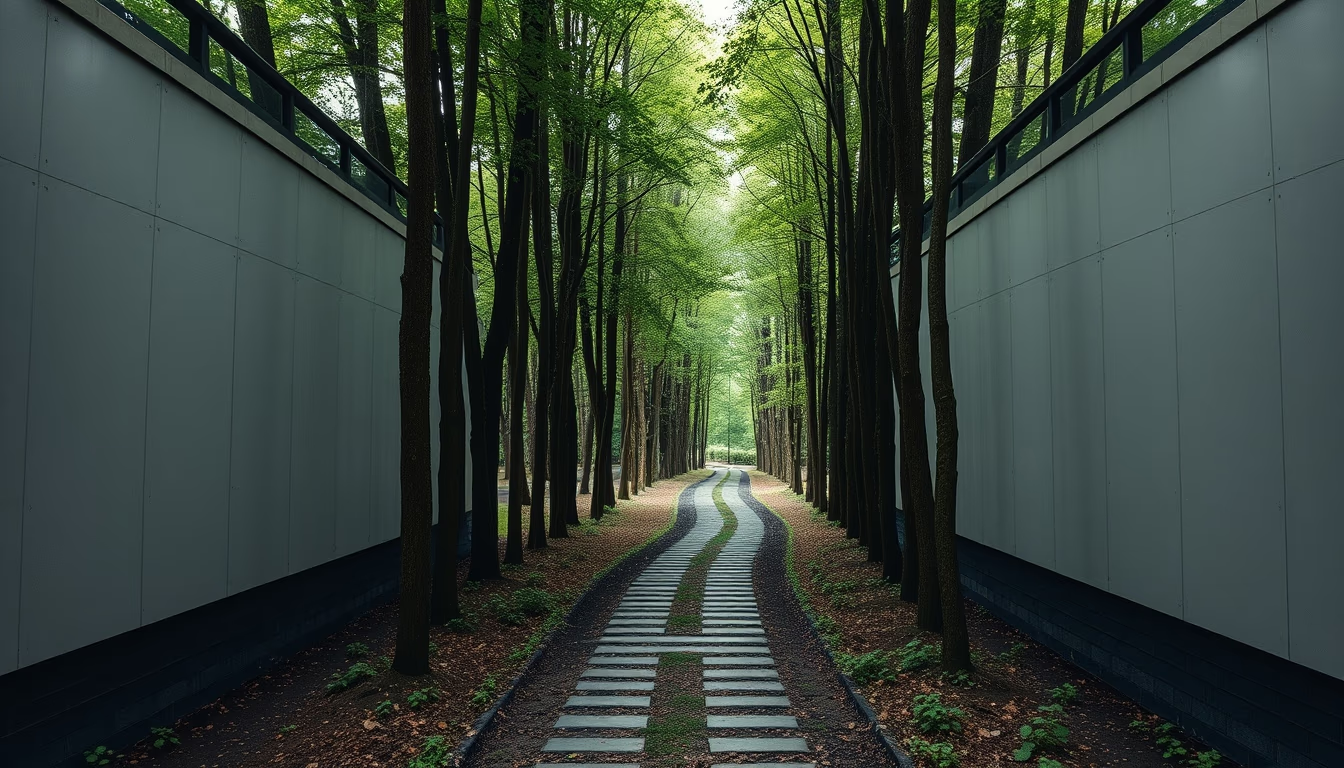
Forest bathing, or shinrin-yoku, is a Japanese practice of mindful immersion in nature, combining walks on trails specifically designed to maximize sensory contact with the forest.
About this subject
Forest bathing, or shinrin-yoku, originated in Japan in the 1980s as a response to urban stress and disconnection from nature. The Japanese government, through the Forest Agency, promoted the creation of therapeutic trails in national forests, designed to encourage slow, mindful walking and full sensory engagement: sight of the canopy, texture of the ground, sounds of birds and water, scent of leaves and wood, and touch of the trees.
Scientific studies, such as those conducted by Chiba University and Nippon Medical School, have shown that forest exposure reduces cortisol levels, blood pressure, and heart rate, while boosting immune system activity, particularly natural killer (NK) cells. The practice is not about intense exercise but about a slow, attentive walk lasting two to three hours.
Forest bathing paths are architecturally designed to integrate seamlessly with the natural environment. Trails often feature uneven surfaces to stimulate proprioception, curves that block long views to encourage close observation, and rest points with benches or platforms for meditation. In Brazil, parks such as the Botanical Garden of Curitiba and Ibirapuera Park in São Paulo offer guided shinrin-yoku experiences.
The global trend for 2026 projects the growth of urban spaces incorporating forest elements, known as "urban forest bathing," in squares, vertical gardens, and even building terraces. Contemporary landscape architecture seeks to recreate the atmosphere of native forests using local species, flowing water, and winding paths that promote contemplative walking.
Frequently Asked Questions
What is forest bathing?
Forest bathing, or shinrin-yoku, is a Japanese practice of mindful immersion in nature, involving slow walks on forest trails to engage all senses and promote physical and mental well-being.
What are the proven benefits of forest bathing?
Studies show reduced cortisol, blood pressure, and heart rate, as well as improved immune function with increased NK cells. It also alleviates stress, anxiety, and improves mood.
Where can I practice forest bathing in Brazil?
Parks like the Botanical Garden of Curitiba (PR) and Ibirapuera Park (SP) offer guided experiences. Trails in Atlantic Forest areas, such as Serra da Cantareira and Tijuca National Park, are also popular.
Direct URL
https://pub-c7d6a6ea828543ac903a74a341ccb2e1.r2.dev/imagens/forest-bathing-path-architectural-photography-p6.avifHow to credit
Include a visible link back to UtilizAí. Copy one of the snippets below:
<a href="https://xn--utiliza-eza.com/en/midia/imagens/forest-bathing-path-architectural-photography-p6">Forest bathing path</a> by <a href="https://xn--utiliza-eza.com">UtilizAí</a>, licensed under <a href="https://creativecommons.org/licenses/by/4.0/">CC BY 4.0</a>.
[Forest bathing path](https://xn--utiliza-eza.com/en/midia/imagens/forest-bathing-path-architectural-photography-p6) by [UtilizAí](https://xn--utiliza-eza.com), CC BY 4.0
License: CC-BY-4.0