Fluorite cubes octahedral
1344×768 · AVIF · CC BY 4.0
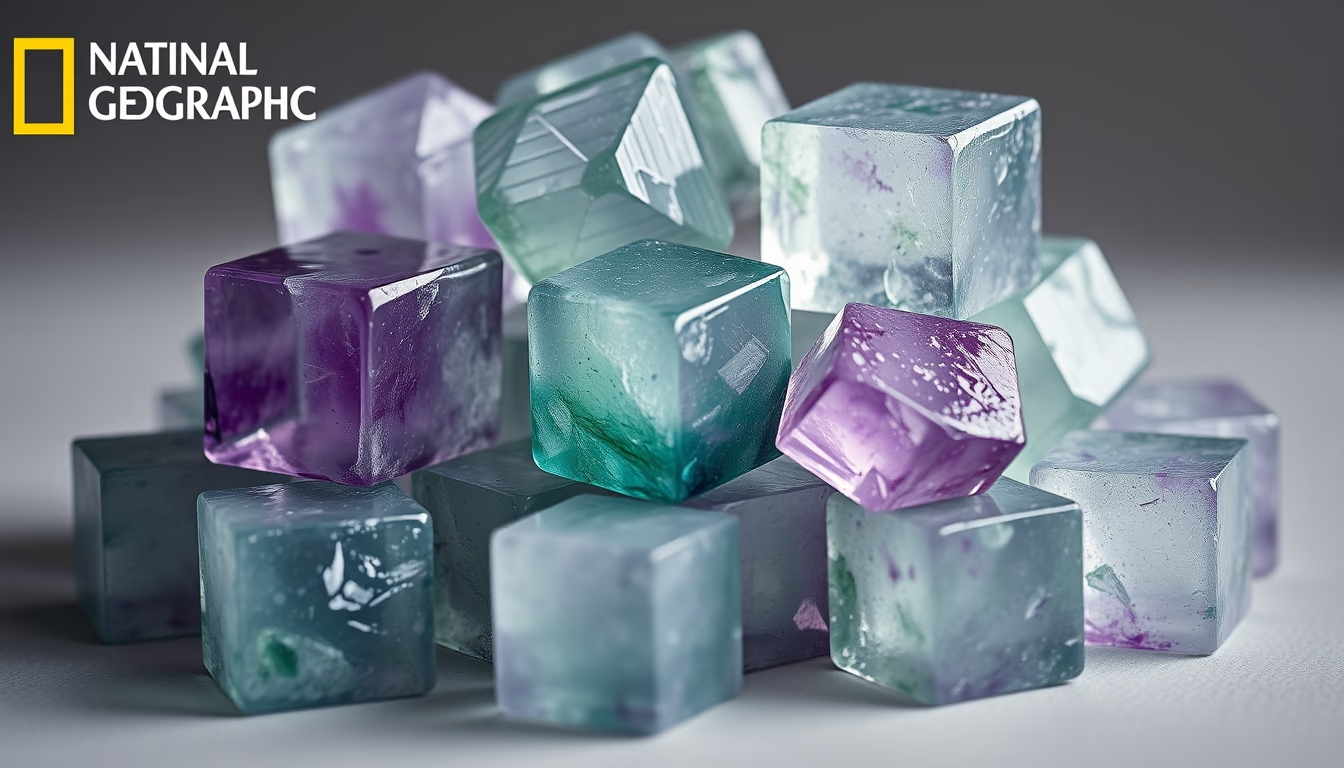
Fluorite (CaF2) is a halide mineral with cubic and octahedral crystals, famous for its fluorescence and wide color range. It occurs in hydrothermal veins and pegmatites worldwide.
About this subject
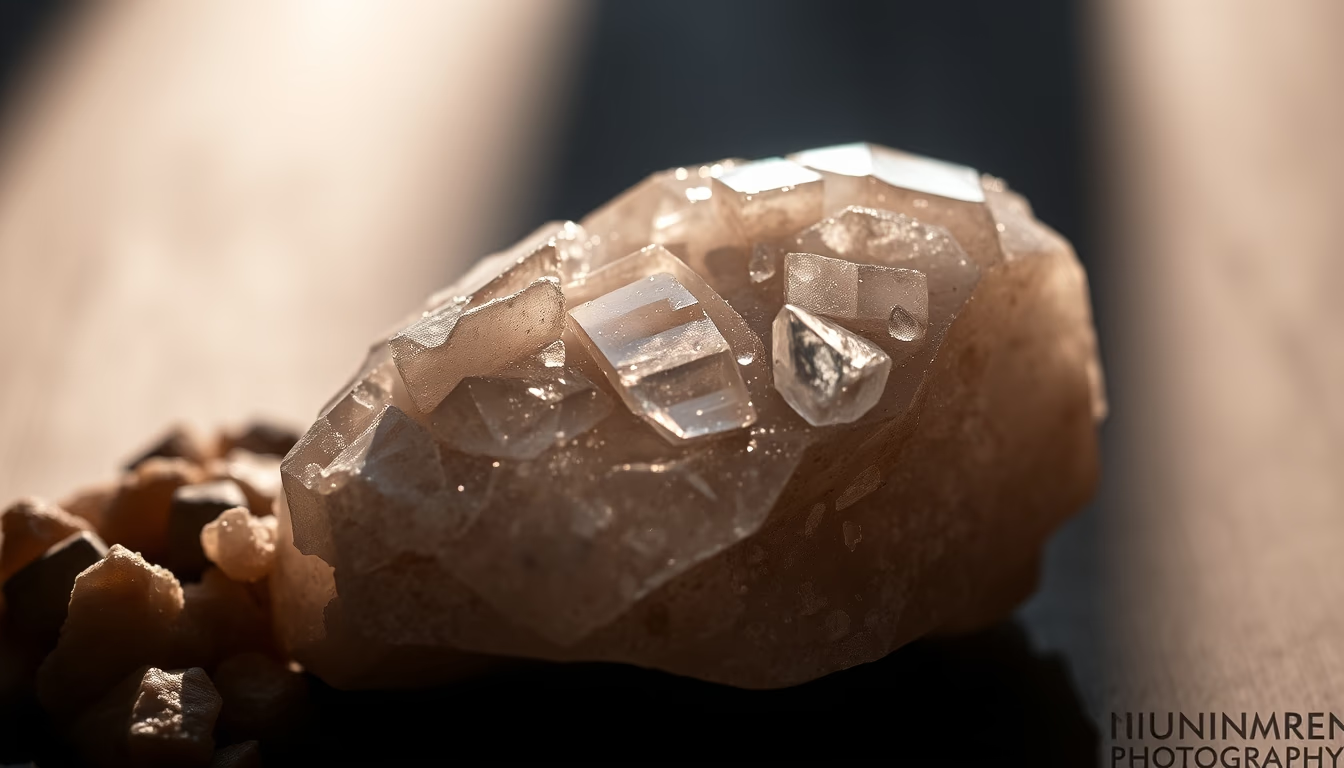
Fluorite, chemically calcium fluoride (CaF2), is a halide mineral that crystallizes in the cubic system. Its crystal structure forms perfect cubes, octahedra, and combinations such as cubes with truncated octahedral faces. This cubic-octahedral habit arises from the symmetry of the face-centered cubic lattice, where calcium and fluoride ions are arranged. Fluorite is the type mineral for hardness 4 on the Mohs scale and exhibits perfect octahedral cleavage, meaning it breaks easily into octahedral fragments.
The color of fluorite is extremely variable: it can be colorless, green, purple, blue, yellow, pink, red, or black. This chromatic diversity is due to impurities, color centers, and exposure to radiation. For instance, green fluorite is often associated with rare earth ions such as erbium, while purple varieties can be induced by natural irradiation. Notable deposits include the Rogerley Mine (England), Hardin County (Illinois, USA), and the Asturias region (Spain). In Brazil, it occurs in pegmatites of Minas Gerais and the Poços de Caldas alkaline massif.
Fluorite has significant economic importance: it is the primary source of fluorine for the chemical industry, used in producing hydrofluoric acid, aluminum, and refrigerants. It is also used as a flux in metallurgy and in optics for lenses and prisms due to its low dispersion and transparency to ultraviolet light. Moreover, the term "fluorescence" derives from fluorite, which exhibits this phenomenon under UV light. In gemology, fluorites with intense colors and clarity are cut as gemstones, though they are relatively soft for jewelry use.
Interestingly, fluorite is a favorite among collectors due to its variety of forms and colors. Perfect octahedral crystals are especially prized. The study of fluorite also contributed to the understanding of crystallography and the geology of hydrothermal deposits.
Frequently Asked Questions
Why does fluorite have so many colors?
Fluorite exhibits various colors due to impurities (such as rare earths), color centers created by natural or artificial radiation, and defects in the crystal structure. The color is not always stable and may fade with prolonged exposure to sunlight.
Where is fluorite found in Brazil?
In Brazil, fluorite occurs in pegmatites of Minas Gerais, especially around Governador Valadares, and in the Poços de Caldas alkaline massif, spanning São Paulo and Minas Gerais. There are also occurrences in Rio Grande do Sul.
Is fluorite a mineral or a gemstone?
Fluorite is a mineral that can be cut as a gemstone, but its low hardness (4 on the Mohs scale) makes it unsuitable for everyday jewelry. However, specimens with intense colors and well-formed crystals are highly prized by collectors.
Direct URL
https://pub-c7d6a6ea828543ac903a74a341ccb2e1.r2.dev/imagens/fluorite-cubes-octahedral-national-geographic-style-p6.avifHow to credit
Include a visible link back to UtilizAí. Copy one of the snippets below:
<a href="https://xn--utiliza-eza.com/en/midia/imagens/fluorite-cubes-octahedral-national-geographic-style-p6">Fluorite cubes octahedral</a> by <a href="https://xn--utiliza-eza.com">UtilizAí</a>, licensed under <a href="https://creativecommons.org/licenses/by/4.0/">CC BY 4.0</a>.
[Fluorite cubes octahedral](https://xn--utiliza-eza.com/en/midia/imagens/fluorite-cubes-octahedral-national-geographic-style-p6) by [UtilizAí](https://xn--utiliza-eza.com), CC BY 4.0
License: CC-BY-4.0