Fiber optic transceiver
1344×768 · AVIF · CC BY 4.0
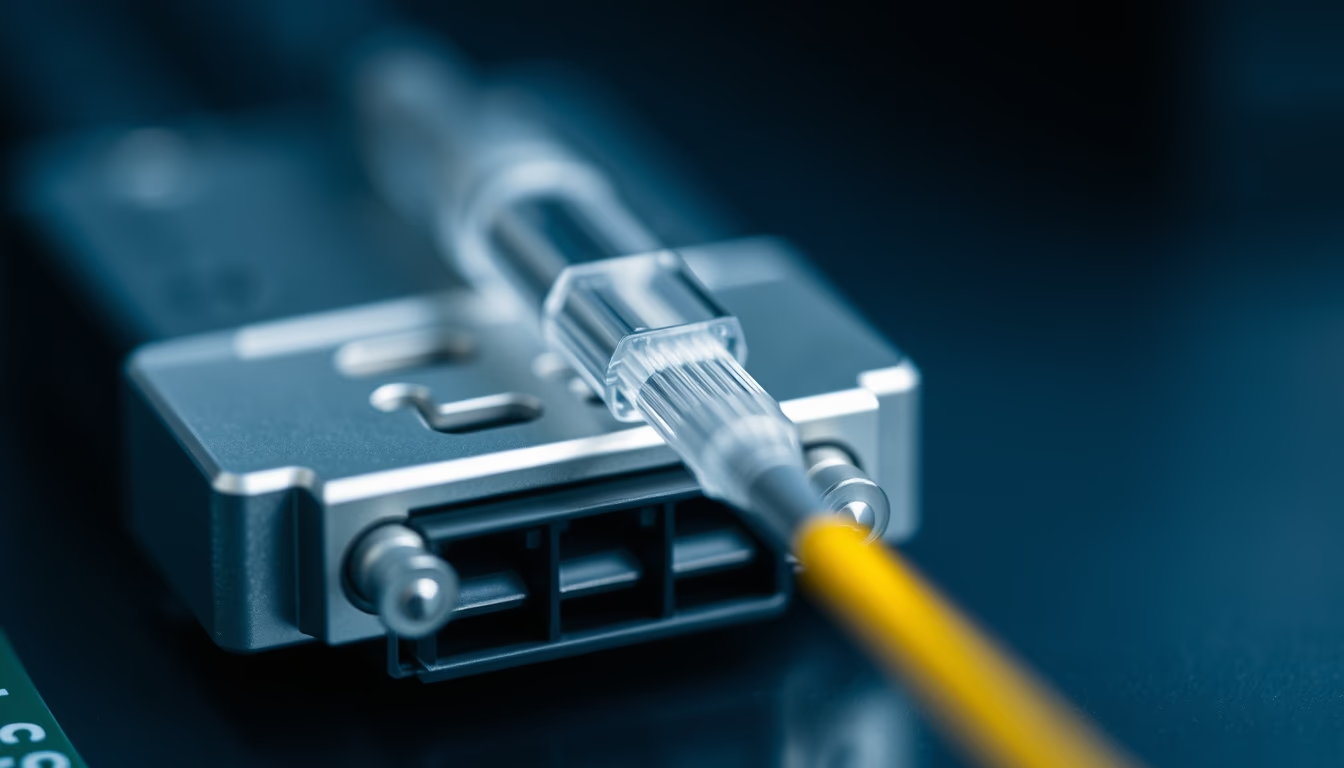
Fiber optic transceivers convert electrical signals to optical ones for high-speed network transmission, crucial in data centers and telecommunications.
About this subject
A fiber optic transceiver is a compact module that converts electrical signals into optical signals and vice versa, enabling data transmission over fiber optic cables. These devices are widely used in computer networks, especially in data centers and telecommunications infrastructure, where high speed and low latency are essential. Common form factors include SFP, SFP+, QSFP, and QSFP28, each supporting different data rates from 1 Gbps to 400 Gbps per module. Standardization is ensured by multi-source agreements, guaranteeing interoperability among equipment from various manufacturers.
Applications of fiber optic transceivers range from local area networks in businesses to long-distance connections in internet backbones. For short distances, such as within a data center, multimode fiber is used with lower-cost transceivers, reaching up to 550 meters. For long distances, single-mode fiber is employed, allowing links of tens of kilometers without significant signal loss. Speeds have evolved rapidly: early SFP transceivers operated at 1 Gbps, while today QSFP-DD modules already offer 800 Gbps, with 1.6 Tbps prototypes under development.
Historically, optical transceivers emerged in the 1990s, replacing fixed connectors with hot-pluggable modules. The GBIC form factor was one of the first, but soon gave way to the more compact SFP. This evolution was driven by the need for greater bandwidth in corporate networks and the explosive growth of the internet. Today, transceivers are also critical components in submarine fiber optic cables, connecting continents with multiterabit per second rates.
Interestingly, despite their small size, a modern transceiver consumes little power, typically between 0.5 and 3 watts, depending on speed and distance. Factors such as temperature, humidity, and connector cleanliness affect performance, requiring careful installation. Ongoing innovation aims to reduce power consumption and increase capacity, with technologies such as coherent transceivers and advanced modulation.
Frequently Asked Questions
What is the difference between SFP and SFP+?
SFP supports up to 1 Gbps, while SFP+ operates at up to 10 Gbps. Both share the same physical form factor and are compatible with SFP+ slots.
How to choose between single-mode and multimode fiber for transceivers?
Use single-mode fiber for distances over 550 meters, such as in metropolitan or long-haul networks. For short distances inside data centers, multimode fiber is more cost-effective.
What does it mean for a transceiver to be hot-pluggable?
It means the module can be inserted or removed from the equipment without powering off the device, simplifying maintenance and upgrades without network disruption.
Direct URL
https://pub-c7d6a6ea828543ac903a74a341ccb2e1.r2.dev/imagens/fiber-optic-transceiver-macro-closeup-p0.avifHow to credit
Include a visible link back to UtilizAí. Copy one of the snippets below:
<a href="https://xn--utiliza-eza.com/en/midia/imagens/fiber-optic-transceiver-macro-closeup-p0">Fiber optic transceiver</a> by <a href="https://xn--utiliza-eza.com">UtilizAí</a>, licensed under <a href="https://creativecommons.org/licenses/by/4.0/">CC BY 4.0</a>.
[Fiber optic transceiver](https://xn--utiliza-eza.com/en/midia/imagens/fiber-optic-transceiver-macro-closeup-p0) by [UtilizAí](https://xn--utiliza-eza.com), CC BY 4.0
License: CC-BY-4.0